How do I build an effective emergency preparedness plan for my Kansas child care program?
Every licensed or unlicensed program in Kansas has a responsibility to protect the children, staff, and families it serves. Creating a usable, practiced emergency plan reduces risk, supports continuity of care, and strengthens your relationships with local responders and families. This article gives directors and providers a practical pathway—grounded in Kansas regulations, public health guidance, and proven child care practice—to design, implement, and maintain an emergency plan that works in your setting.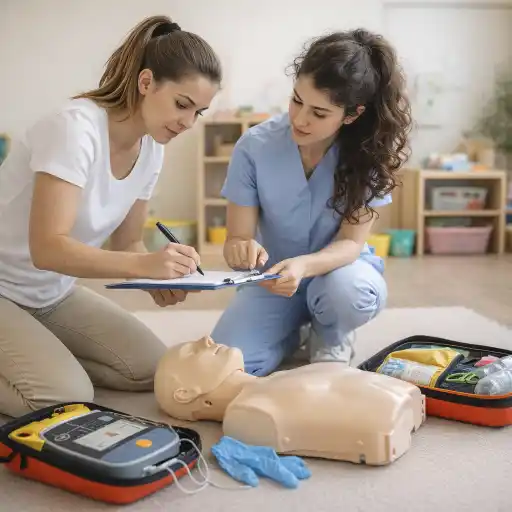
Why it matters:
1) Children are uniquely vulnerable in disasters and depend on you for safety; a clear plan saves precious time and reduces trauma.
2) Parents and the community depend on reliable child care during and after emergencies so first responders can do their jobs. For Kansas-specific requirements, review licensing regulations and statutes early in your planning.
State requirements vary - check your state licensing agency. See the Kansas administrative rules for child care (K.A.R. 28-4 et seq.) and broader public health statutes (K.S.A. Chapter 65).
1) How do Kansas regulations shape my emergency plan?
Kansas licensing and public health standards establish minimum expectations for written emergency procedures, required drills, staff responsibilities, and documentation. Key points to integrate into your plan include:
- Written plan requirement: maintain a written emergency plan covering fire, weather, lock‑down, missing child, chemical/utility incidents, and unscheduled closings (K.A.R. 28-4).
- Capacity and space expectations: ensure evacuation and relocation plans account for your licensed capacity and any required square footage per child (HB 2045).
- Staffing and substitute rules: follow age and training requirements for primary care providers and substitutes; these affect who can lead evacuations and who may remain with children during extended absences (K.A.R. 28-4).
- Documentation: maintain medical records, emergency contact lists, drill logs, and plan revisions as part of licensing compliance (K.A.R. definitions & documentation).
Practical actions:
- 📌 Register or review your license packet and cross‑check every plan element with K.A.R. documentation (KDHE regs).
- 📋 Use a template from a trusted source—ChildCareEd's emergency plan guidance and their free Emergency Preparedness Plan are practical starting points.
- 📞 Establish local contacts: county licensing, local fire, EMS, and your county emergency manager; incorporate those numbers into the plan.
2) What essential components should an all‑hazards plan include?
An all‑hazards plan is actionable, concise, and organized so staff can access required steps under high stress. Include the following core sections and make them easy to find:
- Risk assessment and priority hazards: identify site‑specific threats (tornadoes, floods, utility failures, active intruder) and rank them by likelihood/impact. Use local resources such as the National Weather Service and county emergency management for hazard data.
- Response options: clearly state when to Evacuate, Shelter‑in‑Place, or Lockdown, and include triggers for each decision (e.g., fire alarm, tornado warning, 911 direction).
- Evacuation routes and relocation sites: list primary and alternate on‑site evacuation routes and two off‑site relocation/reunification sites (close and further away) with maps and transportation plans. For practical guidance on temporary relocation of child care facilities and related health and safety considerations, review the relocation guidance on ensuring the health and safety of young children (relocation guidance on ensuring the health and safety of young children).
- Emergency supplies and Go‑Kits: detail contents, storage locations, and a quarterly inspection schedule (first aid, medication, water, child lists, backup communication devices).
- Communication plan: parent notification scripts, staff call tree, designated spokesperson, and use of mass notification tools (apps, phone trees, RAVE), plus an out‑of‑area contact.
- Medical and special needs: medication protocols, allergy action plans, individual evacuation accommodations, and documentation for each child.
- Reunification procedures: ID verification, sign‑out logs, and secure release steps.
- Recovery and continuity: post‑incident facility assessment, mental‑health supports, and return‑to‑service checklist.
Resources to adapt templates and checklists include ChildCareEd, FEMA IS‑36 materials (FEMA IS‑36), and CDC guidance on reunification (CDC reunification).
3) How do I create practical evacuation, shelter‑in‑place, and lockdown procedures?
Procedures must be simple, practiced, and age‑appropriate so staff and children know exactly what to do. Follow this stepwise approach to write these procedures into your plan:
- Define triggers: list clear events that trigger each response (e.g., alarm + smoke = evacuate; tornado warning issued for county = shelter‑in‑place).
- Designate roles: assign primary and backup persons for 1) lead evac coordinator, 2) head count/attendance, 3) medication custodian, 4) parent communications, 5) first aid responder. Document these roles on an at‑a‑glance card for all staff.
- Map routes and space: post maps at classroom doors and the office showing primary/secondary evacuation routes and shelter rooms. Include mobility‑accessible routes for children/staff with mobility needs.
- Prepare Go‑Kits: pack classroom backpacks with supplies and an emergency binder. Items should include: child roster with medical details, parental contacts, medications (if authorized), water, snacks, flashlight, and comfort items.
- Communicate quickly: use multi-channel alerts (app, phone tree, signage). Keep a prepared message bank for parents to reduce time drafting messages under stress.
Practice specifics:
- 🔁 Conduct monthly fire drills and quarterly tornado/lockdown drills (vary times/days). Log each drill with time-to-evacuate and issues observed.
- 🎒 Run tabletop exercises with staff that include role‑play for parent reunification and medication retrieval.
- 🧭 Involve local fire/police in at least one annual drill for feedback and relationship building; many local departments will review plans or observe practice runs.
Sources and templates: use ChildCareEd's courses and Emergency Plan Form  Buy Now
 $55.00$45.00, FEMA sample EAPs (FEMA sample EAP), and KDHE requirements (K.A.R.).
4) How do I plan for reunification, medical needs, and children with special needs?
Reunification and individualized medical care are the most sensitive parts of an emergency response. Careful protocols reduce error and maintain family trust. Build these components into your plan:
- Reunification site and flow: designate two reunification sites (near and farther away). Define a single check‑in/out flow with ID verification, sign‑out logs, and a staff member assigned to supervise release. See CDC guidance on reunification procedures (CDC reunification).
- Authorized release list: maintain printed and electronic lists of authorized pick‑ups for each child; require government ID and a signed release to ensure correct reunification.
- Medication and medical action plans: for each child with chronic conditions or allergies, keep an individualized written action plan and emergency medication protocol accessible in the classroom Go‑Kit. Ensure staff are trained to administer medications and document per KDHE rules.
- Accommodations for children with disabilities: identify evacuation equipment (carrying devices, evacuation cribs), designated staff to assist, and alternate transport plans if normal routes are unusable.
- Emotional recovery: include short‑ and long‑term psychosocial support steps—maintain routines, use comforting language, and provide referrals to mental health supports when needed. Resources from NAEYC and ChildCareEd provide trauma‑informed tips.
Example practices:
- 🧾 Keep a locked classroom binder with photocopies of all parental IDs and emergency contacts in addition to digital records.
- 💊 Assign and train a medication custodian on each shift; practice medication retrieval during drills.
- 🤝 Coordinate with local emergency management on reunification logistics; they can support large‑scale events and advise on alternate sites.
5) How do I train staff, run drills, and coordinate with local responders so the plan actually works?
Training and interagency coordination convert paperwork into resilience. Use this practical schedule and checklist to keep your program ready:
- Initial onboarding: every new staff member must review the EOP, complete role‑specific training, and shadow drills. Include CPR/First Aid certification expectations per KDHE or local licensing.
- Regular refreshers: provide annual full‑plan training, quarterly drill practice, and monthly brief refreshers during staff meetings.
- Drill documentation: record date, time, participants, strengths, and corrective actions. Use those notes to update the plan; assign a person to track corrective actions until closed.
- Partner with responders: invite fire, EMS, and law enforcement to review your plan and participate in at least one annual exercise. Share floor plans, capacity numbers, and special needs lists (with appropriate confidentiality safeguards).
- Tabletop and surge exercises: run scenario-based staff exercises (e.g., power outage + injured child + parent reunification) to test coordination, communications, and logistics.
Common pitfalls and how to avoid them:
- 🚫 Failing to update contact lists—schedule quarterly verification of parental and emergency contact information.
- 🚫 Overly complex instructions—write steps in plain language and use visual aids and checklists for crisis tasks.
- 🚫 Not involving local responders—invite them in early so they understand your site, and you benefit from their feedback.
Training resources: ChildCareEd Buy Now $55.00$45.00, FEMA IS‑36 training (FEMA IS‑36), CDC materials (CDC childcare guidance), and local county licensing offices (for example, Crawford County) are all practical starting points.
Conclusion: What are the first five steps I can take this week?
1) Review your current written plan against KDHE rules (K.A.R.) and local statutes (K.S.A. Ch. 65).
2) Download and adapt a template such as the ChildCareEd Free Emergency Preparedness Plan (ChildCareEd resource).
3) Assemble classroom Go‑Kits and a center Go‑Bag, and schedule a quarterly inventory.
4) Assign clear roles for every staff member and create an at‑a‑glance emergency card for each employee.
5) Schedule one tabletop exercise and one full evacuation drill this month; invite a local responder to review afterwards.
Final notes: Emergency planning is not a one‑time project—it is a program culture. Commit to revisiting your plan quarterly, practicing realistically, and documenting changes. State guidance changes over time; state requirements vary - check your state licensing agency. For Kansas providers, combine KDHE/K.A.R. expectations with practical tools from ChildCareEd, FEMA, and the CDC to craft a plan that protects children, reassures families, and keeps your program resilient.
- Stay Alert! Steps for Emergency Prep
- Basic Health & Safety and Breastfeeding Awareness
- Emergency Preparedness and Response Planning Resulting from a Natural or Man-Made Event
- Emergency and Disaster Preparedness
- Health and Safety Orientation
- Emergency Preparedness and Response Planning Resulting from a Natural or Man-Made Event
- Texas Director Credential Renewal
- Texas Director Credential
- Responding to Emergencies
- CDA Certification en Español: Recursos y Consejos para Educadores Bilingües
- 👶 ¿Cuáles son las proporciones y grupos requeridos en Dakota del Norte? 🏫
- Qué capacitación se requiere para ser director de cuidado infantil en Texas?
- Curso de Comunicación de 9 Horas de Maryland
- ¿Cómo pueden los equipos de cuidado infantil practicar habilidades rápidas de primeros auxilios en situaciones reales?
- Capacitación en Salud y Seguridad Preventiva en Línea para Proveedores de Cuidado Infantil
- Regulaciones de Licenciamiento de Cuidado Infantil en California para Centros y Hogares de Cuidado Infantil Familiar
- Normas de Licenciamiento de Cuidado Infantil en Virginia para Centros Diurnos Infantiles y Hogares Diurnos Familiares
- Lista para Abrir una Guardería en Casa en Virginia: Cómo Empezar
- Lista para Abrir una Guardería en Casa en Carolina del Norte: Cómo Empezar
- Lista para Guardería en Casa en Illinois: Cómo Iniciar una Guardería en el Hogar
- Lista para Guardería en Casa en Texas: Cómo Iniciar una Guardería en el Hogar
- How can child care programs handle drop-off, safety, and schedules during the 2026 World Cup in big cities?
- Cómo simplificar la capacitación para sus empleados de daycare
- How do I build an effective emergency preparedness plan for my Kansas child care program?
- How Do You Create an Effective Emergency Staffing Plan for Your Child Care Program?
- Emergency and Disaster Preparedness Training Online: What Will You Learn?
- Evacuate, Shelter, or Lock Down? How to Respond to Different Child Care Emergencies
