Winter Holiday Fun STEM Activities
This collection of developmentally-appropriate, low-cost STEM projects is designed for child care professionals seeking purposeful winter activities that align with learning goals in science, mathematics, fine motor development, and executive function. Two ChildCareEd courses that support planning and extending these lessons are Enhancing STEM Education for Infants and Toddlers  Buy Now $16.00 and Math Foundations in Early Childhood Buy Now $16.00. Read on for step-by-step adaptations, assessment ideas, safety guidance, and links to related ChildCareEd articles you can use when planning your weekly curriculum. For more ideas on aligning seasonal activities with clear learning goals, see How can seasonal activities (spring, summer, fall, winter) combine fun with clear educational goals?
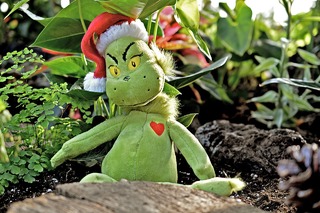
How can a simple chemical reaction create a Grinch-themed STEM demonstration?
All you need is a green balloon with a heart taped to it, a small plastic bottle, a spoon of baking soda, and a little vinegar. When you combine vinegar and baking soda, carbon dioxide gas is produced and can inflate the balloon; use this observation to introduce the concept of gases, cause-and-effect, and measurement. For preschoolers, prompt prediction and counting trials; for older children, introduce measurement by comparing amounts of baking soda and vinegar and recording differences. Use scaffolding questions to support inquiry (e.g., "What do you predict will happen if we add more vinegar?").
View the Activity on Pinterest
How can a pattern-based holiday tree craft build math and fine-motor skills?
Provide children with strips or shapes in alternating colors and invite them to create layered trees on a dark background. This activity targets patterning, classification, and bilateral coordination (scissor skills). Encourage children to verbalize their pattern rules (AB, AAB, ABB) and to predict what comes next. To extend into data literacy, ask children to tally decorations by color and graph the results as a class. For toddlers, pre-cut shapes and focus on gluing and naming colors; for preschoolers, include counting, pattern rules, and a short reflective discussion about choices and results.
How can I adapt these activities for infants, toddlers, and preschoolers?
Adaptation preserves the learning goal while matching materials, supervision, and adult support to the child’s developmental stage. For infants, convert the concept to sensory exploration: place small, sealed bottles with a safe amount of the baking-soda/vinegar mixture (securely closed and supervised at all times) or show the reaction in an adult demonstration while infants observe and hear the fizz. Emphasize rich language—describe cause and effect—and repeat the demonstration across several days to support recognition and memory. For toddlers, provide larger, stable bottles, pre-measured scoops, and pour-and-count vocabulary so children can participate with close adult support. For preschoolers, design small prediction-and-measure stations where children experiment with different vinegar/baking-soda ratios, record outcomes with pictorial charts, and compare results. Providers in Minnesota should consult the Minnesota Department of Human Services child care licensing rules to verify state-specific policies on materials, supervision, and group ratios.
When adapting the pattern-tree craft, toddlers work with pre-cut large shapes and practice gluing and naming colors; preschoolers cut strips, create and explain AB/ABB patterns, and tally decorations to produce simple bar graphs. For staff planning the adaptations and linking activities to learning objectives, consider ChildCareEd’s lesson-planning support such as CDA Infants/Toddlers: Lesson Planning Made Easy Buy Now $24.00, which offers practical strategies for making activities developmentally appropriate.
Relevant in-depth examples of toddler STEM practice are available in our article Can Toddlers Do STEM in the Sandbox at Minnesota Daycares?, which illustrates scaffolding, materials choices, and observation techniques useful when adapting holiday STEM projects.
How should I assess learning and document outcomes from holiday STEM projects?
Assessment for these brief projects should be observation-based, intentional, and aligned to measurable objectives (e.g., demonstrates patterning, counts to five, uses predictive language). Use a simple, consistent format: 1) objective, 2) what you observed, 3) next-step teaching idea. For preschoolers, collect artifacts—photo sequences of the experiment, tally sheets, and child-created graphs—that feed into the child’s learning record. During circle time, ask children to explain what they did and record exact quotes to document expressive language and reasoning skills. For infants and toddlers, focus on engagement, sensory responses, and emerging problem-solving behaviors recorded in short anecdotal notes.
To broaden assessment ideas and curricular links, see Pre-K Ideas for Play, Learning, and Development and integrate short, daily assessment notes into existing lesson plans. Use these documented moments in conferences with families to show progress and goals.
What safety, allergy, and supervision precautions should I plan for?
Holiday STEM often uses common household chemicals and small materials. For chemical demonstrations, keep all reactive liquids and powders in clearly labeled, adult-only containers and perform any reaction behind a small barrier or at a demonstration table where children cannot reach the materials. Never allow unsupervised access to vinegar or baking soda containers during activities that involve mixing or shaking. Be explicit in your risk assessment: identify choking hazards, chemical risks, and slip hazards (e.g., spills from vinegar). Always have cleaning supplies and a first-aid plan available.
Consult staff training resources such as Prevention of and Response to Allergic Reactions Buy Now $8.00 to ensure all team members understand allergy risk mitigation and emergency response. For broader seasonal-hazard planning—weather, allergens, outdoor cold exposure—refer to our article How can child care programs prevent seasonal safety hazards?
How can I involve families and extend learning beyond the classroom?
Share simple home-extension ideas and documentation so families can reinforce STEM concepts. Send a short photo and a single-sentence prompt (example: “Ask your child which pattern comes next—AB or ABB?”) or a one-step experiment families can safely try together. Offer materials lists that use household items, and include notes about what to observe and questions families can ask to stimulate language and reasoning. During family conferences or newsletters, highlight a child’s documented progress and suggest next-step activities appropriate to the child’s level.
For guidance on handling holiday excitement and communicating with families about behavior and transitions, link to How can child care providers manage holiday excitement and big emotions in young children?. For ideas to keep celebrations inclusive and safe while extending learning at home see safe, non-candy holiday alternatives.
Summary & next steps
These winter STEM ideas build science, math, fine-motor, and executive-function skills when planned with age-appropriate supports, clear assessment, and safety-first procedures. Add one short observational note per child, share a home extension with families, and document results with a photo or child-created artifact to make the learning visible. Use internal resources and trainings linked above to support planning and staff development. Intentional planning turns seasonal fun into measurable learning. #STEM #holiday #preschool #safety #assessment
*Archived from ChildCareEd's newsletter. Visit the ChildCareEd archive to view the original edition.
Link: https://conta.cc/3GtxmSB
- Balancing Physically Active Play in Child Care
- Building Early Science Foundations
- CDA Infants/Toddlers: Lesson Planning Made Easy
- 45 Hour School Age Methods and Materials
- Texas Director Credential
- Balancing Active Play in Child Care
- Montessori Cultural Activities: Exploring the World Through Play and Learning
- Enhancing STEM Education for Infants and Toddlers
- Chef's in the Classroom
- How to boost fine motor skills: Holiday Edition
- Deck the Halls with Emotional Wellness: Family Traditions That Foster Connection
- Counting Candy Canes: The STEM of Holiday Fun for Early Learners
- DIY Snow Globes: The Fine Motor Craft That’ll Keep Kids (and Adults) Busy for Hours
- Winter Wonders: Incorporating Seasonal Science in Preschool Curriculum
- Mental Health for Tiny Elves: Supporting Kids Through Winter Blues
- ¿Cómo hacer actividades navideñas inclusivas para todas las familias?
- Actividades de Fiesta para Niños de Preescolar y Primaria
- Actividades de Otoño Fáciles para Preescolares esta Temporada
- Can Toddlers Do STEM in the Sandbox at Minnesota Daycares?
- Pre-K Ideas for Play, Learning, and Development
- Calabazas, hojas y manzanas: actividades de otoño para preescolares
- Be a Kid Again Day: Play-Based Learning Ideas for Teachers
- How can superhero-themed winter science activities energize your classroom?
- How can seasonal activities (spring, summer, fall, winter) combine fun with clear educational goals?
- How can child care programs prevent seasonal safety hazards like heat, cold, allergies, holiday risks, and outdoor play dangers?
- What Should You Ask Families Before a Classroom Winter Celebration?
- How Can Child Care Programs Make Classroom Holiday Invitations Clearly Optional?
- How Can Educators Make Christmas Classroom Activities Optional and Inclusive?
- How Can Child Care Providers Make Christmas Classroom Activities Optional and Inclusive?
