Water play is one of the most joyful parts of the warmer months in child care, but it also requires careful planning because even a small amount of water can present a serious risk. This guide gives directors and providers clear, practical steps they can use to prevent #drowning and make #waterplay safer while keeping activities fun, engaging, and developmentally meaningful. Because drowning incidents can happen quickly and quietly, programs need multiple layers of protection, including safe activity design, close staff positioning, consistent routines, emergency preparation, and continuous #supervision. Child care professionals can strengthen these practices through ChildCareEd’s Active Supervision: A Strategy That Works Buy Now $35.00, which provides strategies for watching, listening, interacting, monitoring, and preventing injuries, and Injury Prevention: Their Safety Is in Your Hands  Buy Now $24.00, which supports educators in identifying hazards and maintaining safer learning environments. Programs should also ensure staff maintain appropriate pediatric first aid and CPR training and follow all applicable licensing requirements for water activities.
Why it matters:
- Young children can drown in inches of water and in seconds — quick planning saves lives. See the CDC for national data and prevention principles: CDC Drowning Prevention.
- Programs that combine active supervision, physical barriers, life jackets, swim skill development, and timely CPR have the best outcomes. ChildCareEd offers practical, program-focused guidance for child care settings: Preventing Accidental Drowning & Responsibilities in Child Care Buy Now $0.00.
What are the essential layers of protection for water play?
- 🔒 Physical barriers and access control: install four-sided fencing and keep gates self-closing and locked. ChildCareEd and the CDC recommend gated pool separation and removing tempting toys when the pool is not in use: Playground and Water Safety Guidelines Buy Now $0.00, CDC.
- 👀 Active supervision: designate a distraction-free water watcher and use touch supervision for infants and toddlers. ChildCareEd explains practical zone assignments and scanning routines: What Is Active Supervision. #supervision
- 🛟 Personal protective devices: use U.S. Coast Guard–approved life jackets for boating or weak swimmers; do not rely on inflatable toys as safety devices (Red Cross).
- 🏊 Skill development: formal swim lessons reduce risk but never replace supervision — include lessons as one layer (CDC).
- 🚑 Emergency readiness: ensure up-to-date pediatric CPR and First Aid, an accessible AED when possible, and practiced emergency roles. ChildCareEd provides training and rationale: Why Providers Should Get CPR/First Aid. #CPR #safety
How should we staff, train, and equip for safe water days?
- 👥 Staff roles and ratios: 1) designate one water watcher per area, 2) assign a floater to cover transitions, and 3) increase adult-to-child ratios for mixed ages. ChildCareEd offers sample zone maps and role lists: How can childcare programs prevent drowning....
- 📚 Training: requires current pediatric CPR and First Aid for all staff and refresher drills each season. Use blended courses or hands-on practice; Red Cross water-safety courses are a good complement (Red Cross).
- 🧰 Equipment checklist: AED (if available), charged phone, reachable life jackets in child sizes, reaching/throwing tools, and a stocked first-aid kit. Post a map to emergency gear so every substitute knows where to go.
- 🔁 Drills: run short, timed drills (10–15 minutes) that rehearse rescue, 911 call, crowd control, and documentation; debrief and update plans after each drill. See ChildCareEd practice guidance: program guide.
- 📋 Licensing note: state requirements vary - check your state licensing agency for mandated trainings and ratios.
What should a written water-play plan and emergency response include?
- 📝 One-page plan: location, time, staff assignments, child counts, and parent permission status. Post where staff gather.
- 📞 Emergency roles (numbered): 1) Rescuer (use reach/throw first), 2) Caller (911, exact address/emergency details), 3) Crowd control (remove other children), 4) Recorder/communicator (parent and licensing notifications). ChildCareEd outlines these roles: Water play emergency steps.
- 🚨 Immediate actions: check water first if a child is missing; if unresponsive and not breathing, start rescue breaths/CPR immediately while someone calls 911. CDC andthe Red Cross advise trained staff to begin CPR without delay.
- 📄 Post-incident: document time, staff, witnesses, actions taken, and notifications to parents and licensing. Review and adapt the plan after each event.
How do we prevent common mistakes and avoid pitfalls?
Knowing common errors helps you design fixes that are easy to use. Below are frequent pitfalls and practical remedies.
- ❌ Mistake: over-relying on swim lessons. ✅ Fix: keep touch supervision and a water watcher even after lessons; teach families the same message (CDC).
- ❌ Mistake: distracted supervision (phones, paperwork). ✅ Fix: water watcher policy: phone off or stored; rotate watchers to prevent fatigue. ChildCareEd recommends this in active supervision materials: Active Supervision. #safety
- ❌ Mistake: using inflatable toys as safety devices. ✅ Fix: replace with U.S. Coast Guard–approved life jackets for non‑swimmers (Red Cross).
- ❌ Mistake: skipping drills and documentation. ✅ Fix: brief drills each season, log near-misses, and follow up with retraining.
- ❌ Mistake: using kiddie pools improperly. ✅ Fix: avoid group use or empty/clean them daily per CDC splash pad and kiddie-pool guidance: CDC Splash Pad Safety.
What short checklists and routines make water play reliable and safe?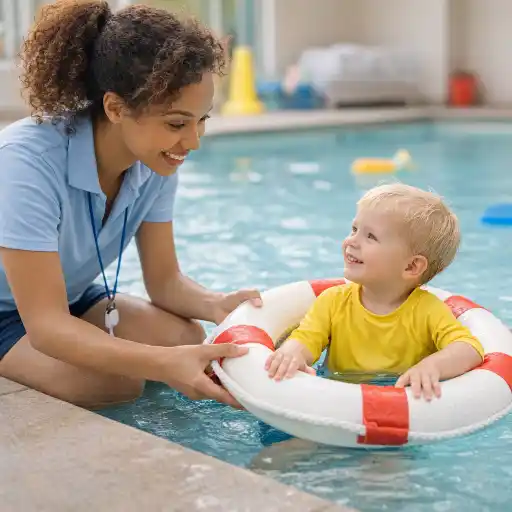
Keep staff on the same page with a brief, repeatable pre/during/post checklist. Post it where staff convene.
- Pre-event (5-point pre-check):
- 🔐 Gate locked and area free of climbables?
- 👀 Water watcher assigned and off phone?
- 🛟 Life jackets ready and sconvenes. Charged phone, AED, and first-aid kit accessible?
- 📋 Parent permissions and medical notes on hand?
- During event (repeat every few minutes):
- 😊 Scan left-to-right then near-to-far; count heads at each transition.
- 🧑⚕️ Keep at least one trained adult focused on the water (no distractions).
- 🚫 Stop play immediately if children fail to follow safety cues.
- After event:
- 🧴 Empty and store small pools; clean splash equipment per CDC guidance.
- 📝 Note near-misses and items needing repair; update the plan as needed.
FAQ
- Q: Can swim lessons replace supervision? A: No — lessons help skills but never replace active supervision or touch supervision for young children (CDC).
- Q: Are kiddie pools safe in group care? A: Generally avoid them; if used, empty and clean daily and maintain strict supervision (CDC, ChildCareEd).
- Q: How close should staff be to toddlers in water? A: Within arm's reach for touch supervision; be ready to act immediately (Water Safety for Toddlers).
- Q: When should we call 911? A: Call immediately for unresponsiveness, no breathing, seizure, or severe distress; begin rescue breaths/CPR if trained while someone calls.
Conclusion
Water play can be safe, developmentally valuable, and delightful when programs adopt layered protections and repeatable routines. To summarize in five practical steps:
- 🔁 Use layers: barriers, active #supervision, life jackets, swim lessons, and CPR-trained staff.
- 📋 Keep a one-page water-play plan with numbered roles and an emergency flow.
- 🧰 Equip and train: pediatric CPR/First Aid, AED access, reach/throw tools, and life jackets.
- 🔍 Practice: brief seasonal drills, near-miss logging, and spot coaching for staff.
- 📣 Communicate: share policies with families and remember state requirements vary - check your state licensing agency.
For program-ready templates, course links, and downloadable checklists, start with ChildCareEd’s resources on water safety and active supervision: ChildCareEd Water Safety and the practical program guide: How can childcare programs prevent drowning.... You may also want to review ChildCareEd’s injury-prevention course Their Safety Is In Your Hands for classroom-level strategies, downloadable checklists, and program-focused guidance that complement water-play procedures. Thank you for the careful, compassionate work you do — thoughtful planning and routine practice keep our #children safer around water.
A one-page, numbered action plan keeps everyone synchronized when seconds matter. Include clear roles, steps, and communication instructions. Staffing, training, and equipment are the operational backbone of safe water play. Use this numbered checklist to staff and prepare each water event. Thinkin layers: no single step is enough. Use an arranged, numbered approach your staff can follow every time.
- 45 Hour Child Growth and Development
- Health and Safety Orientation
- CDA Family Child Care Credential with Portfolio Review
- CDA Bridge Bundle: Family Child Care
- CDA Bridge Bundle: Infant/Toddler
- Texas Director Credential
- 10 Hour Health and Safety Orientation Training
- Family Child Care: Building, Premises, and Outdoor Safety
- How To Prevent Child Injury Using The Course Of 1,2,3 Eyes On Me
- Summer Fun Meets Summer Safety: The Importance of Pediatric First Aid and CPR Training
- CDA Certification en Español: Recursos y Consejos para Educadores Bilingües
- ☀️Sunny Side Up: Smart & Safe Summer Fun for Kids!
- Recursos en Español sobre el Sueño Seguro del Bebé
- Capacitación en Salud y Seguridad Preventiva en Línea para Proveedores de Cuidado Infantil
- Proporciones de Cuidado Infantil y Tamaños de Grupo por Edad en Virginia (Guía Rápida para Centros y Hogares)
- How can we run safe water play and heat-safe summer activities for preschoolers in Texas?
- Canciones, juegos y preguntas de círculo para niños
- How can New York child care providers use active supervision to keep children safe around water this summer?
- How can my Minnesota child care program prevent drowning this summer?
- How can Michigan providers keep kids safe around the Great Lakes and backyard pools?
- How did a backyard pool change water safety at California family child care homes?
- How can child care programs keep playgrounds safe for infants through school-age children?
- How can childcare providers and families keep children safe around water?
- How can child care programs prevent drowning and keep water play safe?
- How Can Child Care Programs Keep Outdoor Play Safe?
- How Can Child Care Providers Teach Summer Safety Lessons Young Children Can Remember?
- What Water Safety Rules Should Every Early Childhood Program Teach?
- How Can Child Care Providers Teach Children to Recognize Safe and Unsafe Summer Choices?
