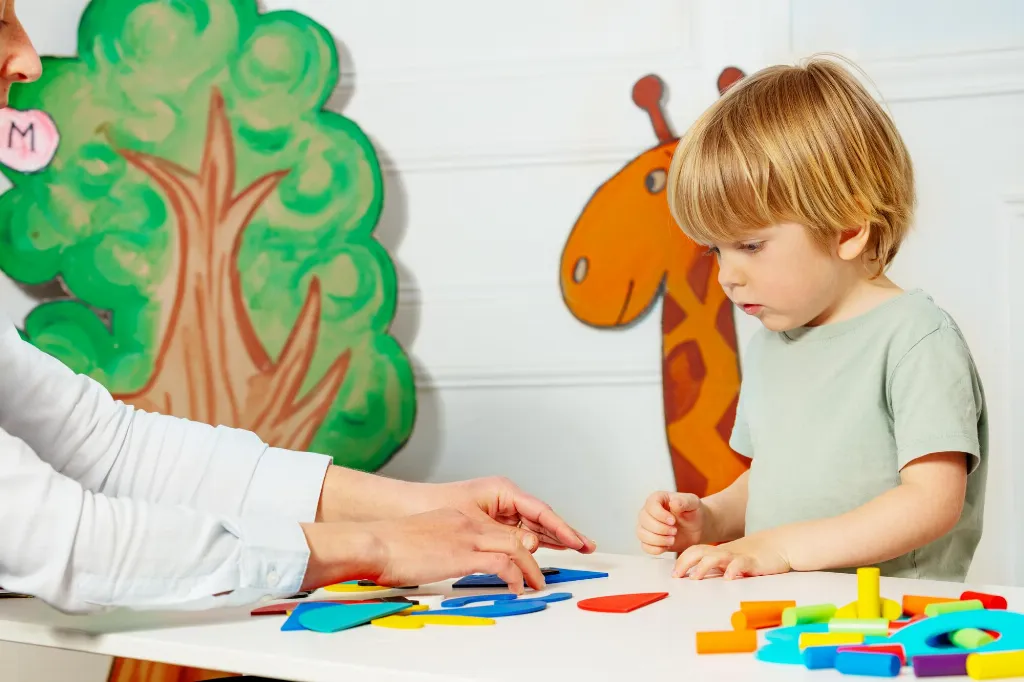
 Young children grow fast. As a teacher or director you help shape how they feel, learn, and play. This article gives simple, practical steps to support the whole child in your #classroom. We use ideas from trusted resources like How Can Teachers Support Every Part of a Child’s Development? and other ChildCareEd guides so you can put plans into action today.
How do I support the whole child's development in my classroom?
Children grow in four big areas. You can help in each area with small daily steps.
- Physical: give chances to run, climb, and use small muscles. Simple moves help health and focus. See physical health and learning.
- Language: read, sing, and talk a lot. Ask open questions and name feelings. See ChildCareEd tips on language and literacy in play-based learning.
- Social-emotional: teach feelings, share routines, and model calm. Use short games that teach taking turns. The CSEFEL brief on self-management has good ideas (CSEFEL).
- Cognitive: let children solve simple problems, sort, and count. Use play to build thinking skills (see The Power of Pretend Play Buy Now $0.00).
Try one small goal each week. For example:
- 😀 Week 1: add 10 extra minutes of outdoor play.
- 🙂 Week 2: read a new book and ask three questions.
- 😊 Week 3: teach a cleanup chart to help routines (see CSEFEL).
These steps support #development, help #teachers notice differences, and let you reach every #child. For training and courses that match this work, see ChildCareEd's Child Development Classes.
What daily routines and classroom setup help children grow?
A well-planned room and steady routines help children feel safe and learn more. Simple changes make a big difference.
- Pick clear learning areas: blocks, art, reading, sensory, and a calm corner. This supports play and choice. See play-based learning.
- Use open-ended materials like boxes, scarves, and loose parts so children invent play and practice thinking.
- Keep routines short and predictable: arrival, circle, free play, snack, outdoor time, rest. Predictability helps children settle and self-regulate (trauma-informed care).
- Observe and record one short note per child each day. This helps spot delays or strong skills. The CDC milestone lists are a clear guide (CDC milestones).
Quick room checklist:
- 🔸 Bins labeled with pictures so children choose easily.
- 🔸 Wide paths for safe movement and clear sight lines.
- 🔸 A calm corner with soft items and a visual feelings chart.
Remember: state requirements vary - check your state licensing agency. For free resources and center ideas see ChildCareEd's resource library (Resources - All).
How can teachers use play, scaffolding, and assessment to boost learning?
Play is powerful. Use it with the right supports so each child learns new skills.
- Start with long play blocks. Protect at least one 30–60 minute play time each day to let ideas grow (play-based learning).
- Use scaffolding: model first, then do with children, then step back. This is the "I Do, We Do, You Do" method (Scaffolding Instruction).
- Include simple assessment: take a photo, write one sentence of what the child did, and link it to a skill. Save 2–3 examples per child each month to show growth.
- Mix ages when possible. Mixed-age groups let older children teach younger ones and build strong social skills (Mixed-Age Group Activities Buy Now $0.00).
Emoji ideas for play supports:
- 🎯 Use challenges: put a simple problem in a center for children to solve.
- 🧩 Offer loose parts to change how children play.
- 📚 Read and then let children act out the story.
For deeper learning about play and cognition, see The Power of Pretend Play Buy Now $0.00 and research on cognitive supports (Cognitive Development).
How do we manage behavior, trauma, and build family partnerships to support learning?
Children bring feelings and life experiences to class. Teachers can respond with kindness, rules, and help from families and experts.
- Use positive routines and clear expectations. Teach rules with a short behavior matrix. PBIS ideas and simple logical consequences help students learn choices and outcomes (Managing Behaviors).
- Create calming tools: a feelings chart, a quiet spot, and sensory items. These help children learn to calm down (Trauma-Informed Care).
- Work with families. Share quick notes, photos, and simple home activities. Strong family partnerships boost learning and trust.
- Ask for help when a behavior is intense or doesn’t match a child’s age. Use local consultants, mental health supports, or early intervention if needed. See CSEFEL tips on self-management (CSEFEL).
Why include trauma-informed practices? Children who have hard experiences need steady routines, safe adults, and predictable days to feel ready to learn (Ringing in Resilience).
For educators seeking formal training in trauma-informed strategies, the CDA Credential outlines practical approaches to foster emotional resilience and create a nurturing classroom environment.
Conclusion
Quick checklist to use tomorrow:
- 😀 Add one longer play block and protect it.
- 📚 Read daily and ask two open questions after the story.
- 🧾 Start a one-line daily note for each child to track skills.
- 🧘 Add a calm corner with a feelings chart.
- 🤝 Send one short message each week to families sharing a small win.
Common mistakes and how to avoid them:
- ⚠️ Too much adult direction — fix: observe, then join briefly, then step back.
- ⚠️ Rushing play — fix: keep longer play times and fewer interruptions.
- ⚠️ Not recording progress — fix: take one photo and one line of notes each day.
FAQ
- Q: How long should play time be? A: Aim for one 30–60 minute block when you can.
- Q: How do I include children with special needs? A: Adapt materials, use partners, and ask for coaching. ChildCareEd has inclusion guides (Resources).
- Q: How do I notice delays? A: Use milestone checklists like the CDC list (CDC milestones).
- Q: Where can I learn more? A: ChildCareEd courses and free PDFs on their site offer practical training (Resources - All).
With small, steady steps you and your team can help each child grow strong. Keep learning, share wins, and remember the power of #play and kind, clear routines for #children and #teachers. Emphasize #learning and #development every day.
- 45 Hour Child Growth and Development
- 45 Hour Infant and Toddler Methods and Materials
- CDA Bridge Bundle: Family Child Care without Portfolio Review
- CDA Bridge Bundle: Infant/Toddler without Portfolio Review
- 45-Hour Infant and Toddler Curriculum
- Creating Environments that Nurture Growth and Community
- Texas Director Credential
- 45 hour Growth and Development Birth-age 12 ONLINE
- Cuáles Son las Señales de Alerta en el Desarrollo Infantil que Todo Educador Debe Conocer?
- Cómo usar tu certificación de 90 horas en Maryland para completar tu CDA
- ¿Qué es la Certificación de 90 Horas para Cuidado Infantil en Maryland?
- ¿Cuáles son los pasos, requisitos y opciones en línea para la certificación de 90 horas en cuidado de Infantes/Toddlers en Maryland?
- 10 Ejemplos de Cómo la Cultura Influye en el Desarrollo Infantil
- Retraso del Habla en la Guardería: Cómo Pueden Ayudar los Proveedores
- The Role of Teachers in Child Growth and Development
- How can directors celebrate and support a child care team so staff stay, thrive, and teach their best?
- Lead Teacher vs. Assistant Teacher: What’s the Difference in a Child Care Classroom?
- Training for Preschool Teachers: What Should You Take After You Meet the Minimum Requirements?
- What Developmental Milestones Should Teachers Know From Birth to Age 5?
- ¿Todos los niños deben participar en el tiempo de círculo?
