Winter dressing can make the difference between a comfortable outdoor adventure and a chilly, rushed transition. Learn a practical layering routine, what to check before heading outside, and how to work with families; for deeper cold-weather and outdoor-safety preparation, explore ChildCareEd’s Family Child Care: Building, Premises, and Outdoor Safety  Buy Now $16.00 training, which covers weather-related hazards and supervision strategies.
Why does a reliable winter dressing routine matter?
For preschool teachers, getting a whole group ready for outdoor play is a daily balance of warmth, comfort, movement, and time. A shared routine makes transitions calmer and helps staff notice when a child lacks a hat, has damp socks, or is wearing a layer that is too bulky for active play. Children are also less able than adults to recognize and explain early cold discomfort, so adult observation and preparation matter.
Winter clothing supports access to outdoor learning, not merely comfort. When children are warm and dry, they can investigate snow, move, and engage with peers more comfortably. Clear expectations also reduce last-minute uncertainty for staff and families. Head Start’s cold-weather safety guidance recommends warm layers and emphasizes limiting exposure in extreme conditions.
Make the routine predictable rather than perfectionistic: check the weather, help children dress in a sensible sequence, inspect fit and coverage, and monitor them outside. A program’s written weather plan should guide whether outdoor time proceeds, is shortened, or moves indoors. State requirements vary - check your state licensing agency.
What are the basic layers for cold-weather play?
Think of winter clothing as a flexible system: a comfortable layer next to the skin, an insulating layer, and an outer layer that blocks wind and moisture. Several manageable layers generally make it easier to adjust a child’s clothing than relying on one very bulky garment.
- Base layer: Choose a close-fitting, comfortable shirt and pants. For cold, active outdoor play, wool or synthetic fabrics can help move moisture away from the skin and dry faster than cotton.
- Middle layer: Add insulation such as fleece or a warm sweater. Adjust its thickness to conditions and the child’s activity.
- Outer layer: Use a wind- and water-resistant coat or snowsuit when conditions call for it. The outer layer should allow movement and protect inner clothing from wet snow or wind.
Which winter accessories and fit checks should teachers prioritize?
Layers work best when the child’s head, hands, and feet are protected and clothing fits safely. Help each child wear a warm hat that covers the ears, mittens, dry socks, and weather-appropriate boots. Mittens are often easier for preschoolers to put on and can keep fingers together. Keep spare items available because mittens and socks often get wet or go missing.
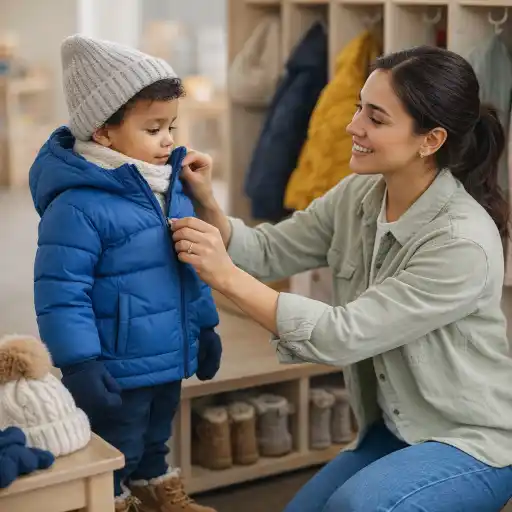
Before leaving the classroom, make a quick, consistent check:
- Is the child’s hat secure and covering the ears?
- Are mittens on, and are sleeves overlapping the mitten cuffs?
- Are socks and boots dry, comfortable, and suitable for the surface?
- Can the child walk, climb, bend, and use playground equipment without clothing dragging or restricting movement?
- Are scarves tucked safely inside outerwear? Avoid loose, trailing items that could catch or create a hazard.
Head Start advises tucking scarves inside jackets and cautions that bulky coats should not go under car-seat harnesses. For vehicle travel, follow current car-seat instructions: secure the harness snugly over appropriate thin layers, then place a blanket or coat over the fastened straps if needed. Label clothing clearly and treat sensory preferences, adaptive clothing needs, and family circumstances respectfully.
How can staff make dressing routines smooth and inclusive?
A thoughtful setup saves time and gives children a chance to participate. Prepare clothing before announcing the transition, seat children where staff can supervise, and use a consistent order—boots last, for example, to keep indoor floors cleaner. Picture cues can help children remember the sequence. Give children time to try, then offer specific assistance rather than taking over automatically.
Keep the tone supportive. A child who dislikes a scratchy hat or struggles with a zipper may need a different option, a demonstration, or a few extra moments—not a reprimand. Offer appropriate choices, such as selecting between two warm hats, while adults retain responsibility for ensuring the clothing suits the weather. These routines build self-help skills without placing the safety decision on preschoolers.
Partner with families using clear, nonjudgmental communication. Share a short checklist of clothing needs, ask families to label items, and explain how the program handles spare clothing. If a child arrives without suitable gear, respond compassionately and use program supplies or an agreed family plan when available. A simple clothing station with labeled bins, spare mittens, socks, and hats supports consistency across classrooms and substitute staff.
How should teachers monitor children once they are outdoors?
Getting dressed is only the beginning. Cold-weather safety depends on conditions, duration, activity, wetness, and each child’s needs. Before every outdoor block, check the local forecast and wind chill, inspect surfaces for ice, and confirm the group has dry spare clothing and a warm place to return to. Follow your program’s written thresholds rather than relying on one universal temperature rule.
- 👀 Observe children frequently, especially those who are quiet, less active, or unable to describe discomfort.
- Check exposed skin and clothing for signs of cold, wetness, or discomfort; bring a child inside promptly if concerned.
- Plan shorter outings or warm-up breaks when conditions warrant, and recheck the weather if it changes.
- Stop outdoor play when conditions are unsafe, including icy play areas or extreme cold under your program’s policy.
Red or tingling skin may be an early warning; numb, pale, grayish, or waxy skin can signal frostbite. Persistent shivering, unusual tiredness, poor coordination, or confusion may indicate a more serious cold-related problem. Move the child to a warm place, remove wet clothing, and follow your emergency procedures; seek urgent medical help for suspected hypothermia or significant frostbite. The CDC’s winter-weather guidance advises against rubbing frostbitten skin or using direct heat.
What common winter clothing mistakes can programs prevent?
Many winter clothing difficulties are predictable and can be addressed with small systems. A single heavy coat may be warm but hard to adjust indoors, and bulky clothing can restrict movement. Cotton can stay wet longer than wool or synthetic materials during active, damp conditions. Wet mittens or socks can also undermine otherwise appropriate layers.
Programs can prevent these pitfalls with a brief, repeatable clothing check and an accessible supply of dry spares. Avoid assuming that every child’s needs are identical: age, health, sensory preferences, mobility, and activity level all matter. Do not rely on children to identify cold stress or decide alone when outdoor conditions are safe. Staff remain responsible for supervision and weather decisions.
Use family communication as partnership, not blame. When gear is missing, ask what practical support would help and follow program policy. Review incidents and near-misses with staff to identify whether the weather check, clothing routine, or spare-gear plan needs improvement. Connect winter readiness with wider safety learning through ChildCareEd’s Health and Safety Orientation Buy Now $55.00, Effective Supervision in Child Care Buy Now $25.00, and Basic Science in Early Childhood Buy Now $25.00. Review course details and local training requirements before enrolling.
Conclusion: What should every preschool winter dressing routine include?
How should preschool teachers dress children for winter? Use adjustable layers, protect hands, feet, and ears, and check that clothing is dry, safe, and comfortable for movement. Before outdoor play, consider wind chill and surface conditions, follow program weather policy, and keep spare gear accessible. Once outside, observe children closely and respond promptly to signs of discomfort or cold stress.
Strong routines are practical and kind: prepare the space, teach the dressing sequence, adapt to individual needs, and communicate with families without judgment. These habits help children take part in winter play while adults maintain responsibility for safety. Make the routine consistent across classrooms, document and review concerns, and check local licensing guidance when setting program procedures.
- 45 Hour Child Growth and Development
- Building and Physical Premises Safety Including the Storage and Handling of Bio-Contaminants and Hazardous Materials
- 45 Hour Preschool Methods and Materials
- What Makes Me Special: An Overview of Autism and ADHD
- Pediatric RSV First Aid & CPR/AED
- 45 Hour School Age Methods and Materials
- Every Moment Matters: Schedules and Transitions
- Family Child Care: Building, Premises, and Outdoor Safety
- Frosty’s First Aid Kit: Emergency Preparedness Tips for Educators During the Holidays
- Infant & Toddler Health Tips for the Chilly Season
- Illinois Weather & Outdoor Time at Daycare
- Last Day of Winter Activities: Learning Centers and Outdoor Play Ideas
- How can child care programs use outdoor learning ideas for all seasons?
- What are 25 easy fine motor activities I can use in my preschool?
- Weather Safety in Child Care: Cold Weather, Summer Heat, and Outdoor Play
- Cómo Celebrar el Día Nacional del Kindergarten
- How Can Child Care Programs Keep Children Safe in Different Weather?
- Lista para Guardería en Casa en California: Cómo Iniciar una Guardería en el Hogar
- Retraso del Habla en la Guardería: Cómo Pueden Ayudar los Proveedores
- Celebrando la amistad en el cuidado infantil durante el Día de los Mejores Amigos
- Canciones, juegos y preguntas de círculo para niños
- How Should Preschool Teachers Dress Children for Winter?
- How Can Child Care Programs Prevent Winter Playground Slips, Falls, and Cold-Weather Injuries?
- Why Can Bulky Winter Coats Put Children at Risk in Car Seats?
- How Can Child Care Providers Keep Infants Safe During Winter Without Overheating?
- How Can Child Care Teams Manage Winter Clothing and Family Handoffs Without Rushing?
- How Can Child Care Providers Teach Young Children Winter Dressing Skills?
