Winter playgrounds can offer children fresh air, movement, and discovery—but ice, cold equipment, and wet clothing can quickly turn routine play into a safety concern. Build a consistent inspection and supervision routine, and strengthen your practical skills with ChildCareEd’s Family Child Care: Building, Premises, and Outdoor Safety  Buy Now $16.00, which focuses on outdoor hazards, weather risks, and active supervision. For a deeper foundation in hazard recognition and prevention, explore Building and Physical Premises Safety Buy Now $10.00 as you shape a winter plan that works for your program.
Why does winter playground safety deserve a specific plan?
Winter changes a playground in ways that are easy to underestimate. A familiar path may develop black ice after a thaw, packed snow can conceal uneven ground or debris, and cold, wet surfaces can become slippery. Freezing and thawing may also expose cracks, loose hardware, or damage to equipment and impact-absorbing surfacing. Risk can shift within a single day, so a fall inspection—or even a morning inspection—cannot replace checks before each outdoor period and after weather changes.
At the same time, outdoor play supports children’s physical, social, and emotional development. The CDC describes outdoor play as an opportunity to move, explore, and practice emerging skills, while noting that providers need to manage injury risks. A clear winter routine helps programs preserve those benefits without treating every cold day as either automatically safe or automatically off-limits.
Consider a cold-weather procedure a shared safety system, not a test of individual judgment. Staff should know who checks conditions, what makes an area unavailable, how children are supervised, and when outdoor time should be shortened or moved inside. State requirements vary - check your state licensing agency, and follow your program’s policies, local guidance, and equipment manufacturer instructions.
What should staff inspect before children enter the playground?
Start with the whole route, not just the play structure. Check sidewalks, gates, ramps, stairs, and the approach to the yard for black ice, slush, pooled water, drifting snow, or blocked access. Then scan high-use areas and fall zones, including the ground beneath swings and climbers. Snow can hide hazards, while hardened snow or ice may compromise a surface intended to cushion falls.
- Look for ice, compacted snow, puddles that may refreeze, leaves, branches, and other tripping hazards.
- Check slides, seats, handrails, chains, steps, and platforms for ice, excessive cold, cracks, loose parts, or other damage.
- Verify that impact-absorbing surfacing is in place and not covered by hard-packed snow or ice.
- Clear or isolate an unsafe area; do not rely on a verbal reminder if children can still reach the hazard.
- Recheck after snowfall, freezing rain, heavy use, maintenance, or a temperature change.
Use only snow- and ice-management methods approved for your equipment and surfacing. Some salts or chemicals can damage surfaces or create environmental concerns; sand or another suitable traction material may be preferable in some settings. Document checks and repairs so the team can spot recurring problem areas and communicate restrictions consistently.
How can programs reduce slips and falls during play?
Keep the play space easy to navigate. Clear snow from routes and access points, manage drainage so water does not collect and refreeze, and mark or close areas that cannot be made safe. A playground may need partial closure rather than an all-or-nothing decision: if a specific slide or climbing structure is icy, block access to it and direct children to a safe zone only when staffing and visibility allow.
Set brief, age-appropriate expectations before going outside. Remind children to walk on icy paths, take turns, avoid pushing, and use equipment as intended. Adapt activities to the conditions: nature observation, walking games, or play on a cleared, level area may be safer than running games near structures. Ensure footwear has a secure fit and good traction, while recognizing that even suitable boots do not make an icy surface safe.
Active supervision is essential because children may not recognize a hazard or may become excited by snow and change their play quickly. Position staff to maintain clear sightlines across the group, especially near entrances and known hazards. Count children during transitions and keep staff informed about closed zones. When conditions become widespread or visibility makes supervision unreliable, pause or end outdoor play.
What clothing and cold-weather checks help protect children?
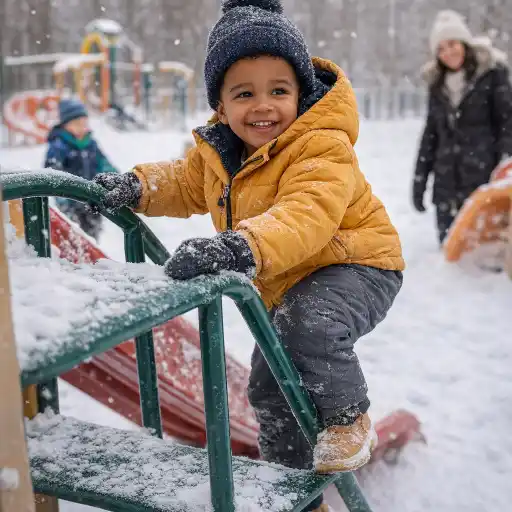
Dress children for warmth, dryness, and movement. Layers can help caregivers adjust clothing to activity and changing conditions; waterproof outerwear, warm hats, mittens, socks, and boots support comfort outdoors. Make sure clothing does not restrict movement or introduce a snag or entanglement risk. Scarves and loose cords around the neck can catch on equipment, so choose safer alternatives and follow your program’s clothing policy.
Wet clothing and wet mittens deserve prompt attention because they reduce comfort and can increase heat loss. Keep spare dry items available when possible, and check children throughout play rather than waiting for a child to ask for help. Infants, toddlers, children with medical or sensory needs, and children who are less active may need closer monitoring or shorter outdoor periods.
- 👀 Look for shivering, unusual quietness, discomfort, numbness, or skin that appears unusually pale, gray, or waxy.
- Check hands, feet, ears, cheeks, and noses, which are particularly exposed during outdoor play.
- Bring children indoors to warm up and change wet clothing; do not wait for a scheduled break if a child is uncomfortable.
- Use current local weather information, including wind chill, and program guidance to decide whether to shorten or cancel play.
Children may not describe cold stress clearly, especially at younger ages. Respond to behavior and appearance as well as their words, and make decisions based on the individual child and actual conditions—not the thermometer alone.
When should outdoor play be shortened, paused, or moved indoors?
There is no single temperature that works for every child, location, or program. Wind, wetness, precipitation, surface conditions, activity level, age, health needs, clothing, and available supervision all affect the decision. Use wind-chill information and local health or licensing guidance as part of a written policy. A posted “go, adjust, or stay inside” chart can help staff make consistent decisions, but its thresholds should come from applicable local guidance and program policy rather than an informal rule of thumb.
Delay or stop playground use when there is widespread ice, freezing rain, unsafe access, damaged equipment, severe wind or cold, poor visibility, or any condition that prevents staff from supervising effectively. Reassess conditions during the day: melting snow can create puddles that freeze later, and weather can change after the first check.
Teach staff to recognize possible signs of cold injury. Numbness or tingling can be an early warning; pale, grayish, firm, or waxy skin may indicate frostbite. Intense shivering, unusual drowsiness, confusion, or poor coordination may signal a serious cold-related emergency. Move the child indoors, remove wet clothing, and follow your emergency and first-aid procedures. Seek emergency medical help for suspected hypothermia or serious frostbite. Staff should not rub affected skin or use direct high heat.
How can directors build a reliable winter safety routine?
Make winter checks part of normal operations rather than an extra task that depends on memory. Assign responsibility for inspections, weather decisions, communicating closures, and recording repairs. Ensure all staff—including substitutes—know the procedure and the location of supplies. A short seasonal refresher can use real examples from the playground: where ice forms, which structures are closed first, and how the group will move inside calmly.
Use a practical checklist before each outdoor block:
- Check weather conditions and review the program’s decision chart.
- Walk the route and inspect equipment, high-traffic surfaces, and fall zones.
- Confirm children have appropriate, dry clothing and footwear.
- Assign supervision zones and explain any area restrictions to every staff member.
- Set a reassessment or warm-up plan, and bring children inside promptly if conditions worsen.
- Record hazards, corrective actions, and near misses; review recurring issues with the team.
Common pitfalls include checking only the equipment while ignoring icy walkways, assuming snow is soft enough to cushion falls, and relying on reminders instead of blocking unsafe equipment. Another frequent gap is treating the morning inspection as valid for the entire day. A consistent, documented routine helps providers respond thoughtfully, communicate clearly with families, and keep outdoor play available when conditions are appropriate.
Conclusion: What are the essential winter safety takeaways?
Preventing winter playground injuries requires more than reminding children to be careful. Inspect routes, equipment, and fall zones; remove or isolate hazards; ensure suitable clothing; and actively supervise children as conditions evolve. Use local guidance and a written decision process to determine when to shorten play, restrict an area, or move indoors. If a child shows signs of cold stress or injury, respond promptly according to the program’s emergency procedures.
Most importantly, make these actions predictable and shared across the staff team. Document checks, communicate closures, and revisit the plan as the weather changes. With thoughtful preparation, child care programs can support joyful winter outdoor experiences while taking slips, falls, and cold-weather risks seriously.
References and further reading
- The ABCs of Behavior: Turning Challenges into Learning Opportunities
- Pediatric RSV First Aid & CPR/AED
- CDA Bridge Bundle: Family Child Care without Portfolio Review
- Positive Attention: Interactions & Supervision for Infants & Toddlers
- Texas Director Credential
- 10 Hour Health and Safety Orientation Training
- Preventative Health and Safety
- Everyday Safety: Creating Healthy Environments
- Family Child Care: Building, Premises, and Outdoor Safety
- Winter Weather and Indoor Air Quality Tips
- CDA Certification en Español: Recursos y Consejos para Educadores Bilingües
- Recursos en Español sobre el Sueño Seguro del Bebé
- Weather Safety in Child Care: Cold Weather, Summer Heat, and Outdoor Play
- Capacitación en Salud y Seguridad Preventiva en Línea para Proveedores de Cuidado Infantil
- Normas de Licenciamiento de Cuidado Infantil en Virginia para Centros Diurnos Infantiles y Hogares Diurnos Familiares
- Proporciones de Cuidado Infantil y Tamaños de Grupo por Edad en Maryland (Guía Rápida para Centros y Hogares)
- Proporciones de Cuidado Infantil y Tamaños de Grupo por Edad en Nueva Jersey (Guía Rápida para Centros y Hogares)
- Proporciones de Cuidado Infantil y Tamaños de Grupo por Edad en Virginia (Guía Rápida para Centros y Hogares)
- Por Qué la Supervisión Activa Es Clave para la Seguridad en el Cuidado Infantil
- Consejos de Supervisión Activa para Salones de Preescolar y el Juego al Aire Libre
- Cómo Trabajar en el Cuidado Infantil en California: Requisitos y Pasos
- Capacitación Previa al Servicio para Proveedores de Cuidado Infantil en California
- Cómo simplificar la capacitación para sus empleados de daycare
- How can I create a safe childcare environment for every age group?
- How can child care programs prevent seasonal safety hazards like heat, cold, allergies, holiday risks, and outdoor play dangers?
- Playground Safety Checklist for Daycares: 10 Hidden Hazards Staff Often Miss
- How Can Child Care Programs Prevent Common Playground Injuries?
- How Can Child Care Programs Prevent Winter Playground Slips, Falls, and Cold-Weather Injuries?
- How Cold Is Too Cold for Preschoolers to Play Outdoors Safely?
