Introduction
This article gives child care providers a friendly, practical list of 25 easy fine motor activities you can use in your #preschool to build #fine #motor skills in little #hands. These activities are low-cost, quick to set up, and fit into daily routines. State requirements vary - check your state licensing agency. Use these ideas to make learning playful, measurable, and part of your c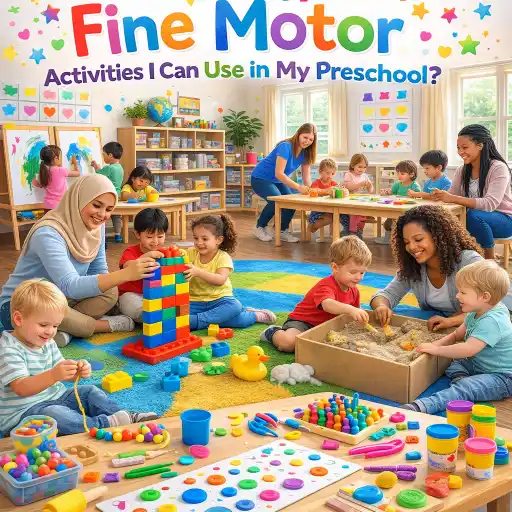 lassroom rhythm.
What are 25 simple fine motor activities I can use in preschool?
Here are 25 activities you can try right away. For each one I note the main skill it builds so you can match activities to goals. When possible I link to helpful resources for more detail, prioritizing the ChildCareEd resources useful for classrooms.
- 🔹 Threading beads on pipe cleaners — builds pincer grasp and coordination. (Use large beads for beginners.)
- 🧵 Lacing cards — strengthens bilateral hand use and finger control. See name-focused ideas at fine motor name activities.
- ✂️ Cutting play: snip strips of paper, cut playdough, or simple shape cutting — builds scissor control.
- 🧮 Clothespin counting — clip clothespins to cards with numbers to practice number sense and finger squeeze.
- 🎯 Tweezer transfer of pompoms — excellent for pincer strength and sorting games. (See tweezers idea in Time 4 Kindergarten.)
- 🔢 Hole punch strips — children punch holes along designs for precision and hand strength.
- 🧩 Puzzles (6–20 pieces) — pick, place and turn pieces to develop dexterity and problem solving.
- 🍝 Pasta stringing — use uncooked rigatoni or tube pasta to make necklaces (use supervision).
- 🖊️ Dot painting with Q-tips — target grasp and small controlled motions; inspired by simple Q-tip activities like Q-tip fine motor play.
- 🥣 Scoop-and-pour sensory bins (rice, beans, water) — build bilateral coordination and wrist control.
- 📎 Paperclip transfer — pick up and move paperclips with fingers or tongs to build precision.
- 🧷 Buttoning boards and practice clothes — dressing practice builds functional fine motor skills.
- 🧸 Doll hair brushing and dressing — fine motor for grooming and social play.
- 🧼 Spray bottle & wipe — children spray and wipe tables or windows to build hand strength and endurance (idea from Messy Little Monster).
- 🔩 Nuts-and-bolts or Lego snap tasks — twisting and snapping builds wrist rotation and strength.
- 🧁 Clothespin cupcake holders — clip 'frosting' pom poms on paper cupcakes for decoration games.
- 🍪 Playdough task cards — pinch, roll, flatten and stamp to build hand muscles; see free task box ideas at Fine Motor Task Box.
- 🎨 Stickers & peel-and-place art — peeling stickers is surprisingly hard and great practice.
- 🖼️ Push-pin art on foam boards — push larger pushpins to create pictures (supervise carefully; see push pin idea).
- 🔍 Nature color hunt with tweezers — collect small leaves or petals and sort by color in an egg carton (inspired by Growing Hands-On Kids).
- 🍽️ Mealtime practice: forks, spreading soft foods, and picking peas — everyday fine motor practice (see ideas at ChildCareEd: incorporate fine motor into daily activities).
- 🔔 Button & zipper stations — cloth boards, old jackets and toys with closures.
- 🧵 Sewing with plastic needles and burlap — simple running stitch cards for hand-eye coordination.
- 🎲 Game play pieces (moving small tokens, card shuffling) — supports precision and turn-taking.
- 🍬 Cereal bracelets — string cereal loops onto yarn for wearable math and fine motor practice.
Many of these activities can be rotated weekly or used as independent tubs. For seasonal craft examples and winter-themed fine motor ideas, see ChildCareEd winter fine motor activities.
How can I organize these activities into centers and daily routines?
Organization helps you keep activities ready, safe, and purposeful. Below are practical steps with numbered actions so you can set up centers that run smoothly.
- 🧭 Pick 3–4 rotating centers per day: 1) Fine Motor Table, 2) Sensory Bin / Scoop Table, 3) Cutting & Glue Station, 4) Playdough / Manipulative Box. Rotate groups every 12–20 minutes so each child gets practice without getting bored.
- 📦 Use labeled tubs or pencil boxes: Put 1 activity and a picture instruction card in each tub so children can do tasks independently. See the free playdough task box idea at My Happy Place.
- 🔖 Post goals and visuals: Attach a simple skill goal (e.g., "pinch, thread, count") to each center so staff know which #fine skill is targeted.
- 🧯 Safety first: Remove choking hazards for under-3s, supervise small-piece activities, and store small items in clear containers with lids. State requirements vary - check your state licensing agency about safe materials.
- 🧰 Prep 1–2 new activities per week: Keep a closet or cart with ready-to-go extras for substitutions and early finishers. Use inexpensive materials like clothespins, pompoms, and recycled containers.
- 📊 Track progress: Use a simple checklist to note who practiced which skill (pincer, scissor, in-hand manipulation). You can adapt printable trackers from occupational therapy resources such as OT Mom Learning Activities.
Tips for smooth transitions: show a 30-second demo, keep clear picture directions in each tub, and have an easy clean-up song. Task boxes and laminated cards make centers independent and low-stress for staff.
Why do these #activities and routines matter for learning?
Understanding "why it matters" helps you prioritize time for fine motor practice. Here are brief reasons and evidence-based connections for including this work in your daily plan.
- Academic readiness: Fine motor strength and coordination support handwriting, cutting, and classroom tasks. Research and professional resources link early #fine motor skills with later academic outcomes and handwriting legibility — see the research summary at Growing Hands-On Kids.
- Daily living skills: Activities such as buttoning, zipping and using utensils build independence for self-care.
- Executive function & focus: Tasks that require small, precise movements also support planning, patience, and working memory. Complex fine motor tasks correlate with executive function in early learners.
- Social & emotional growth: Cooperative fine motor tasks (racing to thread, working on a shared puzzle) teach turn-taking and problem solving.
- Engagement through play: Children learn best when activities are playful and meaningful. Embedding practice in real classroom routines (mealtime, dressing dolls, art) keeps learning natural and motivating — ideas featured on ChildCareEd.
In short: investing 10–20 minutes daily in targeted #preschool fine motor play helps children build skills they use across the day and across subjects.
How do I avoid common mistakes, adapt for diverse learners, and answer staff FAQs?
Common mistakes often lead to frustration. Here is how to avoid pitfalls and adapt activities for different ages and abilities. A short FAQ follows to answer quick staff questions.
- ❗ Mistake: Too-hard tasks cause frustration. Fix: Level up slowly. Start with large beads, large-hole lacing, and chunky crayons, then move to smaller pieces as strength and precision improve.
- ❗ Mistake: Only worksheets. Fix: Prioritize hands-on play first; use worksheets as a brief follow-up for pencil control (see printable ideas at OT Mom Learning Activities).
- ❗ Mistake: One-size-fits-all. Fix: Offer 2–3 difficulty levels per tub (easy/medium/hard) and use visual cues so children self-select appropriately.
- ✅ Adaptations: Use tong/tweezer alternatives (clothespins, large tweezers, chopsticks), provide grip helpers, seat children on cushions for better wrist angle, and offer bilateral tasks that involve both hands.
- ✅ Safety: For mixed-age rooms, separate small-piece activities for under-3s. Keep choking-risk items locked when not in supervised activity.
FAQ (quick answers for staff)
- Q: How long should a fine motor center run? A: 12–20 minutes per rotation works well for preschool attention spans.
- Q: How often should children practice? A: Aim for daily short sessions (10–20 minutes) plus incidental practice during routines.
- Q: How do I document progress? A: Use a simple checklist noting target skills practiced per child each week.
- Q: Can screen apps help? A: Limited, supervised tracing apps can supplement but do not replace hands-on practice.
- Q: Where to find ideas and training? A: ChildCareEd has articles and resources on integrating fine motor practice into routines: How to incorporate fine motor skills into daily activities.
Conclusion
Use this list of 25 activities and the organization tips to make fine motor practice a predictable, playful part of your classroom. Start small: pick 3 activities to rotate for 2 weeks, track each child’s attempts, and adjust difficulty. You’ll see children build confidence, independence, and the #motor skills that matter for school success. For seasonal ideas, themed printables, and activity downloads, explore the ChildCareEd resources linked above. You are doing important work — keep it playful and consistent!
- 45 Hour Child Growth and Development
- CDA Home Visitor Subject Area 3 Part 3 Birth to 5
- CDA Home Visitor Subject Area 2 Part 3 Birth to 5
- 45 Hour Preschool Methods and Materials
- Easy Steps to Resume and Interview Success
- Art from the Heart for Preschoolers: Open Ended Art Projects that Build Self-Esteem
- Texas Director Credential
- Pencil and Paper Activiites
- 👶 ¿Cuáles son las proporciones y grupos requeridos en Dakota del Norte? 🏫
- What are 25 easy fine motor activities I can use in my preschool?
- Actividades de Motricidad Gruesa que Desarrollan el Equilibrio, la Coordinación y la Fuerza
- Cómo Trabajar en el Cuidado Infantil en Wisconsin: Requisitos y Pasos
- Cómo Ser Maestra de Preescolar en Wisconsin
- Learning Through Creative Daycare Activities
- How Do Art Activities Support Cognitive Growth in North Dakota Preschoolers?
- How can North Dakota classrooms build toddler fine motor skills with simple activities?
- Can Toddlers Do STEM in the Sandbox at Minnesota Daycares?
- Calabazas, hojas y manzanas: actividades de otoño para preescolares
- Celebrando la amistad en el cuidado infantil durante el Día de los Mejores Amigos
- What toddler development activities can I use in my child care room?
- Crayon Activities That Support Toddler Development
- How can Michigan preschool programs build strong fine and gross motor skills?
- How can childcare providers support fine motor development with simple activities?
- Can a simple friendship bracelet craft strengthen fine motor skills in your daycare?
- What fun, practical activities help build fine and gross motor skills in early childhood classrooms?
- How can child care providers support fine motor development through simple activities?
- How Can Child Care Providers Strengthen Fine Motor Development Through Play and Daily Routines?
