 Young children feel big emotions but have small emotion tools. Mindfulness is a simple set of skills that help children notice their bodies, breathing, and feelings. For busy child care providers and directors, adding short, playful mindfulness activities can make days calmer and learning easier.
In your classroom, teaching small moments of attention helps children learn to #mindfulness, builds their #selfregulation, and supports their ability to stay #focus. You will also see kinder interactions and smoother transitions.
ChildCareEd has many classroom-friendly ideas you can try right away see Sesame Street Mindfulness Practices Buy Now $0.00
What is mindfulness for young children and why does it help?
Mindfulness means paying attention to the present moment with kindness. For young children, mindfulness should be short, playful, and sensory-based. It can be as simple as a breathing game, a listening activity, or a quiet stretch.
These small practices can help children notice their feelings and calm their bodies. When a child learns to pause and breathe, it gives the brain time to slow down and reset. That can support safety, learning, and friendships.
Key points child care providers should know
Mindfulness can build attention
Simple mindfulness activities can help children sit, listen, and stay with a task. See Finding Calm in the Classroom.
Mindfulness can support emotional skills
Children can learn words for feelings and practice calming strong emotions in healthy ways. See Little Zen Masters.
Mindfulness can help educators too
Short mindfulness practices can also help staff reduce stress and model calm behavior for children. See provider tips
How do simple activities help children calm and focus?
Short, playful activities are best. You don’t need long meditations. Use tiny moments in the day so practices become a habit. Here are easy, concrete ideas you can try and repeat:
🌬️ Balloon breathing — hands on belly, breathe in like filling a balloon; blow out slowly. (Quick, visual, and well-loved by kids.)
🌸 Smell the flower, blow the candle — inhale like smelling a flower; exhale like blowing a candle. Great at transitions.
🔷 Shape breathing — trace a square, triangle, or circle with a finger while timing breaths. See examples at Shape Breathing Exercises.
🎧 Mindful listening — close eyes and name 3 sounds. Use this to reset from noisy play (ChildCareEd describes short mindful moments in Mindfulness for Little Learners).
🧸 Breathing buddies — lay a small stuffed toy on the belly to watch it rise and fall. This ties breath to body awareness (see Little Zen Masters).
🌿 Sensory or nature walks — find 5 sights, 4 textures, 3 sounds, 2 smells, 1 taste.
Tip: Keep activities under 3 minutes for most preschoolers. Repeat them daily so children learn they can use the tools themselves.
How can I fit mindfulness into routines and classroom design?
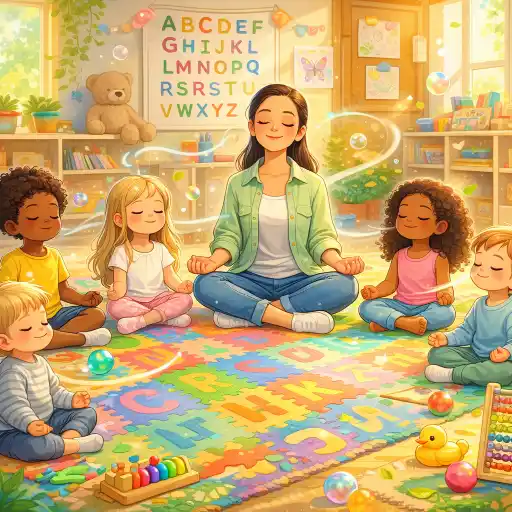
Mindfulness works best when it is part of the daily rhythm — not an extra task. Use routines and a cozy calm area so children know where to go when they need a reset. Here are practical steps to add to your program:
🪑 Create a calm-down space or peace corner. Include soft pillows, a small basket of sensory toys, visuals of breathing steps, and a few books about feelings. This should be a safe, supportive spot — not a punitive time-out place.
See classroom setup ideas on ChildCareEd and the practical peace-corner guidance at The Responsive Counselor.
🚿 Add mindfulness to routines: during handwashing notice the water, before meals take a “thank you breath,” and use a short breathing pause before transitions. ChildCareEd lists many ways to weave mindfulness into daily tasks (see Mindfulness for Little Learners).
🧑🏫 Model calm: narrate your pauses — “I’m taking a deep breath to help me reset.” Children learn from watching you (resources on provider wellbeing: Finding Calm in the Classroom).
🎭 Use play: combine mindfulness with dramatic play, yoga poses, or storytime about feelings to make skills natural and fun (see Little Zen Masters).
📚 Train staff: consider short staff sessions or courses like Getting on the Right Path to Teaching  Buy Now $24.00 or Early Emotional Wellness Buy Now $16.00 so everyone uses the same language.
How will I know it’s working and how do I avoid common mistakes?
Look for small, steady changes. Mindfulness is a skill that grows slowly with practice. Here are signs of success and common pitfalls with fixes.
Signs it’s working:
- Fewer meltdowns and faster transitions.
- Children use breathing tools on their own during frustration.
- Improved attention during circle time and tasks
Common mistakes and fixes:
- 👍 Mistake: Making mindfulness boring or long. Fix: Keep it playful and under 3 minutes for young children.
- ❌ Mistake: Forcing participation. Fix: Offer it as an invitation; children join when ready.
- ⚠️ Mistake: Using the calm spot as punishment. Fix: Teach it as a positive tool and rehearse its use with the group.
When to get extra help:
- If a child shows persistent high anxiety, aggression, or withdrawal, work with families and specialists.
Trauma-informed practices pair well with mindfulness to support children with deeper needs see Trauma-Informed Care.
FAQs
How long should a mindfulness practice be?
For most young children, 30 seconds to 3 minutes is enough. Short, frequent practice usually works best.
Can toddlers do mindfulness?
Yes. Toddlers can practice mindfulness through movement, touch, and simple sensory games like bubbles or breathing buddies.
Do we need special training?
No. Special training is not required, but short staff training can help everyone use the same approach. ChildCareEd also offers courses and resources that can support consistency.
Will my whole classroom join in?
Some children will try mindfulness right away, while others may need more time. Offer choices, keep it low-pressure, and model the skills often.
Conclusion
Small, playful mindfulness activities fit easily into daily child care routines and can make a big difference over time. Start with one short practice, teach it with warmth and enthusiasm, and repeat it often. These simple moments can help children calm their bodies, focus their attention, and get ready to learn. They can also help make your classroom a calmer, more supportive place to grow.
- Early Emotional Wellness
- Play Safe, Think Big: Literacy Through Play
- Opportunity for Growth: Emotional Development
- CDA Bridge Bundle: Family Child Care without Portfolio Review
- Healing Young Hearts: Stress and Grief
- Are They Ready for Kindergarten?
- CDA Bridge Bundle: Infant/Toddler without Portfolio Review
- CDA Bridge Bundle: Preschool without Portfolio Review
- Emergent Learning & Development
- Brighter Futures: Social Emotional Development
- Slaying Metaphorical Dragons of Fear and Self-Doubt in Childcare Educators
- Nature’s Classroom: Why Fall Is the Best Season for Sensory Learning Outdoors
- How Neurodivergent Kids Shine During the Holidays
- Kickstart a Healthy Routine for Kids That Actually Sticks Past January
- Mental Health for Tiny Elves: Supporting Kids Through Winter Blues
- Cómo Celebrar el Día Nacional del Kindergarten
- How can positive guidance help manage big feelings during indoor play in Oklahoma classrooms?
- How can I create calm classroom spaces that help children learn?
- Canciones, juegos y preguntas de círculo para niños
- How can I build a daily music routine that calms and focuses children?
- Which activities and routines best help children develop empathy, self-regulation, and resilience?
- How can child care leaders and providers use self-care, stress management, and work–life balance strategies to stay healthy and effective?
- How can preschool teachers teach mindfulness and calm-down skills so young children actually use them?
- How Can Child Care Providers Help School-Age Children Manage Stress?
- How can directors create supportive workplace cultures and practical wellness strategies for educators?
- How Can We Teach Patience in a World of Instant Gratification?
- What Should Every Child Care Provider Know About Decision Fatigue?
- How Can Child Care Providers Manage Stress During Challenging Behaviors?
- How Can Childcare Providers Practice Mindfulness During the Childcare Day?
- How Can Fall Classroom Activities Teach Positive Behavior?
