Winter can bring shorter days, more indoor time, and a classroom that feels a little worn by the season—but a welcoming refresh does not require a major budget. With intentional layout choices and a few low-cost materials, you can support children’s comfort, independence, and curiosity; Classroom Setup for Child Care  Buy Now $24.00 offers practical professional learning on arranging inclusive spaces that invite young children to learn.
Why does a winter makeover matter beyond appearance?
A classroom is not simply a backdrop for activities. Its layout, materials, and atmosphere influence how children move, connect, choose, and engage. In winter, when weather may limit outdoor time, thoughtfully planned indoor spaces can help balance energetic play with quieter opportunities to read, build, create, and reset. A room can feel festive without being crowded or overstimulating.
Think of the environment as one of your teaching tools. Clear pathways and accessible materials encourage children to make choices and participate more independently. Quiet and active zones help the group use the room in different ways, while predictable organization supports smoother transitions. These choices also help educators supervise and spend more time observing and interacting rather than continually redirecting.
A successful makeover does not have to look like a catalog. It should reflect the children and families who use the room, the curriculum, and the practical needs of your team. Begin with what you already have, notice how children use the space, and choose changes that solve a real problem. That focus keeps spending purposeful and makes the results more meaningful.
How can you plan a low-cost refresh before buying anything?
Start with a brief classroom audit. At different points in the day, notice where children gather, where traffic jams occur, which materials are ignored, and whether some areas feel too loud or visually busy. Ask colleagues and children what feels comfortable or frustrating. A few observations can reveal that the most useful change is moving a shelf—not purchasing a new one.
Next, set one or two priorities. For example, you might want to make books more inviting, create a calm retreat, or improve access to art materials. Define a modest spending limit and make a list of materials already in storage, reusable items, and possible donations. Reuse sturdy containers, fabric, baskets, and child-created art when appropriate.
- Shop your program’s existing supplies before shopping elsewhere.
- Ask families or community partners for clean, safe donations, with no pressure to contribute.
- Look for washable, durable items that can serve more than one purpose.
- ✨ Refresh with children’s own seasonal drawings, paper snowflakes, or nature observations rather than buying a full themed set.
For a broader design perspective, ChildCareEd’s article on designing an early childhood classroom space emphasizes function, defined activity areas, and clear movement paths. Use those principles to guide purchases—and remember that state requirements vary - check your state licensing agency before changing equipment, furnishings, or room arrangements.
Which cozy zones support learning during winter?
Rather than decorating every surface, use a few purposeful zones to make the room feel warm and usable. A reading nook can include a small basket of seasonal books, a washable cushion, and a rug or fabric boundary. A few well-chosen books displayed cover-forward may invite more browsing than a large, tightly packed shelf. Rotate selections as children’s interests shift.
A calm space can be simple: a soft mat, a feelings visual, and a small number of familiar books or regulation tools. Present it as a place children may choose when they need quiet—not as a punishment or a place to send children away. Keep it within sight and make sure it remains accessible to children with different mobility, sensory, and communication needs.
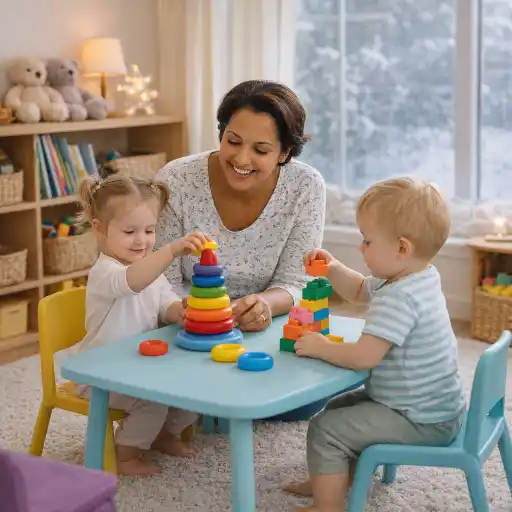
Keep active learning available too. A winter discovery area might use paper snowflakes for sorting, blocks for building shelters, or play materials for pretend hot-cocoa service. Reuse classroom materials and connect invitations to children’s questions. Keep routes between zones clear, place frequently used items at child height, and reduce visual clutter so the room stays calm rather than crowded.
- Reading: books, a comfortable defined spot, and a simple book-return basket.
- Making: paper scraps, crayons, glue sticks, and open-ended seasonal prompts.
- Exploring: safe, age-appropriate objects for comparing texture, shape, or temperature.
- Regulating: a quiet option, predictable cues, and tools matched to individual plans.
Head Start’s guidance on designing environments highlights accessible, motivating spaces that support exploration, independence, and participation. Those goals matter more than a particular decorating style.
How do you make inexpensive materials both enriching and safe?
Budget-friendly materials can be rich in learning when they are open-ended, organized, and selected with care. Cardboard tubes, clean boxes, fabric scraps, and large building pieces can support dramatic play, construction, storytelling, and problem solving. Reused baskets or containers can make materials easier to see and return. Picture labels can help children find supplies and participate in cleanup.
Before reusing or accepting any item, inspect it for sharp edges, loose parts, choking hazards, damage, and cleaning needs. Avoid materials with unknown origins or those that cannot be safely sanitized. Keep small pieces away from infants and toddlers, supervise sensory experiences closely, and follow each child’s allergy, health, and individual support plans. Do not use candles, hot beverages, or electrical decorations within children’s reach; confirm program policies for lights and other equipment.
Make the setup inclusive as well as attractive. Ensure pathways stay open, materials can be reached by the children who use them, and options are available for children who prefer to observe before touching. Visual cues and predictable storage can support participation, especially during busy indoor days. If you want to build deeper skills in intentional room arrangement, the Classroom Arrangement: The Second Teacher Buy Now $16.00 course explores how classroom design can shape children’s learning and everyday experiences.
How can you keep the makeover practical, inclusive, and flexible?
A winter refresh works best when it can evolve. Observe whether children actually use the new areas and whether a change improves participation, comfort, or traffic flow. Ask children simple questions such as “Where do you like to look at books?” or “What would help this area feel calm?” Invite families to share ideas about meaningful books, languages, and materials that reflect their child, without assuming every family celebrates the same holidays.
Common pitfalls are easy to avoid: adding too many decorations, filling every shelf, placing a cozy nook where supervision is difficult, or choosing a seasonal theme that does not connect to children’s interests. Keep displays intentional and let children’s work carry much of the decoration. A few authentic, changing details can make the space feel lively without creating excess visual stimulation.
Revisit the room weekly or whenever routines shift. Rotate a small selection of materials rather than replacing everything, and remove items that no longer serve a purpose. For indoor days, add movement opportunities alongside calm choices; children need both. ChildCareEd’s Engaging Indoor Activities for Inclement Weather Buy Now $24.00 course offers additional ideas for planning varied indoor experiences when weather affects outdoor play.
What are the key takeaways for a budget-friendly winter classroom?
A cozy winter classroom is built through thoughtful decisions, not expensive décor. Begin by observing how children use the room, then prioritize the changes that will make it more functional, welcoming, and learning-rich. Reuse safe materials, define a few flexible zones, maintain clear paths, and make books and play materials inviting and accessible.
Keep safety, inclusion, and children’s voices at the center. Choose materials that can be cleaned and maintained, adapt the space to individual needs, and check whether each change is working in practice. A small refresh—a rearranged shelf, a quieter reading corner, or child-created winter artwork—can make a meaningful difference when it supports how children learn and feel. The goal is not a picture-perfect room; it is a space where children can feel comfortable, belong, and explore throughout the winter season.
For more structured professional learning, explore Spaces that Support Discovery Buy Now $24.00, which focuses on using classroom space to facilitate learning and exploration.
- CDA Preschool Credential with Portfolio Review
- Classroom Setup for Child Care
- 45 Hour Preschool Methods and Materials
- Birth to Five CDA Credential with Portfolio Review
- CDA Bridge Bundle: Preschool
- CDA Bridge Bundle: Family Child Care
- CDA Bridge Bundle: Infant/Toddler
- CDA Family Child Care Credential with Portfolio Review
- CDA Infant/Toddler Credential with Portfolio Review
- Texas Director Credential
- Bye Bye Winter: The Role of Outdoor Play in Early Childhood Development
- Strategies for Finding Budget-Friendly Deals, Discounts, and Promotions on Back to School Supplies
- DIY Snow Globes: The Fine Motor Craft That’ll Keep Kids (and Adults) Busy for Hours
- Mental Health for Tiny Elves: Supporting Kids Through Winter Blues
- Encouraging better nutrition for growing kids during the colder months
- Winter Classroom Activities for Child Care Providers
- Proporciones de Cuidado Infantil y Tamaños de Grupo por Edad en Virginia (Guía Rápida para Centros y Hogares)
- How can Washington forest and nature center field trips work well on a rainy day?
- How can we use nature-based learning through Minnesota's outdoor seasons?
- How can New York early childhood programs use garden-based learning?
- How Do Minnesota Winters Affect Young Children's Mental Health?
- Canciones, juegos y preguntas de círculo para niños
- How can seasonal activities (spring, summer, fall, winter) combine fun with clear educational goals?
- How can childcare programs create high-quality outdoor classrooms and nature-based care?
- How Can Teachers Build Learning Centers on a Tight Budget?
- How Can Child Care Providers Keep Infants Safe During Winter Without Overheating?
- How Can Cozy Animal Bedtime Play Teach Preschoolers Sequencing in Fall?
- How Can Child Care Providers Keep Toddlers and Preschoolers Active Indoors During Winter?
- How Can You Create a Cozy, Learning-Rich Winter Classroom on a Budget?
- How Can Winter Storytime Questions Build Preschool Vocabulary and Comprehension?
