Teamwork and cooperation make classrooms calmer and learning richer. For child care providers and directors, small choices every day help children practice working together. Use clear routines, short games, and kind language so children and staff learn the same skills. Our short words to remember: #teamwork #cooperation #children #teachers #play.
Why does teamwork matter for children and the program?
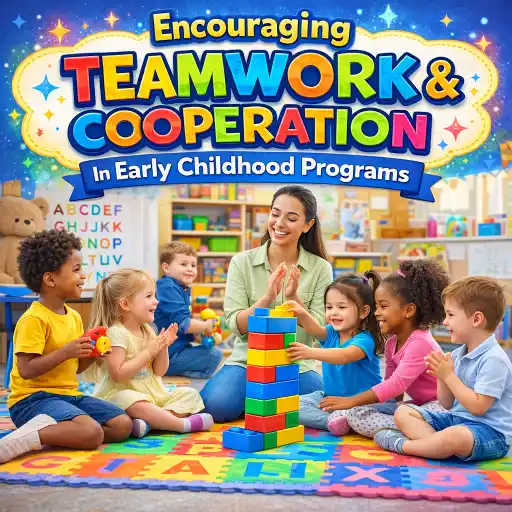
1. Teamwork helps children feel safe and included. When kids belong, they try new things and calm down faster.
2. Teamwork builds social skills like sharing, listening, and taking turns. These skills help children make friends and stay focused during learning time.
3. Strong teamwork among staff creates steady routines. That makes families trust your program and helps staff feel supported.
Why it matters: When adults teach cooperation, children learn to solve problems together instead of arguing. Teaching cooperation now saves time later because kids learn the words and moves that help them fix problems themselves. For more ideas on shifting from commands to choice, see Encouraging Cooperation Instead of Compliance.
Quick evidence-based tips:
- 😊 Give simple choices: let a child pick a helper job or choose between two tasks.
- 🔹 Teach one short script to use when joining play ("Can I play with you?").
- 🔸 Notice and name cooperation quickly: "You passed the blocks—thank you for helping!"
How can daily routines teach cooperation step by step?
2. Use short, repeatable roles. Make 3–5 simple jobs (water helper, tray carrier, line leader) and rotate them daily. Children learn responsibility and feel needed.
3. Use scripts and visuals. Teach a 2-line script ("Your turn in two minutes" and "Can I help?") and show a picture or timer so children can remember.
4. Coach with short prompts. Stand near a small group and model the line to follow. Praise effort quickly and specifically: "You waited and then asked—great job!"
5. Embed practice often. Schedule a 5–15 minute guided-play block each day where staff coach cooperation. For guided-play ideas, see Building Cooperative & Problem Solving Skills and sample team activities at Team-Building Activities for Daycare.
Note: state requirements vary - check your state licensing agency.
What simple activities teach cooperation you can try tomorrow?
- 😊 Circle Pass: Sit in a circle and pass a soft ball while each child names one kind thing they did today. Great for turn-taking.
- 🔸 Partner Obstacle: Pairs guide each other through a simple course. One child leads, one child follows and helps.
- 🔹 Team Build Block Challenge: Small groups build one big structure with roles: architect, carrier, finisher. Rotate roles.
- 🔔 Read-and-Act: Pause a story and ask, "What could friends do?" Then let kids act out the solution.
- 🎨 Group Mural: Each child adds one piece to a big paper. Talk about choices and thank helpers.
For classroom-ready games and props, see indoor creative play and cooperative obstacle ideas at How can indoor creative play encourage teamwork.
How do we support staff so cooperation becomes the classroom culture?
1. Create clear roles and short scripts for staff: use posted one-sentence role cards and shared phrases so every adult uses the same words across rooms. See leadership and teamwork tips at How can we build effective teamwork.
2. Offer short coaching: pick one goal (better transitions), give one quick suggestion to a teacher, and follow up. Coaching that is kind and practical helps staff try new ideas.
3. Train in small chunks: short trainings plus on-the-floor coaching stick better than one long session. Use group admin tools or team courses like Team: Together Everyone Achieves More Buy Now $25.00 to build skills.
4. Make family partnerships part of the plan: share one home script or short photo so families can practice cooperation with their child. Strong family–school messages help children generalize skills.
Remember: small changes in adult routine create big changes for children. State requirements vary - check your state licensing agency.
Common mistakes and how to avoid them
- 🚫 Too many rules at once — Fix: Teach 1 rule or script at a time and practice it daily.
- ⚠️ Forcing sharing — Fix: Teach offers and trade language instead of taking toys away. See social scripts in How can preschoolers learn to share.
- 🔁 One-time training only — Fix: Combine short trainings with follow-up coaching and weekly check-ins.
- ❌ Leaving children out — Fix: Adapt roles and give buddy supports so every child can join. For inclusion ideas see Indoor creative play and CSEFEL resources like Promoting Children's Success.
Conclusion — Quick checklist and FAQs
Quick checklist to start this week:
- 😊 Pick 1 teamwork skill for the week (sharing, waiting, helping).
- 🔹 Plan one 5–15 minute guided-play time daily to practice it.
- 🔸 Use short scripts and a timer or visual to teach turns.
- 🔔 Coach staff with one clear next step and celebrate small wins.
FAQ
- Q: How long before I see change? A: Small gains in weeks with daily practice; bigger change over months.
- Q: What if a child won’t join? A: Offer a helper job or observer role so the child feels safe and included.
- Q: How long should team activities be? A: 5–15 minutes is best for most groups.
- Q: Where can I learn more? A: ChildCareEd articles and short courses linked above are a great place to start.
You are already doing the most important part: noticing and choosing to teach cooperation. Small, steady steps turn routines into learning moments. For more ideas and lesson packs, visit ChildCareEd links above and explore CSEFEL briefs for evidence-based routines. State requirements vary - check your state licensing agency.
1. Turn routines into practice times. Snack, clean-up, and line-up are perfect moments to teach cooperation without needing a special lesson.Pick 1 activity and repeat it a few days. Short practice helps skills grow.- 45 Hour Child Growth and Development
- 45 Hour Preschool Methods and Materials
- TEAM: Together Everyone Achieves More
- 45 Hour School Age Methods and Materials
- Connections That Count: Building Relationships in Child Care
- Texas Director Credential
- Every Moment Matters: Schedules and Transitions
- Families, Communities, and Classrooms: Working Together for Children
- Tiny Hands, Big Dreams: Fostering Creativity in Preschoolers
- CDA Certification en Español: Recursos y Consejos para Educadores Bilingües
- Can simple indoor movement games teach listening and cooperation to preschoolers in Oklahoma?
- How can rainy day indoor activities help preschoolers learn kindness and cooperation in Georgia?
- How can indoor creative play encourage teamwork for preschoolers in California?
- How can we encourage teamwork and cooperation in early childhood programs?
- Define Cooperative Play: Examples for Preschool and Child Care
- How can we use team activities to help preschoolers learn and cooperate?
- How can we explore sand, space, and science with young children in preschool settings?
- How can I integrate the World Cup into my daycare program in an inclusive, safe, and developmentally appropriate way?
- Can sports-themed play teach cooperation and build team spirit in young children?
- How can we host a Daycare Mini Olympics that builds movement and teamwork?
- Indoor and Outdoor Activities for School-Age Programs
- School-Age Program Ideas: Games, Projects, and Group Activities
- Daycare Team-Building Activities That Encourage Cooperation
- How Can Cleanup Time Become a Lesson in Sorting, Counting, and Teamwork?
