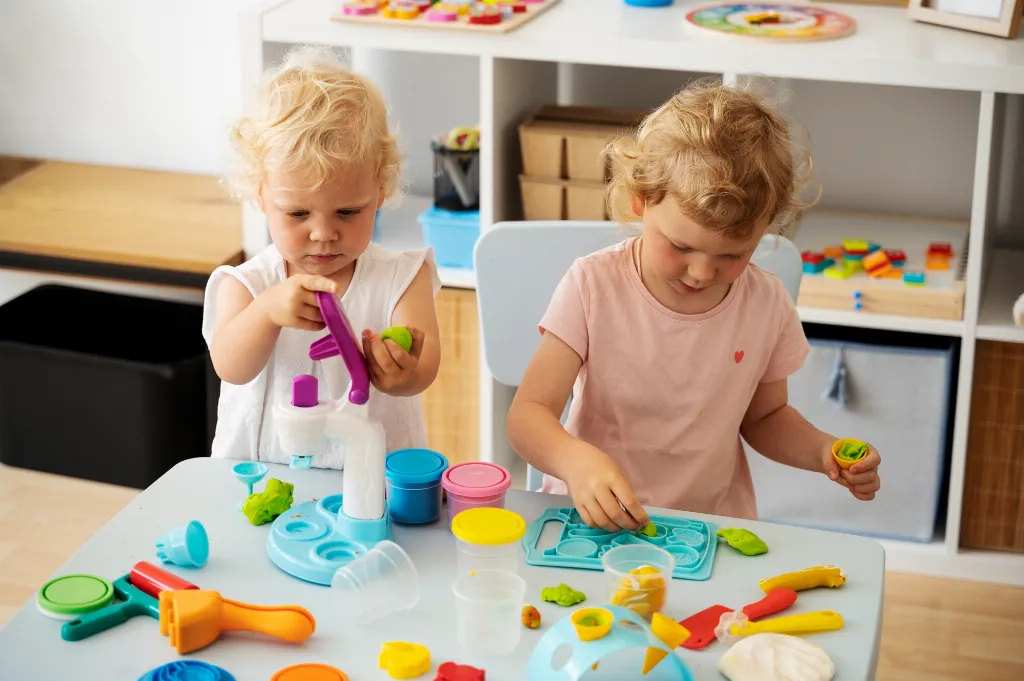
 Cooperative play happens when children play together with a shared plan or goal. This article helps child care providers and directors understand what cooperative play looks like, why it matters, and how to use easy classroom examples. You can use these ideas tomorrow during free play or planned lessons. For more reading on stages of play, see What's the Difference Between Parallel Play and Cooperative Play?. Remember: state requirements vary - check your state licensing agency.
We focus on simple steps teachers can try. This article highlights ways to support #cooperative #play in your #preschool so children build strong #socialskills and staff like #teachers see steady gains.
1) What is cooperative play?
Cooperative play means children:
- Work toward the same goal (for example, build one big block house).
- Take roles or jobs (one is the builder, one is the helper).
- Follow simple rules and share ideas.
Cooperative play is different from parallel play, where children play side-by-side but do not join goals. For a clear definition and stage differences, see ChildCareEd's guide and the research on pretend play and thinking skills in the ECRP article. Key features to watch for:
- Shared plan and shared materials
- Talk and negotiation (even short phrases)
- Problem solving together
2) Why does cooperative play matter?
Why it matters: cooperative play teaches real classroom-ready skills. Short, guided play helps children grow in 3 big areas:
- Language & communication: They name roles, ask for turns, and tell stories. See how play supports brain growth in ChildCareEd's brain development post.
- Self-control & executive skills: Waiting, remembering rules, and switching roles build focus and flexible thinking.
- Social & emotional learning: Sharing, taking perspective, and repairing small conflicts build friendships and empathy. For classroom routines that support peer interaction, review the CSEFEL briefs like Using Classroom Activities & Routines.
Research shows pretend and cooperative play link to later thinking and social skills (see the role of pretend play at ECRP). For program-level benefits—calmer rooms, better transitions—see team-building ideas at ChildCareEd Team-Building.
3) How can providers encourage cooperative play? Practical examples and steps
Here are classroom-ready ideas you can try. Use short coaching blocks (5–15 minutes) and repeat them each day.
- 😊 Guided dramatic play:
- Set a simple scene (store, vet, post office) with a few props.
- Give 2–4 role cards (cashier, customer) so roles are clear. See guided play ideas at ChildCareEd Guided Play.
- 👀 Team build challenges:
- Small groups build one structure (roles: architect, carrier, finisher). ChildCareEd's team-building post has many examples: Team-Building Activities.
- 🧩 Puppet problem-solving:
- Use puppets to act out a social problem. Ask children how to help. This teaches language for repairing conflicts (Building Cooperative Skills). For ready classroom activities and short collaborative tasks that build both cooperative and problem-solving skills, see Building Cooperative & Problem Solving Skills.
- 🎲 Cooperative games and music:
- Try group songs, circle passes, or cooperative board tasks. See indoor movement and music ideas at ChildCareEd Movement Games.
- 🔁 Use daily jobs and routines:
- Embed peer tasks (snack helper, prop passer). CSEFEL shows how routines create many teachable peer interactions: Using Classroom Activities & Routines.
Simple teaching moves that work every day:
- Model scripts: "Can I help?" "Your turn in two."
- Praise attempts: "You asked and waited—great!"
- Offer a helper role to children who hesitate to join.
For ready lessons, props lists, and staff coaching, check ChildCareEd's activity packs and short courses in classroom setup and team building (Health & Safety and Training Resources Buy Now $0.00).
4) How do we include every child and avoid common mistakes?
Inclusion and careful planning make cooperative play work for all children. Follow these steps and fixes:
- 🧩 Adapt roles and materials: offer easier or harder tasks so everyone can help (bigger handles, fewer small parts).
- 😊 Use visual supports: role cards, picture scripts, timers, or a job chart help children who need clear cues. CSEFEL gives many practical strategies in its briefs: Teaching Social Skills and Positive Behavior Support.
- 👥 Pair intentionally: match a steady peer with a child who needs support. Rotate buddies so friendships grow.
- 🔁 Keep turns short and give many chances to practice (1–3 minutes per turn for preschoolers).
Common mistakes and quick fixes:
- 🚫 Mistake: Too many rules at once. Fix: Teach 1–2 steps and practice.
- 🚫 Mistake: Pushing group play too fast. Fix: Start with side-by-side and paired tasks.
- 🚫 Mistake: Not coaching staff. Fix: Use short scripts, model on the floor, and do quick reflections each week.
FAQ
- Q: When does cooperative play usually start? A: Many children show basic cooperative play between ages 3–5, but timelines vary. See ChildCareEd.
- Q: Is parallel play bad? A: No. It is a normal step toward cooperation.
- Q: What if a child won't join? A: Offer a small helper job or pair them with a patient peer.
- Q: Should we remove toys that cause fights? A: Try turn-taking tools (timers, job cards) before removing materials.
Summary
- Cooperative play = shared goals, roles, and rules. Watch for talk and teamwork.
- It builds language, self-control, and friendships—important for school success. See how play supports brain development.
- Try short guided blocks (5–15 minutes), clear role cards, and simple scripts daily.
- Adapt tasks, use visual supports, and pair children to include everyone. For routines that build peer interaction, see the CSEFEL briefs (Using Classroom Activities & Routines).
You are already doing the work of teaching teamwork when you plan jobs, model words, and praise small tries. Small, steady steps help children move from side-by-side play into joyful, shared stories and teamwork. For more tools and staff training, explore ChildCareEd's courses and articles linked above. State requirements vary - check your state licensing agency.
- CDA Preschool Credential
- The Best Promotion is Play
- Teacher & Me Playtime
- CDA Family Child Care Credential
- TEAM: Together Everyone Achieves More
- CDA Family Child Care Credential with Portfolio Review
- 24 Hour Texas Pre-Service
- The Best Promotion is Play
- 45-Hour Infant and Toddler Curriculum
- Texas Director Credential
- 👧 ¿Cómo iniciar y abrir una guardería en Texas? Lo que necesitas saber
- Cómo Abrir Una guardería Para Niños Con Necesidades Especiales?
- Cómo usar tu certificación de 90 horas en Maryland para completar tu CDA
- Cómo ser director de cuidado infantil en Maryland
- ¿Cuáles son las mejores actividades del Día de la Tierra para niños en casa o en el aula?
- Lista para Abrir una Guardería en Casa en Virginia: Cómo Empezar
- Por Qué la Supervisión Activa Es Clave para la Seguridad en el Cuidado Infantil
- Consejos de Supervisión Activa para Salones de Preescolar y el Juego al Aire Libre
- Cómo Ser Maestra de Preescolar en Maryland
- How can indoor creative play encourage teamwork for preschoolers in California?
- Canciones, juegos y preguntas de círculo para niños
- Define Cooperative Play: Examples for Preschool and Child Care
- Cómo Planificar Actividades al Aire Libre Seguras Durante el Calor y la Mala Calidad del Aire
- How Can We Teach the Forgotten Skill of Being a Good Friend to Young Children?
- How Can Child Care Providers Help Children Build Healthy Friendship Skills?
- How Can Child Care Providers Teach Sharing Without Forcing It?
- How Can You Support an Autistic Child in a Preschool Classroom?
- How Can Child Care Providers Help a Shy Child Feel Comfortable in Preschool?
- ¿Todos los niños deben participar en el tiempo de círculo?
- How Can Providers Plan Meaningful After-School Choices for Seven- and Eight-Year-Olds?
