Introduction
Good teamwork helps programs run smoothly and helps #children learn and feel safe. When adults work together, families trust the program more and teachers feel supported. This article gives clear, practical steps for directors and providers to build a strong #team that helps children every day.
Why it matters:
1. Strong teamwork makes routines predictable for children.
2. Teams that share the same plan reduce teacher #stress and turnover.
3. Families notice steady, calm care and feel more confident in your program.
For ideas on consistent responses and shared language, see ChildCareEd's post about staff teamwork and consistent responses across rooms: Staff teamwork: consistent responses across rooms.
Note: state requirements vary - check your state licensing agency.
How do we create clear roles and daily routines so everyone stays on the same page?
Clear roles and routines make the day easier for your #staff and children. Follow these steps:
- Define roles (who does what):
- 1. Lead teacher: plans curriculum and supports assistants.
- 2. Assistant: supervises play areas and joins small groups.
- 3. Floater/backup: covers breaks and helps outside.
- Turn routines into short scripts. Use the same words in every room so children learn faster. ChildCareEd gives sample shared phrases in their staff teamwork article: consistent responses across rooms.
- Use short handoffs and check-ins:
- 🟢 Daily 3-minute handoff: 1 win, 1 need, 1 change.
- 🟡 Weekly 15-minute check-in: celebrate a win, name a challenge, set one next step.
- Post the 3–5 program expectations in every room (example: Be safe, Be kind, Care for our space).
Why this works:
1. Children learn faster when adults use #consistent language.
2. New staff can follow the plan without guessing.
3. Leaders can spot breaks in routine quickly and coach where needed. For tools on team structure and leadership, review AHRQ’s TeamSTEPPS section on team leadership: Team leadership concepts and tools.
How can coaching, mentoring, and training keep staff learning and working as one team?
Ongoing coaching helps staff grow and keeps practices aligned. Try these steps:
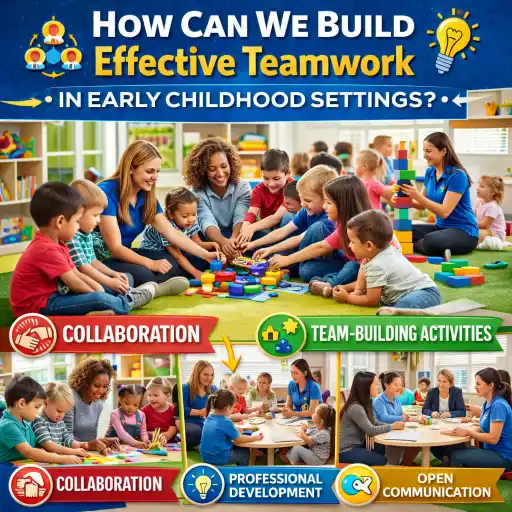
- Pick clear learning goals before you train (example: better transitions, stronger interactions).
- Offer short, regular training and pair it with coaching in classrooms. ChildCareEd explains how online training can build a culture of continuous improvement: Online training for childcare teams.
- Use a group admin to assign and track courses so everyone gets the same content. See ChildCareEd’s group admin idea: group admin account.
- Train coaches and mentors. Courses like Effective Coaching & Mentoring in ECE
 Buy Now $24.00 and Introduction to Coaching & Mentoring Buy Now $24.00 teach skills to support staff on the floor.
 - Make coaching kind and practical: observe, give one clear next step, and follow up.
Quick tips:
- 🔁 Keep training short and repeat it.
- ⭐ Celebrate completions (shout-outs, small certificates).
- 📈 Tie training to real goals (fewer disruptions, smoother transitions).
When leaders and coaches model learning, staff feel safe to try new ideas. For research that supports coaching and instructional improvement, read about coaching paired with curriculum work in early childhood: Coaching with CLASS and the Project Approach.
How do we build consistent responses and strong family partnerships that help every child?
Consistency and strong family work make children feel secure. Try these steps to partner with families and respond the same way across rooms:
- Choose 3–5 program expectations and show what they look like at each age level.
- Use shared scripts for big moments (hitting, biting, big feelings). ChildCareEd offers a simple 5-step incident script: consistent responses across rooms.
- Share the same documentation and family messages. For examples of family partnership steps, see ChildCareEd’s family engagement resources: Partnering with Families in Early Childhood Education and Building Strong Partnerships with Families.
- Invite families in: volunteer times, take-home learning ideas, and short family nights.
Why include families?
1. Families are children’s first teachers. When families and staff work together, learning continues at home.
2. Partnerships help programs understand each child’s routines and strengths.
3. Consistent messages from both home and school lower confusing signals for children.
For guidance on teaching social-emotional skills and using calm responses, see CSEFEL’s brief on behavior supports: CSEFEL What Works Brief. Remember: state requirements vary - check your state licensing agency.
How can leaders support teamwork, avoid common mistakes, and keep staff long-term?
Leaders set the tone. Use these practical, respectful steps to support your #staff and reduce turnover:
- Model calm, respectful language and coaching not blaming. See ChildCareEd’s tips on supporting staff and boosting retention: Keep Them Happy, Keep Them Here.
- Create simple accountability tools: one-page behavior guides, shared notes, and posted expectations.
- Hold regular, short routines for connection: daily handoffs, weekly wins check-ins, and monthly training time.
- Promote growth: offer pathways to coach, lead, or take courses like Theory of Mentoring and Coaching Buy Now $16.00.
Common mistakes and how to avoid them:
- ❌ Mistake: Vague roles. ✅ Fix: Write one-sentence role cards and post them.
- ❌ Mistake: One-time training only. ✅ Fix: Mix short trainings + coaching on the floor.
- ❌ Mistake: Public correction of staff. ✅ Fix: Coach in private and use supportive language.
Research shows leadership training helps directors create better work environments and stronger programs. For a study on leadership development for directors, see the McCormick Center evaluation: Building the Leadership Capacity of Early Childhood Directors.
Conclusion
Effective teamwork grows from clear roles, shared routines, steady coaching, and real partnerships with families. Start small: pick 3 program expectations, set a daily 3-minute handoff, and schedule short coaching visits. Over time, these simple actions build trust, reduce stress, and help your #team give children the steady care they need.
Extra resources and next steps:
- Read ChildCareEd articles on teamwork and family partnerships: Staff teamwork, Team Building, and Online training for childcare teams.
- Consider coaching courses: Effective Coaching & Mentoring Buy Now $24.00.
FAQ
- Q: How long should a daily handoff take?
A: 2–5 minutes. Focus on 1 win, 1 need, 1 change. - Q: Who should coach staff?
A: A trained mentor or lead teacher. Use brief, kind coaching on the floor. - Q: How do we keep messages consistent across rooms?
A: Use short shared phrases and post expectations in every classroom. See ChildCareEd for sample scripts: consistent responses. - Q: What if staff resist new routines?
A: Listen, ask for input, try a pilot for 2 weeks, and celebrate early wins. - Q: Are there ready trainings for teams?
A: Yes. ChildCareEd offers courses like Collaboration for the Win Buy Now $16.00 and mentor/coaching courses.
- 45 Hour Child Growth and Development
- CDA Home Visitor Subject Area 3 Part 3 Birth to 5
- Professional Presence in Early Childhood
- Bienvenido! Welcoming All Families
- TEAM: Together Everyone Achieves More
- Workplace Essentials: Communicate, Collaborate, Succeed
- Texas Director Credential
- Equity-Centered Communication in ECE
- Families, Communities, and Classrooms: Working Together for Children
- The Power of International Sign Language in Early Childhood Education
- Supporting Social Relationships Among Young Children
- How Can Childcare Educators Thrive in the Big Apple?
- The Right Time to Get Your Child Development Associate Certification is NOW!
- CDA Certification en Español: Recursos y Consejos para Educadores Bilingües
- 👶 ¿Cuáles son las proporciones y grupos requeridos en Dakota del Norte? 🏫
- How can we build effective teamwork in early childhood settings?
- Curso de Comunicación de 9 Horas de Maryland
- Cómo Trabajar en el Cuidado Infantil en Carolina del Norte: Requisitos y Pasos
- How can indoor creative play encourage teamwork for preschoolers in California?
- How can Florida early learning programs include every child with exceptionalities?
- Team-Building Activities for Daycare: Helping Children Learn Together
- How Can North Dakota Caregivers Help Toddlers with Speech Delays?
- Cómo simplificar la capacitación para sus empleados de daycare
- How can my child care program keep children safe from food allergies?
- How Do You Build Strong Teaching Teams?
- What Is the Difference Between Early Childhood Education and Child Development?
- Want to Become a Daycare Assistant? Start With These Essential Training Skills
