The World Cup offers a timely and engaging opportunity to connect children’s natural curiosity with geography, movement, language, culture, and social-emotional learning. This guide helps child care providers and directors introduce World Cup-inspired activities in ways that are brief, respectful, inclusive, safe, and developmentally appropriate, while ensuring every child and family feels #seen, valued, and supported. Educators can strengthen this work through ChildCareEd’s self-paced online course Strength in Differences: Cultural Diversity  Buy Now $24.00, which explores cultural awareness, respectful representation, and inclusive learning environments. The self-paced online course Wellness in Action: Teaching Healthy Habits to Children Buy Now $55.00 can also help providers plan age-appropriate movement experiences that encourage active play and healthy participation. Together, these approaches can help programs use World Cup excitement to promote belonging, teamwork, curiosity, and learning without placing too much emphasis on competition. State requirements vary, so always check with your state licensing agency.
Why it matters
Short, playful routines are high-yield: circle-time games, small-group practice, and sensory centers all support language, self-regulation, and cooperation. For circle-time examples tied to sports themes, review ChildCareEd: World Cup on the DC Circle Time Rug. #WorldCup #preschoolers
How can I introduce the World Cup without stereotyping or pressuring families?
- 📌 Start small—one or two countries per week and a simple paper passport. See Passport to Fun.
- 📷 Use photos of everyday life (homes, markets, playgrounds) instead of caricatures or dress-up.
- 🗣️ Add 2–4 greetings to the classroom wall in home languages when families volunteer—keep it low-stakes.
- 🔁 Rotate options so children choose passive or active ways to participate (sticker in passport, drawing, or sharing a family photo).
What short World Cup activities work on the rug and in learning centers?
- ⚽️ 🎯 Rug routine (5–12 minutes):
- 1) Welcome + one greeting from a featured country.
- 2) Two-pass cooperative game using a soft ball and simple scripts: “My turn—your turn.”
- 3) One-sentence reflection: “What was kind we saw today?”
- 🎨 Center sample (art & literacy):
- 1) Flag-pattern collage (focus on colors & patterns, not exact flags). See Passport to Fun.
- 2) Postcard writing with sentence starters: “Hello from ____.”
- 🌊 Sensory & movement: a market or stadium sensory bin and a gross-motor “stadium walk” course. For sensory ideas, view general sensory activity inspiration (PlayLearn Sensory).
- 🔠 Multimodal literacy: read a short picture book about family life in another place and highlight similarities and differences. ChildCareEd lists usable story ideas in its multicultural packs (Bring the World Cup).
How can the World Cup help build teamwork, turn‑taking, and emotion regulation?
Sports themes naturally invite the practice of cooperation and emotional skills. Use short, repeatable routines and consistent language: Connect → Calm → Coach. The DC rug piece gives scripts and a six-step mini-lesson you can adapt to your group (DC Circle Time Rug).
- 🔹 Gather & name the goal: “Today our goal is to pass kindly and say ‘nice pass.’”
- 🔸 Demo (2 minutes) with teacher and helper using scripts: “My turn. Your turn.”
- 🔹 Play short rounds (3–5 passes) with a visual cue (timer or sandglass).
- 🔸 Support big feelings: connect at child level, use a breathing tool or turtle technique, then coach a tiny repair script. ChildCareEd points to regulation tools in its SEL posts (Emotions & Calm-Down).
- 🔹 Provide a calm spot near the rug stocked with 2–4 tools (soft toy, breathing visual, sensory bottle).
- 🔸 Praise the exact behavior: “You waited and passed—great sharing!”
How do I involve families and support Dual Language Learners respectfully?
Family involvement is high-impact when it’s optional, simple, and honors privacy. Invite families to share a greeting, a photo, or a song title; avoid asking families to dress children or represent cultures publicly. ChildCareEd offers practical family-invite wording and low-pressure options in its multicultural posts (Bring the World Cup and Fun Multicultural Activities).
- 📩 Send a one-paragraph invite: what you’ll do and three easy ways to help—photo, greeting word, or short audio.
- 👋 Display a small greeting wall with 3–5 words in volunteered home languages. Practice one each morning.
- 🎧 Provide translations or pictorial options for families who prefer not to write in English.
- 🧾 Document family contributions in a classroom book instead of spotlighting a single child as “the representative.”
What safety, staffing, and emergency logistics should directors plan for during big World Cup events?
In cities hosting major events, routines and transit change. Directors should update drop-off plans, refresh emergency preparedness, and communicate clearly with families and staff. ChildCareEd’s event and emergency resources guide these steps (Managing Drop-Off & Safety), and its emergency training courses are practical for staff development (Emergency Preparedness Training).
- 🗺️ Map & communicate: post a temporary drop-off map + send an email and a morning text reminder.
- 👥 Staffing plan: cross-train door staff and plan paid backups for transit-disrupted days.
- 🧰 Emergency check: refresh your written plan, supplies, and practice a short drill. ChildCareEd offers templates and courses for written plans (Emergency Preparedness).
- 📣 Clear family messages: use WIN format—What happened, Impact, Next step—and post a short FAQ.
Remember: state requirements vary - check your state licensing agency before changing hours or staffing models.
Conclusion — Quick checklist and Frequently Asked Questions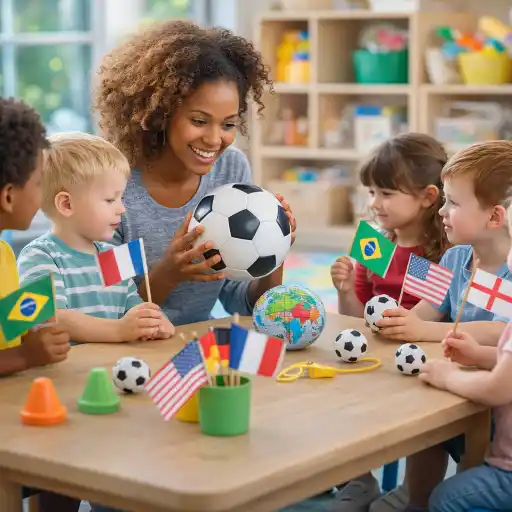
Quick checklist (use as a 1-page handout):
- ✅ One clear learning goal per activity (e.g., wait and pass twice).
- ✅ Short whole-group rug routines (5–12 minutes) + 2–3 centers.
- ✅ Calm spot and regulation tools visible near rug.
- ✅ Optional, low-pressure family invitations and home-language greetings.
- ✅ Updated drop-off map, staffing plan, and emergency checklist for event days. #families #inclusion #safety
FAQ (short):
- Q: How long should a World Cup-themed circle activity be? A: Aim 5–12 minutes whole group; 6–8 minutes for small groups (DC Rug).
- Q: What if a family doesn’t want participation? A: Keep all family sharing optional and provide alternatives like drawings or teacher-read notes (Bring the World Cup).
- Q: How do I support a child who refuses group play? A: Offer watching or helper roles and practice scripts during calm times.
- Q: Where can staff get training on emergency plans? A: ChildCareEd offers emergency and disaster preparedness courses and plan templates (Emergency Preparedness Training).
Use the World Cup as a brief, joyful doorway into global learning—one short rug routine, one center, and one family story at a time. For a deeper framework on teaching cultural diversity and critical thinking with young children, see Global Education. Your calm choices make classrooms kinder and more curious. #WorldCup
Plan 10–20 minute experiences that combine movement, stories, and play. Use the rug for quick whole-group routines and centers for deeper, child-led exploration. The DC Rug mini-lessons show how a sports theme can teach #turntaking and big feelings on a circle rug (World Cup on the DC Rug). Keep the focus on people’s daily lives rather than costumes or simplified “culture day” moments. Use real photos, short stories, and home-language greetings. Prioritize optional family involvement: invite a photo, a greeting, or a song title—never require costumes or food. ChildCareEd’s guidance on respectful inclusion gives ready scripts and family-invite language (Bring the World Cup).1) The event is culturally rich and motivates engagement: children bring home conversations and media and will notice flags, songs, and cheering. Thoughtful planning turns that excitement into learning about people, places, and feelings. See practical multicultural ideas at ChildCareEd: Bring the World Cup into a Multicultural Classroom.
- 45 Hour Child Growth and Development
- You're Not My Friend Anymore: Learning Conflict Resolution
- CDA Home Visitor Subject Area 3 Part 3 Birth to 5
- Children at the Wheel: Emergent Curriculum
- Sensitive Periods in Montessori: Guiding Natural Learning
- Texas Director Credential
- Wellness in Action: Teaching Healthy Habits to Children
- Montessori Cultural Activities: Exploring the World Through Play and Learning
- Ways to Serve: Leadership
- CDA Certification en Español: Recursos y Consejos para Educadores Bilingües
- 👶 ¿Cuáles son las proporciones y grupos requeridos en Dakota del Norte? 🏫
- Cómo Abrir Una Quardería En Casa Sin Dinero?
- Recursos en Español sobre el Sueño Seguro del Bebé
- 10 Ejemplos de Cómo la Cultura Influye en el Desarrollo Infantil
- Cómo Iniciar el Proceso de Obtención de la Licencia de Cuidado Infantil
- Cómo Empezar una Guardería en Casa: Requisitos y Pasos
- Lista para Abrir una Guardería en Casa en Dakota del Norte: Cómo Empezar
- Lista para Guardería en Casa en Illinois: Cómo Iniciar una Guardería en el Hogar
- Lista para Guardería en Casa en Texas: Cómo Iniciar una Guardería en el Hogar
- Cómo Trabajar en el Cuidado Infantil en Wisconsin: Requisitos y Pasos
- Celebrando la amistad en el cuidado infantil durante el Día de los Mejores Amigos
- Canciones, juegos y preguntas de círculo para niños
- Cómo simplificar la capacitación para sus empleados de daycare
- How can I integrate the World Cup into my daycare program in an inclusive, safe, and developmentally appropriate way?
- How Can I Celebrate Lunar New Year Respectfully and Effectively in My Classroom?
- Home Daycare Ideas That Make Your Space Feel Safe, Fun, and Professional
- Mawlid Around the World: How Kids Can Explore Different Traditions and Celebrations
- How Can Toddlers Contribute to Classroom Jobs Without Turning Them into Rewards?
- How Can You Give Coaching Feedback Without Treating One Teaching Style as the Only Right Way?
