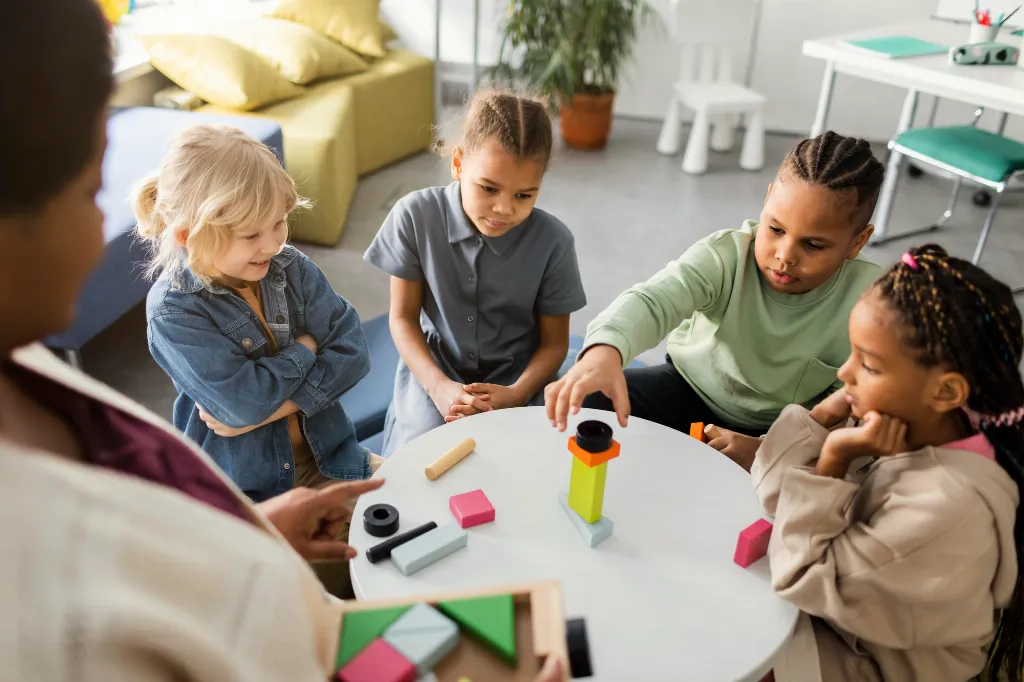
 Small group work is one of the fastest ways to help children practice skills, build friendships, and stay calm during the day. In this article you will learn easy steps to plan and run short, powerful #smallgroups in your #preschool program. We focus on simple #planning, ready-to-go #activities, and smooth #transitions so staff save time and kids get more practice.
How do I plan fast, effective small groups each day?
Quick planning makes small groups doable every day. Try a 10–15 minute routine with a clear goal and simple steps. Use this short plan:
- 🎯 Pick 1 clear goal (skill or behavior). Example: beginning sounds or taking turns. For templates, see How can I plan small group activities for preschool fast?
- 🕒 Choose your time and size: 10–12 minutes for 4 children; up to 20 minutes for 6 with an assistant.
- 🧰 Pick 2–3 short parts: warm-up (30–60 sec), main activity (6–8 min), wrap-up (1–2 min).
- 📦 Prep a tub with all materials and a one-line script. ChildCareEd shows how tubs speed setup: Small Group Planning.
- ✍️ After the group, jot 1 quick note: what worked and who needs more practice.
Why this works: small goals keep children focused. A repeatable template makes planning a 10–15 minute task, not a full lesson. Use printable packs and themed plans to save even more time (see free themed plans at Pre-K Printable Fun).
How should I set up space, materials, and transitions so groups run smoothly?
Organized space and clear signals cut downtime and prevent meltdowns. Try these steps every day so staff and children know what to expect.
- 📍 Assign fixed spots for each group (same rug square or table). Children move faster when places are predictable.
- 📦 Keep 1 tub per group slot, labeled with a photo and script. Prepping tubs the night before saves morning stress — more ideas in Small Group Planning.
- 🔔 Use a consistent transition cue (song, bell, or sand timer). CSEFEL’s tips on transitions are helpful: Helping Children Make Transitions.
- 🧭 Teach and practice the steps: clean-up, line-up, move. Make transitions a mini-lesson — see the course Moving About the Classroom Buy Now $35.00 for ideas.
- 🌿 Place noisy centers away from group tables and use caddies for shared supplies.
Tip: use visual schedules and a rotation chart so families and substitutes can follow the plan easily. Remember: state requirements vary - check your state licensing agency.
How can I include every child and manage behavior during small groups?
Small groups are perfect for teaching one skill to children at different levels. Use simple adaptations and positive support so every child succeeds.
- 🔧 Adapt materials: bigger pieces, fewer steps, or a picture script. ChildCareEd lists easy changes in Adaptations that support children's learning.
- 🤝 Offer multiple ways to join: speaking, pointing, holding a prop, or signing. Use sign-and-say for shy or nonverbal children (Language games).
- 🧘 Co-regulate when needed: get to the child’s level, model calm breathing, offer a 30–60 second reset, then rejoin.
- 🎯 Track one target per child weekly: independent, needs prompting, or needs more practice. A quick photo + one sentence works well for notes.
- 📣 Partner with families: send a one-line home tip after a successful group (example: "Try a two-minute turn timer at home"). Family words and songs help inclusion — see ideas at How to boost language.
Why this matters: when kids feel successful, behavior improves. Small, repeated practice builds skills and confidence fast.
How will I know it's working and what common mistakes should I avoid?
Use small checks, not big tests. Keep data simple and use it to tweak your plan.
- ✅ Quick checks (do this each week):
- Did most children try the activity?
- Did you see the target skill in action?
- One quick note per child (photo + 1 sentence).
- 📈 Simple rubric: independent / needs prompting / needs more support. Track one skill per child for a week and compare next week.
- ⚠️ Common mistakes and fixes:
- 😕 Overplanning — Fix: keep plans tiny and flexible.
- 🔁 Too many transitions — Fix: reduce switches and use clear cues (see CSEFEL).
- 🙅 Forcing participation — Fix: offer roles (helper, observer) and choices instead.
- 📚 Use resources: small-group games and printable packs help. Try ideas at No Time For Flash Cards or the free lesson bundles at Pre-K Printable Fun.
Quick FAQ (for busy providers):
- Q: How long should groups be? A: 10–12 minutes for focused practice; up to 20 with an assistant.
- Q: How many children? A: 4–6 is best for attention and practice.
- Q: What if a child won’t join? A: Offer a helper job or a quiet observer role and try again later.
- Q: How to prep fast? A: Make tubs tonight with a one-line script and a timer — see ChildCareEd tips.
Why it matters:
1) Short, focused #smallgroups give children practice they can’t get in whole-group time. 2) Teachers save planning time and reduce stress. Little wins add up to big growth in language, math, social skills, and self-control. Use simple templates, ready tubs, predictable spots, and quick notes to make groups a reliable, high-impact part of your day.
Conclusion: Start small. Try one 10-minute group with a single goal tomorrow. Prep a tub, pick a spot, set a timer, and note one quick outcome. Repeat, tweak, and celebrate progress. You’ve got this.
- CDA Home Visitor Subject Area 3 Part 3 Birth to 5
- CDA Home Visitor Subject Area 2 Part 3 Birth to 5
- Bienvenido! Welcoming All Families
- TEAM: Together Everyone Achieves More
- Art from the Heart for Preschoolers: Open Ended Art Projects that Build Self-Esteem
- The Best Promotion is Play
- Emergent Learning & Development
- Play, Learn, Grow
- Creating Environments that Nurture Growth and Community
- Moving About the Classroom: Effective Transitions for Everyday
- Tiny Hands, Big Dreams: Fostering Creativity in Preschoolers
- Actividades de Motricidad Gruesa que Desarrollan el Equilibrio, la Coordinación y la Fuerza
- Can simple indoor movement games teach listening and cooperation to preschoolers in Oklahoma?
- How can indoor creative play encourage teamwork for preschoolers in California?
- Open-Ended Activities That Help Preschoolers Learn
- What age-appropriate learning activities should we use for infants, toddlers & preschoolers in New York?
- How Do Art Activities Support Cognitive Growth in North Dakota Preschoolers?
- How can I teach colors, shapes & numbers through play in Michigan classrooms?
- Pumpkin, Leaves, and Apples: Fall Activities for Preschoolers
- How can we help children reach new heights—from the Space Needle to the preschool classroom?
- What Can the Golden Gate Bridge Teach Preschoolers About Connection?
- Daycare Activity Ideas for Infants, Toddlers, and Preschoolers
- How can I use simple math activities for preschoolers every day?
- How can I start a small garden project with New York preschoolers?
- Team-Building Games for Preschoolers That Teach Cooperation
- Preschool Team-Building Activities for Better Communication and Friendship
- First Week of Preschool Lesson Plans: 5 Days of Easy Activities and Routines
- Mixed-Age Daycare Schedule: How to Plan a Day for Different Age Groups
- How Often Should Preschool Teachers Change Classroom Activities?
- How Do You Keep Preschoolers Engaged During Group Activities?
