Joining a classroom where friendships and routines are already established can feel daunting for a new child. A personalized Welcome Certificate for Children Buy Now $0.99 can offer a warm first greeting, followed by everyday invitations to play, patient introductions, and help learning the classroom routine. Let the child’s comfort guide how you welcome them, including whether they enjoy group attention or prefer a quieter introduction. For deeper learning on relationships, community, and children’s social success, explore Supporting Social Learning: Creating Classrooms that Care Buy Now $35.00. Read on for practical ways to help a newcomer build connections and find their place in the group.
Why does a midyear welcome require more than a quick introduction?
A new child is learning more than names. They are figuring out the room, the daily sequence, how children communicate, and whether adults and peers are safe to approach. The established group is adjusting, too. Existing children may be curious, protective of routines, or unsure how to include someone they do not yet know. Recognizing both sides of the transition helps providers plan with empathy instead of expecting instant friendship.
Belonging develops through repeated experiences of being noticed, having choices, and contributing meaningfully. A child may first participate by watching, moving near a group, pointing to a picture, or accepting a material. These are legitimate steps—not signs of failure. NAEYC’s guidance on individuality and inclusive practices emphasizes that educators should respond to each child’s strengths, experiences, and needs so every child can participate in the learning community.
Think of welcoming as a process woven into arrival, play, meals, and transitions rather than a single event. A calm greeting, accurate pronunciation of the child’s name, and consistent adult support can help the child feel recognized while the group learns that community grows whenever someone new joins.
How can you prepare the group without making the new child a spectacle?
Before the child arrives, talk with the class about what helps people feel included. Keep the conversation concrete and respectful: “When someone is new, we can show them where things go or invite them to play.” Avoid asking children to make promises of instant friendship or turning the newcomer into the focus of a long meeting. The aim is to set a welcoming tone while protecting the child’s privacy and agency.
Prepare the space and staff, too. Make sure the cubby, name card, and commonly used materials are ready. Review the day’s routines and decide which adult will provide check-ins. A simple visual sequence can make the room easier to navigate, while children’s work and family representations signal that membership is valued. The NAEYC discussion of physical, social, and temporal environment highlights how small adjustments to materials, interactions, group size, and timing can support engagement.
- Ask the family how to pronounce the child’s name and what comforts or interests may help with the transition.
- Choose a familiar peer or two for brief, shared activities; do not assign a child responsibility for managing the newcomer.
- Prepare a quiet entry option and a clear place for belongings.
- Tell children they may offer an invitation, but the new child can choose whether to join.
Keep the preparation strengths-based. The class is not being asked to “fix” a problem; it is practicing how a community makes room for another person.
Which activities help children connect without pressure?
Activities work best when they create a shared purpose and offer more than one way to participate. Rather than asking the new child to introduce themselves to the whole class, start with pairs or a small group. An activity can invite conversation, but it should not demand it. A child may speak, gesture, choose a picture, build, draw, or observe before joining in.
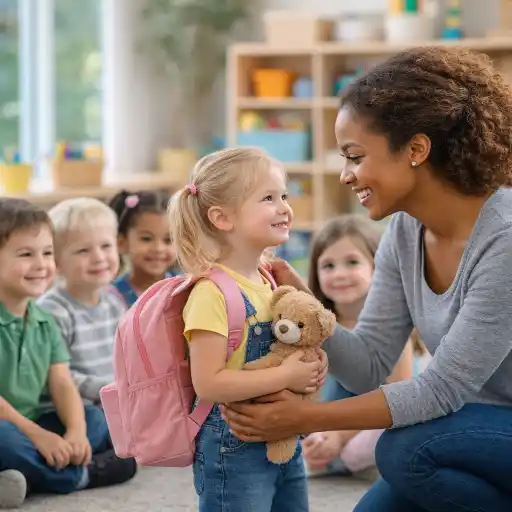
- Name-and-action game: Children can say or point to a name card while the group adds a wave, clap, or movement. Let the new child watch or choose an action.
- Classroom discovery walk: Partners use picture cards to find the book area, blocks, art materials, or a favorite puppet.
- Shared build: Offer a small group blocks and a common goal, such as making a bridge. Model simple phrases like “Can I add one?” or “Where should this go?”
- Interest picture board: Children place their names near pictures of animals, books, music, or play areas they enjoy. Notice shared interests without asking anyone to explain personal details.
- 🧸 Flexible participation: Offer roles such as material chooser, page turner, observer, or helper for children who prefer a gradual entry.
Observe what draws the newcomer in, then use that information to make a specific invitation: “You’re looking at the train tracks. Would you like to place this piece beside us?” Hanen Centre’s guidance on supporting peer interaction likewise encourages educators to arrange spaces and model language that help children connect. Keep activities playful, repeat them when useful, and treat small moments of shared attention as meaningful progress.
How can you support peer relationships after the first few days?
Children do not necessarily become comfortable with a peer after one game or one morning. Plan recurring, low-stakes opportunities for connection so the new child can see familiar faces and predict what will happen. Rotate partners thoughtfully over time, while preserving the safety of a trusted connection when it is helping. The goal is to open several pathways into the group, not to engineer a specific friendship.
During play, stay close enough to support interaction without taking over. A brief prompt can help a child enter play: “They’re building a road. You could ask, ‘Can I help?’” If the invitation is declined, coach a respectful next step, such as choosing another center or trying again later. Peer play is a developing skill; children may need adult modeling for turn-taking, listening, and repairing misunderstandings.
Look for signs of growing comfort beyond talk: the child chooses a familiar center, accepts an invitation, shares materials, follows a peer’s idea, or returns to a group after a break. These observations help staff adapt support rather than compare children’s adjustment timelines. The Hanen Centre notes that peer interaction involves both initiating and sustaining an exchange, and that adults can make interaction more likely through intentional environmental and social supports.
Keep the rest of the group included, too. Notice and name specific acts of kindness—“You saved a space beside you”—without making one child the class’s designated helper. Over time, everyday invitations and cooperative play can strengthen everyone’s sense of #belonging and help relationships develop naturally.
How should you partner with families and adapt for individual needs?
Families know important details about a child’s interests, routines, communication, and ways of finding comfort. Ask open, practical questions: “What helps your child warm up in a new place?” “Are there familiar words or songs we can use?” “What kinds of play are especially engaging?” Share information in the family’s preferred language and through a communication method that works for them. Family partnership is reciprocal: educators share classroom observations, and families offer knowledge that can guide thoughtful support.
Adapt access rather than expecting every child to join in the same way. Use photos, gestures, visual schedules, home-language labels, accessible materials, and additional processing time as appropriate. A child who is learning English may understand a routine before speaking in English; a child with a disability may communicate through movement, pictures, or an assistive system. NAEYC’s inclusion guidance underscores that participation should be individualized and supported, not conditioned on a child using one particular communication style.
- Offer choices about speaking, touch, eye contact, and group participation; never make these a condition of welcome.
- Share brief, specific observations with families, including what the child enjoyed and what support helped.
- Check that photographs, family contributions, and personal information are handled with permission and confidentiality.
State requirements vary - check your state licensing agency. Program policies may also guide family communication, documentation, and referrals when additional support is needed.
What common pitfalls should providers avoid?
Even well-meant welcomes can create pressure. A newcomer may be shy, tired, overwhelmed, or simply taking time to observe. Requiring a public introduction, physical affection, eye contact, or immediate participation can make the child feel on display rather than included. Instead, offer invitations privately or in a small group, accept a child’s “not yet,” and return with another opportunity later.
A second pitfall is assuming the existing group will handle integration on its own. Children may need adults to model respectful play entry, clarify routines, and help them respond when an invitation is declined. At the same time, avoid over-managing every interaction or assigning a peer the ongoing job of caring for the newcomer. Stay available, coach briefly, and let children’s relationships take shape through shared experiences.
Also avoid treating one activity as proof that the transition is complete. Connection may look different from day to day and can be affected by schedule changes, separation feelings, language differences, or sensory demands. Keep a short, objective record of what you notice and what helps. This supports team consistency and gives families a more useful picture than a general judgment such as “adjusting well” or “not social.”
- Avoid: competitive icebreakers, forced sharing, intrusive personal questions, or cultural assumptions.
- Try instead: cooperative play, optional ways to contribute, repeated routines, and specific invitations based on the child’s interests.
- Review as a team: Who is getting invited? Which supports help the child take part? What should we try next?
Conclusion: What helps a new child belong in an established class?
Welcoming a new child after classmates have already bonded is not about making a friendship happen on schedule. It is about ensuring the child has dependable access to caring adults, predictable routines, inclusive materials, and genuine opportunities to connect. Prepare the classroom and group thoughtfully, use shared-interest activities without pressure, and support peer play with brief, respectful coaching.
Keep families involved, adapt participation to the child’s communication and comfort, and notice small signs of growing connection over time. Above all, remember that belonging is built through repeated messages: your presence matters, your way of participating is welcome, and this community has room for you. With patience and consistent care, the established class can remain a close-knit group while making space for a new relationship to grow.
For additional professional learning, Supporting Social Learning: Creating Classrooms that Care Buy Now $35.00 explores community-building, relationships, and strategies for supporting children’s social success. You may also find these focused courses useful:

- CDA Bridge Bundle: Preschool
- Pediatric RSV First Aid & CPR/AED
- Classroom Setup for Child Care
- CDA Bridge Bundle: Family Child Care
- CDA Bridge Bundle: Family Child Care without Portfolio Review
- CDA Bridge Bundle: Infant/Toddler without Portfolio Review
- CDA Bridge Bundle: Preschool without Portfolio Review
- CDA Bridge Bundle: Infant/Toddler
- Texas Director Credential
- CDA Certification en Español: Recursos y Consejos para Educadores Bilingües
- 💛🧩 ¿Cómo puedo hacer que mi enseñanza sea inclusiva para los niños con autismo?
- 🤔 ¿Cómo hablo con los padres cuando un niño no está avanzando en el entrenamiento para ir al baño?
- Recursos en Español sobre el Sueño Seguro del Bebé
- ¿Cómo pueden los equipos de cuidado infantil practicar habilidades rápidas de primeros auxilios en situaciones reales?
- 10 Ejemplos de Cómo la Cultura Influye en el Desarrollo Infantil
- Cómo Empezar una Guardería en Casa: Requisitos y Pasos
- ¿Cómo solicito la licencia para una guardería en California?
- Proporciones de Cuidado Infantil y Tamaños de Grupo por Edad en Nueva Jersey (Guía Rápida para Centros y Hogares)
- Proporciones de Cuidado Infantil y Tamaños de Grupo por Edad en Virginia (Guía Rápida para Centros y Hogares)
- Horas de Capacitación Anual para Proveedores de Cuidado Infantil en Maryland
- Lista para Abrir una Guardería en Casa en Dakota del Norte: Cómo Empezar
- Cómo Trabajar en el Cuidado Infantil en Carolina del Norte: Requisitos y Pasos
- Cómo Ser Maestra de Preescolar en Maryland
- Capacitación Previa al Servicio para Proveedores de Cuidado Infantil en Dakota del Norte
- Celebrando la amistad en el cuidado infantil durante el Día de los Mejores Amigos
- Canciones, juegos y preguntas de círculo para niños
- Cómo simplificar la capacitación para sus empleados de daycare
- How Can You Welcome a New Child After the Class Has Already Bonded?
