When the same child is repeatedly left out of after-school activities, staff need to look closely at when it happens, who is involved, and how the child experiences it. With older school-age children, use the respectful-language expectation on the 5th Grade Classroom Rules & Expectations Poster Buy Now $1.50 to start a discussion about everyday interactions, alongside observation and individual support. Addressing Bullying Among School Age Children Buy Now $35.00 offers focused learning on identifying and responding to bullying, while Supporting School Age Development ONLINE  Buy Now $24.00 provides a broader foundation in social-emotional development. Read on for ways to recognize recurring exclusion and follow through with changes that support children’s safety and belonging.
Why does a repeated pattern of exclusion matter?
After-school groups are important social communities, not simply places to wait until pickup. Children form friendships, test identities, and learn how groups include or exclude members. When exclusion repeatedly targets one child, it may affect their willingness to participate, trust peers, and feel connected to the program. The CDC describes bullying as unwanted aggressive behavior involving a power imbalance that is repeated or likely to be repeated; relational aggression can include deliberately leaving someone out. See the CDC’s definition and types of bullying.
Not every decision to play separately is bullying. Children may choose different partners, need space, or disagree about a game. The central concern is whether the behavior is targeted and recurring, whether there is a power imbalance, and whether the child being excluded has a meaningful way to access activities and adult support. Consider the wider impact, too: the CDC notes that feeling cared for, valued, and supported contributes to school connectedness and well-being. Although after-school programs are not schools, the principle of belonging matters in any youth setting.
Taking a pattern seriously does not mean assigning a fixed identity to any child. It means responding to observable behavior, preventing further harm, and teaching the group how to build respectful relationships. State requirements vary - check your state licensing agency.
How can staff tell a pattern from an ordinary friendship disagreement?
Begin with careful observation, not a label. Record what was said or done, who was present, where it happened, and whether similar incidents have occurred. “Three children told Sam he could not join their game on four afternoons, then moved the game when he approached” is more useful than “the group is mean.” Factual notes help the team separate what staff witnessed from assumptions about intent.
Review the incidents together and ask:
- Does the same child or group repeatedly exclude a particular peer?
- Does exclusion appear intentional, harmful, or connected to social status, age, ability, language, or another difference?
- Can the excluded child join another activity freely, or are they being shut out across settings?
- Does one child or group hold more social influence or control over access?
- Does the pattern continue after adults set clear expectations and support inclusion?
- Are there predictable triggers, such as team selection, transitions, or a highly sought-after game?
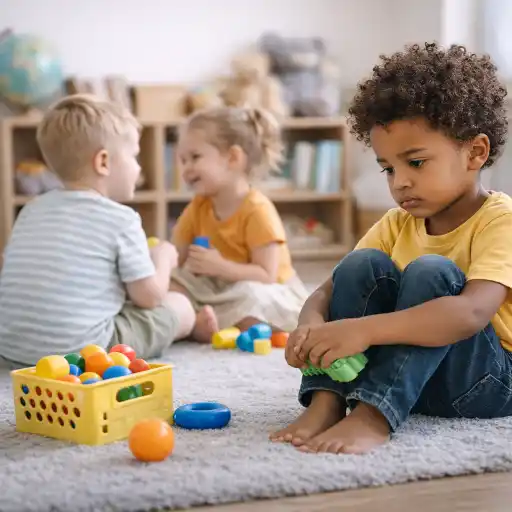
Use the term bullying cautiously and in line with program policy. Repeated social exclusion can be relational bullying, but children’s motives and developmental capacities are not always easy to determine. Focus first on safety and observable behavior. Avoid treating a targeted child as responsible for fixing the situation by changing their personality or simply “finding different friends.” Support their choices while adults address the group pattern.
What signs might show a child is being persistently left out?
Some children will directly tell an adult; others may communicate distress through changes in behavior or participation. Notice whether a child who usually enjoys the program begins arriving reluctantly, stays close to staff, watches from the edge of activities, or avoids certain locations and peers. They may seem unusually quiet, irritable, tearful, or worried when teams or partners are chosen. A child might also report that “nobody likes me,” repeatedly ask to go home, or stop participating in a favorite activity.
These clues are signals to check in, not proof on their own. Fatigue, family changes, anxiety, disability-related barriers, conflict outside the program, or a temporary friendship shift can look similar. Approach conversations with curiosity and calm. Useful open-ended questions include:
- “What was a good part of your afternoon? What was a hard part?”
- “Who did you spend time with today?”
- “Was there a time you wanted to join something but couldn’t?”
- “What would help you feel comfortable here?”
Give the child time to answer and accept that they may not want to talk immediately. Offer other ways to share, such as drawing, a private check-in, or a feelings scale. StopBullying.gov recommends listening, assuring children that the behavior is not their fault, and following up consistently; see support for children involved. Protect confidentiality, and do not promise outcomes beyond what your program can deliver.
How should staff respond when exclusion happens?
Intervene promptly and calmly when staff observe a child being deliberately shut out or demeaned. First make sure the child is safe and acknowledge what happened without making them defend their feelings: “I saw the game move when you came over. That can feel hurtful. I’m here to help.” Ask what would help right now—joining with adult support, choosing another activity, or taking a break. Do not tell the child to ignore it, retaliate, or solve a persistent group problem alone.
Set a clear limit with the children responsible for excluding: “You may choose the game, but you may not organize the group to repeatedly keep one person out. Let’s find a fair way for people to participate.” Then teach an alternative: rotating roles, inviting each child to contribute, or setting a turn for choosing the next activity. Avoid forcing the targeted child into a confrontation, public apology, or activity that feels unsafe. StopBullying.gov cautions that forced mediation is not an appropriate response to bullying because it can treat unequal power as a mutual dispute.
Follow up after the immediate moment. Check whether the child feels supported and watch the next similar activity. If exclusion persists, apply program policies, involve a director, and coordinate an individualized plan. Address each child with dignity: accountability for harmful behavior can coexist with support to develop empathy, communication, and better ways to participate.
What routines and group practices can prevent exclusion?
Prevention works best when belonging is built into program design rather than left to chance. Observe games and transitions where children choose teams, partners, or roles; these are common points at which social access becomes uneven. Make participation options clear and predictable, and organize activities so that children can contribute in different ways. For example, a cooperative challenge can include roles such as designer, materials organizer, recorder, and presenter, with children rotating roles over time.
- Establish shared agreements: “We use respectful words,” “No one is pressured to join,” and “We do not recruit others to target a peer.”
- Plan inclusive games that do not eliminate children early or rely on public team selection.
- Offer varied activity choices and adapt materials, rules, or communication supports so children with different abilities can participate.
- Use consistent, visible expectations during transitions, group projects, and free-choice time.
- Notice and name inclusive actions: “You made room for another idea, and the team could keep working together.”
Inclusion is not the same as requiring every child to be close friends or forcing constant interaction. It means each child can access program activities, be treated respectfully, and seek help from a trusted adult. The inclusive afterschool program strategies from Kids Included Together highlight cooperative activities, staff modeling, and social-emotional learning as ways to support meaningful peer interaction. Invite children’s perspectives while ensuring the adults retain responsibility for safety and fair access.
How can directors partner with families and sustain a response?
Directors can help staff respond consistently by clarifying how to report incidents, who contacts families, how confidentiality is protected, and when to seek additional support. Review documentation for recurring patterns across times, activities, staff coverage, and peer groups. If incidents cluster around team selection or a particular space, adjust the routine or supervision rather than expecting the targeted child to avoid that part of the program.
When speaking with families, use a private setting and describe specific observations, actions taken, and next steps. Avoid diagnosing intent or sharing confidential information about another child. With the family of a child who has been excluded, explain how staff will monitor interactions and support access to activities. When discussing a child’s excluding behavior with their family, focus on what staff observed, the impact on peers, and the skills being taught—not on defining the child by the behavior.
Agree on a review date and identify who will check in with the child and observe the relevant activities. Consult appropriate program leadership or specialists when the pattern is persistent, distress is significant, or staff need support to develop an effective plan. Remember that family partnership is collaborative, not a substitute for the program’s responsibility to provide a safe, inclusive environment.
- 🙂 Practical team step: choose one high-risk routine this week, assign an adult to observe it closely, and review brief factual notes at the next staff meeting.
Additional learning can support implementation: Social Foundations and Responsive Classrooms Buy Now $24.00 focuses on social-emotional development and conflict resolution; Active Supervision: A Strategy That Works Buy Now $35.00 develops supervision strategies; and Planning for Every Child: Responsive Strategies in Action Buy Now $55.00 offers tools for responsive and inclusive planning.
Conclusion: What should providers remember about repeated exclusion?
When does exclusion in an after-school group become a pattern? Look beyond one disagreement and assess repetition, targeting, power, impact, and whether children can participate safely. Observe and document specific behavior; listen to the child being excluded without blame; intervene calmly; teach the group practical ways to share access and respect boundaries; and follow up to see whether the pattern changes.
Directors can reinforce this work through clear procedures, consistent supervision, thoughtful activity design, and private, factual family communication. Avoid labeling children, forcing confrontations, or expecting the excluded child to solve the problem. A steady adult response helps children experience that group membership is not something peers can use to threaten another child’s dignity. Start with one routine, one observation plan, and one consistent inclusion practice—and keep checking whether every child can genuinely take part.
- 45-Hour School Age Curriculum
- CDA Preschool Credential with Portfolio Review
- CDA Family Child Care Credential
- CDA Family Child Care Credential with Portfolio Review
- CDA Bridge Bundle: Preschool
- CDA Infant/Toddler Credential with Portfolio Review
- 45 Hour School Age Methods and Materials
- CDA Bridge Bundle: Family Child Care
- CDA Bridge Bundle: Infant/Toddler
- Texas Director Credential
- What should child care programs consider when returning to the classroom?
- CDA Certification en Español: Recursos y Consejos para Educadores Bilingües
- Cómo Abrir Una Quardería En Casa Sin Dinero?
- ¿Cómo pueden los equipos de cuidado infantil practicar habilidades rápidas de primeros auxilios en situaciones reales?
- Normas de Licenciamiento de Cuidado Infantil en Virginia para Centros Diurnos Infantiles y Hogares Diurnos Familiares
- Lista para Guardería en Casa en Texas: Cómo Iniciar una Guardería en el Hogar
- Time-In or Time-Out? 7 Real Classroom Scenarios and What to Try
- Childcare License Texas: Which Permit Do You Need for the Program You Want to Open?
- How Can Child Care Providers Prevent and Respond to Bullying?
- How Can Child Care Providers Respond When Children Exclude Others From Play?
- When a Child Refuses to Follow Directions, What Should Teachers Do?
- Can a Child Attend Daycare With a Cough or Runny Nose?
- When Should a Sick Child Be Sent Home From Daycare?
- How Can Child Care Providers Identify Triggers Behind Challenging Classroom Behavior?
- Why Do Children Repeat the Same Challenging Behavior?
- Why Does a Child Become the Rule Keeper When an Adult Joins Play?
- When Should a Sick Child Be Sent Home From Daycare?
- When Does Exclusion in an After-School Group Become a Pattern?
- What Should You Say When a Child Calls Another Child’s Feelings Silly?
- Bullying or Peer Conflict? What Should After-School Staff Look For?
