When a preschooler says “happy” or “sad,” they are beginning to connect facial expressions, body language, voice, and events with an inner experience. Purposeful, playful practice can strengthen this early emotional literacy, and Brighter Futures: Social Emotional Development  Buy Now $16.00 offers deeper professional learning on emotional development and responsive interactions. Pair the ideas below with training such as Self-Regulation & Change: Helping Children Cope Buy Now $16.00 to build consistent classroom practices and support professional development goals.
Why does reading emotional clues matter in preschool?
Young children experience complex emotions before they have the language to describe them. A child may recognize that a peer looks unhappy but still need support interpreting whether the peer is sad, tired, frustrated, or simply concentrating. Emotional literacy includes recognizing, labeling, and understanding feelings in oneself and others; it provides a foundation for communication, empathy, self-regulation, and problem-solving.
The CSEFEL guidance on emotional vocabulary emphasizes that children need words for different emotional states in order to interpret social situations accurately. Similarly, Eastern Connecticut’s overview of social and emotional development highlights the value of strong relationships, predictable routines, and adult support.
For providers, this means emotional-clue instruction is not an extra lesson added after “academic” work. It can be embedded in arrival, stories, dramatic play, snack, transitions, and conflict resolution. Brief repetition helps #preschoolers notice clues, communicate needs, and return to learning with greater confidence.
How can educators teach children to notice facial and body clues?
Begin with a small, concrete vocabulary: happy, sad, mad, scared, surprised, and calm. Introduce two or three words at a time, then expand as children become familiar with the visual and physical clues associated with each emotion. Avoid presenting expressions as rigid rules; people display feelings differently, and context matters.
- Use mirrors: model a smile, frown, relaxed shoulders, or a tense body and invite children to observe themselves.
- Use photographs and illustrations showing diverse children and adults. Ask, “What do you notice about the eyes, mouth, hands, or body?”
- Model cautious language: “She might feel sad. I notice her mouth is turned down and she is crying.”
- Connect clues to context: “He is holding the broken tower and looking down. He may feel disappointed.”
- Offer communication choices: children may point, gesture, use a home-language word, select a picture, or speak.
CECMHC recommends daily opportunities to make emotion faces, label children’s feelings, discuss characters in stories, and use puppets or songs. These approaches make emotional learning active rather than abstract. Acknowledge that the same face can communicate different feelings, and invite children to explain their reasoning instead of marking every answer simply right or wrong.
Which playful activities help children distinguish happy from sad?
Short, low-pressure activities are especially effective because children can repeat them frequently. Choose activities that require children to observe a clue, name a feeling, and communicate an idea.
- Happy-or-sad photo sort: Place two labeled baskets on the floor. Children sort photos or drawings, then identify one clue they noticed.
- Mirror detectives: A child chooses a card, makes the expression, and peers identify the feeling. Follow with, “What might make someone feel that way?”
- Emotion charades: Children act out happy or sad without words. The group guesses and suggests a kind response.
- Puppet problem-solving: One puppet loses a toy or receives a gift. Children identify the puppet’s possible feeling and offer a helpful next step.
- Story pauses: During a read-aloud, ask, “How does the character feel? What clues tell us? What could a friend do?”
- 🎵 Emotion movement song: Sing familiar melodies with actions such as smiling for happy, lowering the head for sad, or breathing slowly for calm.
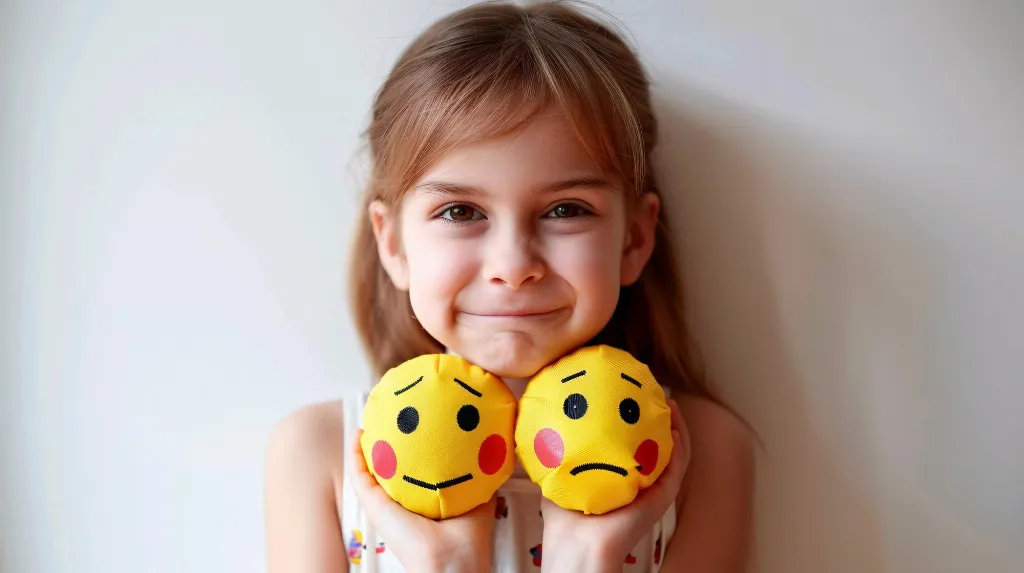
ChildCareEd’s emotion sorting activities illustrate how matching pictures, toys, or actions can build feeling words and recognition of facial, vocal, and body clues. Keep sessions to approximately three to seven minutes and return to them during calm parts of the day.
How can teachers include voice, movement, and context?
Children often attend first to a face, yet emotional communication also appears through posture, movement, volume, pace, and tone. A “happy” voice may sound bright and energetic; a “sad” voice may be quiet or slow. These are possibilities, not universal prescriptions. Help children compare clues across several examples rather than teaching stereotypes.
Try a “clue laboratory.” Present the same neutral sentence—“The block is over there”—in a calm, excited, worried, or frustrated tone. Ask children what changed and what additional information they would need. In a movement game, invite children to walk like they feel joyful, tired, worried, or disappointed, then discuss how their bodies changed. The goal is not performance accuracy; it is awareness.
Teachers can also help children notice how body language, facial expressions, tone of voice, and the situation itself provide clues about how someone may be feeling. Encourage children to describe the specific clues they observe before deciding which emotion they think the person is experiencing.
During peer conflict, coach children through a sequence: notice the clue, name a possible feeling, check the situation, and choose a respectful response. For example: “Maya turned away and said ‘no.’ She may want space. Let’s ask, ‘Do you want to play later?’” This approach supports #empathy without requiring children to guess another person’s feelings with certainty.
How should activities be adapted for diverse learners and families?
Effective emotional-clue activities are flexible. Younger children may need two choices and large photographs; older preschoolers may compare similar feelings such as sad and disappointed. Children with language delays, disabilities, sensory differences, or emerging English proficiency may demonstrate understanding nonverbally.
- Use visual schedules, emotion cards, gestures, signs, and augmentative communication supports.
- Offer seated, standing, movement-based, and quiet participation options.
- Use real classroom situations carefully, while avoiding public labeling or embarrassment.
- Include books and images that reflect children’s families, cultures, skin tones, abilities, and communication styles.
- Ask families which emotion words, comfort routines, and calming strategies are familiar at home.
Children should never be forced to perform an emotion, disclose a personal experience, or talk during distress. A child may watch, point, use a puppet, or participate later. The CSEFEL strategy library includes emotion faces, feeling charts, scripted stories, and problem-solving tools that can be adapted for individual needs.
Document observations without turning them into judgments. Note what the child saw, said, gestured, or did; the prompt provided; and the child’s response. State requirements vary - check your state licensing agency when selecting documentation systems, training, or assessment practices.
What common mistakes can educators avoid?
Even well-intentioned instruction can become confusing if adults overemphasize “correct” facial expressions or teach emotional vocabulary only after a conflict. A strengths-based approach treats each attempt as useful information.
- Mistake: Assuming one facial expression always means one emotion. Better: Discuss multiple clues and ask about context.
- Mistake: Teaching too many words at once. Better: Start with two to four familiar feelings and revisit them often.
- Mistake: Saying, “You are not sad.” Better: Say, “You may feel sad. Tell me what happened or show me a card.”
- Mistake: Asking lengthy questions during a meltdown. Better: Prioritize safety, co-regulation, and one simple choice; teach later.
- Mistake: Using a calm space as punishment. Better: Introduce it during calm moments as a supportive option.
- Mistake: Treating cultural or individual differences as errors. Better: learn how families communicate and comfort children.
Directors can improve consistency by selecting two or three shared scripts, modeling them in staff meetings, and observing how children respond. Track small indicators: whether children point to or use feeling words, identify a clue, seek help, or choose a calming strategy. These observations guide planning without reducing emotional growth to a single score.
Conclusion: How can preschoolers become better emotional detectives?
Preschool activities help children read emotional clues when they repeatedly connect observable details—faces, bodies, voices, actions, and context—with respectful language. The central question is not simply “Is this child happy or sad?” but “What clues do we notice, what might they mean, and how can we respond with care?”
Start with a daily two-minute check-in, one short sorting or mirror game, and a read-aloud question about a character’s feelings. Model uncertainty, validate children’s experiences, provide visual and nonverbal choices, and practice calm strategies before difficult moments occur. Over time, these small routines strengthen #emotional vocabulary, #SEL, empathy, communication, and self-regulation.
To continue strengthening your ability to support children’s emotional development, explore ChildCareEd’s CDA Subject Area 3: Supporting Children’s Social and Emotional Development Buy Now $80.00, which provides strategies for promoting positive relationships, emotional development, self-regulation, and healthy social interactions in early childhood settings.
Frequently asked questions
What if children disagree about an emotion?
Invite each child to explain the clue they noticed. Then model that more than one interpretation may be possible.
How many feelings should we teach first?
Begin with two to four familiar words, such as happy, sad, mad, and calm. Add nuance gradually.
Should children always make the same face for an emotion?
No. Expressions vary by person, culture, context, and communication style. Teach children to consider several clues.
Can these activities be used during a meltdown?
Usually, teach and practice during calm moments. During distress, keep language brief and focus on safety and co-regulation.
How can directors support staff implementation?
Choose shared language, provide visual materials, schedule brief practice opportunities, and review objective observations during coaching conversations.
- CDA Home Visitor Subject Area 3 Part 3 Birth to 5
- 45 hour Growth and Development Birth-age 12 ONLINE
- Language and Literacy Foundations in Pre-K
- CDA Bridge Bundle: Family Child Care without Portfolio Review
- Art from the Heart for Preschoolers: Open Ended Art Projects that Build Self-Esteem
- CDA Bridge Bundle: Infant/Toddler without Portfolio Review
- CDA Bridge Bundle: Preschool without Portfolio Review
- Supporting Families and Caregivers in Language and Literacy
- Mental Health in Early Childhood
- Language Development in School Age
- CDA Certification en Español: Recursos y Consejos para Educadores Bilingües
- Cómo Celebrar el Día Nacional del Kindergarten
- What Social-Emotional Learning Activities Work Best for Toddlers in Minnesota Classrooms?
- Crayon Colors and What They Mean in Children’s Art
- Emotion Sorting Activities for Social-Emotional Learning
- How to Teach Feelings with an Emotion Sorting Activity
- How can friendly-monster crafts teach children about feelings?
- How can we help children identify and express emotions in child care?
- How can we build emotional vocabulary through books and play?
- Feelings Activities for Toddlers: Building Social and Emotional Skills
- Social-Emotional Activities for 2-Year-Olds: Big Feelings, Little Words, Big Growth
- Big Feelings, Busy Bodies: Self-Control Activities for Toddlers
- Happy or Sad? Preschool Activities That Help Children Read Emotional Clues
- Feelings Activities for Toddlers: Point, Move, Match, and Name It
- Can You Guess the Feeling? Emotion Games for Pre-K Kids
- How Can We Help Children Understand Mixed Emotions Beyond the Feelings Chart?
- How Can Child Care Providers Teach Feelings to Preschoolers Through Simple Activities?
- How Can Child Care Providers Teach Children to Express Their Feelings With Words?
- How Can a Feelings Chart Help Preschoolers Build Self-Regulation?
- How Can Emotional Check-Ins Become a Meaningful Part of the Daily Child Care Routine?
