Friendly, goofy creatures made from paper, felt, paint, clay, or dough can be much more than an entertaining craft theme—they can become approachable tools for helping children identify emotions, express difficult feelings, practice calming strategies, and develop stronger social skills. By creating monsters with different facial expressions, colors, body positions, and stories, children can explore emotions in a playful way that feels less personal or intimidating. This article gives directors and child care providers practical, research-informed, and classroom-ready ways to use #monsters for emotional learning, including step-by-step activities, adaptations for mixed-age groups and diverse learners, simple assessment ideas, and extensions using resources such as the Emotions Playdough Activity and Emotions Match Activity.
To deepen your team’s ability to support emotional regulation, explore ChildCareEd’s self-paced online course Self-Regulation & Change: Helping Children Cope  Buy Now $16.00. The training equips child care providers with practical strategies for helping children manage emotions, respond to change, and develop self-regulation within a nurturing environment. Educators can apply these strategies during monster-themed crafts by encouraging children to name each monster’s feeling, explain what may have caused it, and choose a calming or supportive response.
Why it matters
Crafts create repetition, sensory feedback, and social stories: three drivers of emotional literacy and self-regulation highlighted in Big Feelings: Teaching Kids to Manage Difficult Emotions and Emotions in Motion.
Why do friendly-monster crafts help children learn about feelings?
1. Crafting combines language, motor practice, and story: kids name feelings while gluing, cutting, or molding, which reinforces vocabulary and memory. For hands-on examples, see the Emotions Playdough Activity and the printable Emotion Sorting Activities Buy Now $0.00.
2. Monsters support regulation practice. Use the creature as a coach: 'Breathe to calm the blue monster' becomes a scripted, playful routine children can rehearse. This approach is aligned with strategies in Big Feelings and practical SEL courses like Brighter Futures: Social Emotional Development Buy Now $16.00.
3. Play reduces shame and increases curiosity. Monsters are silly and distance the child from feeling 'bad' about emotions—encouraging exploration instead of suppression (see Imagine Dragons).
What easy monster craft activities actually teach emotion vocabulary and self-regulation?
- 🎨 Squish & Reveal Monster Paintings (process art)
Have children fold paper with paint blobs, open to reveal symmetrical monsters; add googly eyes and emotion faces. This activity encourages descriptive language ('wide grin = happy') and is great after a read-aloud. For inspiration, see a tutorial at No Time For Flash Cards and monster painting steps in Monster Painting.
- 🧸 Mix-and-Match Felt Monsters
Use felt bodies, mouths, and eyes so children build faces that match feelings (smiles, frowns, worried brows). This supports emotion recognition, imitation, and storytelling—see Mix and Match Monsters.
- 🟡 Color Monster Feelings Chart
After making or coloring a monster for each color/feeling, use the chart for daily check-ins. Living Life & Learning’s Color Monster chart pairs nicely with child-made monsters: Color Monster Feelings Chart.
- 🖐️ Playdough Emotion Faces
Provide mats labeled with feeling words (happy, sad, mad, calm). Kids sculpt faces and explain choices. Pair with the ChildCareEd Emotions Playdough Activity.
- 📚 Story + Craft Extension
Read a feelings book (e.g., Love Monster), then make a love/alone/fidget monster and discuss how the character felt and what helped. See lesson ideas at One Sharp Bunch. You can also tie the craft to seasonal themes that provide an engaging hook for children; for example, adapt this activity for Groundhog Day with simple, age-appropriate variations—see Groundhog Day activities for kids for ideas.
- 🔁 Emotion Sorting Stations
Children sort monster faces or photos into homes labeled with feeling words and pick a calming tool for each home. Use ChildCareEd’s Emotions Match Activity Buy Now $0.00 and Emotion Sorting Activities Buy Now $0.00.
How can I adapt monster crafts for mixed ages, children with special needs, and diverse cultural backgrounds?
1) Plan tiered materials. For toddlers: large pre-cut shapes, stickers, and a 2-feeling focus (happy/sad). For preschoolers: additional feelings and simple story prompts. For school-age children: layered complexity—create monster journals describing triggers and coping steps. ChildCareEd’s mixed-age PDFs like Emotions Match Activity Buy Now $0.00 are designed for these ranges.
2) Sensory and motor adaptations. Offer tactile options (soft felt, foam, textured paper, Play-Doh) and fine-motor supports (pre-punched holes, larger glue sticks). This aligns with sensory-friendly crafts highlighted across practitioner resources and the ChildCareEd activity library (Resources).
3) Communication supports. Use visual emotion cards or the Color Monster chart when verbal labeling is difficult. Pair craft steps with simple visual cues and two-choice language ('Does the monster look calm or mad?'). See techniques in Emotions for Kids.
4) Cultural responsiveness. Invite families to share words or stories about feelings from home languages and traditions; incorporate those into monster names and coping rituals. Ask: 'What words do you use at home for this feeling?' This approach is supported by family-engagement guidance in Teaching Your Child About Feelings Buy Now $0.00. Remember: state requirements vary - check your state licensing agency when making curriculum changes or sending materials home.
How do I structure a lesson: timing, scaffolds, and assessment?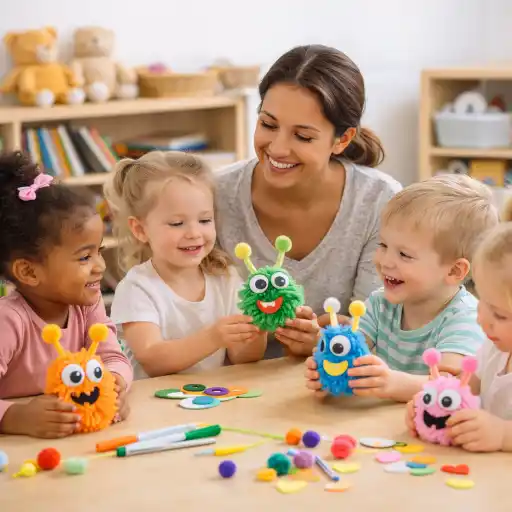
Use a predictable routine that pairs a story, a short craft, and a calibration step (label + calm strategy). Below is a simple, repeatable lesson template you can use in multiple age groups.
- 📘 Warm-up (3–5 minutes): Quick feelings check-in using the Color Monster or emotion cards. Children point to the monster that matches how they feel.
- 📖 Read-aloud (5–8 minutes): Choose a short book about emotions or a brief story. Pause to label feelings ('He looks frustrated—how do you know?'). Related SEL reading ideas are in Emotions in Motion.
- ✂️ Craft station (10–20 minutes): Offer 2–3 choices (paint, felt, playdough). Encourage each child to make a monster that shows a feeling and choose one calm tool for it (breaths, squeeze ball, hug a pillow).
- 🔁 Practice (3–5 minutes): Model calming with the monster ('Breathe with the sleepy monster: sniff, blow out').
- 📝 Quick assessment (1–2 items): Use a one-question check: Can the child point to the monster and say the feeling and the calm move? For more formal tracking, use observation notes tied to the ChildCareEd emotional development checklists in Brighter Futures Buy Now $16.00.
Documentation: Take a photo of each child’s monster and attach a short caption (child’s words if possible) for your portfolio or family share. This creates a visible record of growing emotion vocabulary and coping choices.
What are common mistakes,s and how do I avoid pitfalls?
1) 😕 Mistake: Craft without language. Avoid crafting in silence—link each monster explicitly to a feeling word and a calm step. Use prompts like: 'Show me how this monster breathes when it’s mad.' ChildCareEd’s emotion-sorting materials model this pairing (Emotion Sorting Activities Buy Now $0.00).
2) 🔢 Mistake: Too many feelings at once. Start with 2–4 core feelings and add others gradually. Young children benefit from repetition; toddlers do best with happy/sad first. See teaching scaffolds in Emotions for Kids.
3) ✋ Mistake: Using the calm-down corner as punishment. The calm area (and your monster activities) must be framed as supports—not time-outs. Share scripts and images with families so the same language is used at home and school; ChildCareEd materials include family engagement tips (Teaching Your Child About Feelings Buy Now $0.00).
4) ❌ Mistake: Skipping assessment. Monitor both language use and behavior change. Are children naming feelings more often? Are outbursts shorter? Take notes and adapt. Training like Brighter Futures Buy Now $16.00 helps staff interpret observations.
Conclusion: How can you get started this week?
1) Choose one small routine to try for a week: a 5-minute feelings check-in + a 10–15 minute monster craft. Use downloadable supports from ChildCareEd: Emotions Playdough Activity, Emotions Match Activity Buy Now $0.00, and Emotion Sorting Activities Buy Now $0.00.
2) Share results with staff and families. Brief notes, a photo, and one sentence about language gains go a long way toward building consistent practice across settings.
3) If you need deeper staff training, explore courses like Brighter Futures Buy Now $16.00 and related ChildCareEd trainings on emotional development and behavior supports.
Quick FAQ
- Q: How long should a craft lesson be? A: 15–25 minutes for preschool groups, shorter choices for toddlers. Repetition matters more than length.
- Q: What if families don’t like the 'monster' theme? A: Offer alternative animal or puppet versions and invite family input—cultural fit matters. Consider family-centered keepsakes (handprint flowers or small sock-monkey gifts) and seasonal projects that families can celebrate at home; see Mother's Day weekend activities for adaptable ideas child care centers can use.
- Q: Can monster crafts reduce behavior problems? A: They’re one tool—when paired with language, modeling, and predictable routines, they support fewer big outbursts over time (see Big Feelings).
- Q: Any safety or licensing notes? A: Simple: avoid small hazardous parts for infants; keep messy materials out of mouths; state requirements vary - check your state licensing agency.
Ready to try? Start with one low-prep monster station this week, keep it playful, and log what children say about their creatures. Over time you’ll see language and self-regulation grow—one friendly monster at a time. #feelings #SEL #crafts #emotions
- CDA: A Closer Look at Assessments
- CDA Home Visitor Subject Area 2 Part 3 Birth to 5
- CDA Infants/Toddlers: Lesson Planning Made Easy
- From Tantrums to Triumphs: Equipping Preschoolers with Self-Regulation Skills
- Bienvenido! Welcoming All Families
- 45 Hour Infant and Toddler Methods and Materials
- Art from the Heart for Preschoolers: Open Ended Art Projects that Build Self-Esteem
- Healing Young Hearts: Stress and Grief
- Emergent Learning & Development
- CDA Certification en Español: Recursos y Consejos para Educadores Bilingües
- 💛🧩 ¿Cómo puedo hacer que mi enseñanza sea inclusiva para los niños con autismo?
- Proporciones de Cuidado Infantil y Tamaños de Grupo por Edad en Maryland (Guía Rápida para Centros y Hogares)
- Proporciones de Cuidado Infantil y Tamaños de Grupo por Edad en Nueva Jersey (Guía Rápida para Centros y Hogares)
- Proporciones de Cuidado Infantil y Tamaños de Grupo por Edad en Virginia (Guía Rápida para Centros y Hogares)
- Apoyo en Preescolar para Retrasos del Habla: Estrategias Simples que Ayudan
- Retraso del Habla en la Guardería: Cómo Pueden Ayudar los Proveedores
- Cómo Trabajar en el Cuidado Infantil en Carolina del Norte: Requisitos y Pasos
- Cómo Trabajar en el Cuidado Infantil en California: Requisitos y Pasos
- Cómo Ser Maestra de Preescolar en Illinois
- Cómo Ser Maestra de Preescolar en Maryland
- Mother’s Day Gifts and Crafts Children Can Make
- Celebrando la amistad en el cuidado infantil durante el Día de los Mejores Amigos
- Canciones, juegos y preguntas de círculo para niños
- Superhero Theme Activities for Preschool and Child Care
- Pool Noodle Sea Creatures: A Fun Ocean Craft for Preschoolers
- Cómo simplificar la capacitación para sus empleados de daycare
- Can we tame the ‘monsters’ of big emotions in young children?
- How can friendly-monster crafts teach children about feelings?
- How Can Halloween Fine-Motor Activities Be Fun Without Being Scary?
