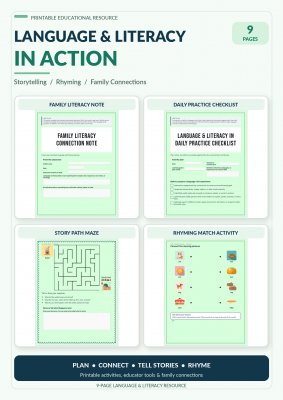
Supporting the language and literacy development of school-age children is essential for their academic success and overall communication skills. This course explores key cognitive and language development stages in children ages five to twelve, providing child care providers with a deeper understanding of how language skills evolve. Participants will learn effective strategies to foster literacy and language growth through engaging activities and content-rich experiences. By applying these techniques, child care providers can create a supportive learning environment that enhances children's reading, writing, and verbal communication abilities. Completing this course will empower providers to strengthen children's literacy skills, promote confident communication, and support lifelong learning.
By the end of this training, the learner will be able to:
- Describe strategies to support school age childrens language and literacy skills.
- Demonstrate an understanding of the cognitive and language stages of development in children five to twelve years of age
- Demonstrate an understanding of concepts within the activity and content area for language/literacy
- Criteria to earn CEUs:
- Certificates are awarded when the following criteria have been met by the learner:
- Class has been paid in full
- All material has been reviewed
- All review questions and final test have been completed with a passing score of 80% or higher.
- Learning Assessment Method:
- Learners will be assessed through questions after every section is completed. Learners will not be
allowed to proceed to the next section of the training until all questions have been answered correctly.
Learners will be presented with a final test composed of true/false and multiple choice questions.
Upon successful completion of the training, learners will receive their certificate by email.
- Learning Methodology:
- Online material will be presented in the form of slides,
accompanied with speech. Videos will be used to demonstrate ideas and concepts. Charts and tables
will be used for illustration.
- Logistics/Required Technology:
- A stable internet connection is required for the completion of this course. Users are highly encouraged to take their online course on Google Chrome on either a laptop or desktop computer. Speakers and/or headphones are also required to hear speech.
- Payment Policy:
- Payments need to be made in full. No refunds will be issued after starting the class.
- Proprietary or conflict of interest disclosure:
- Unless otherwise stated in the course description none of H & H subject matter experts and editor has any conflict or proprietary interests related to the material they prepared in this course.
- Support Services:
- Please visit our contact us page
You are purchasing a session of an online training that includes online assessments. Your certificate will be emailed to you once you pass the final exam with a passing grade of 80%.
Your certificate will bear the name you provided to us when you signed up. For support and questions regarding the material presented in this class please contact us at info@childcareed.com. Please consult our frequently asked questions page for other questions or feel free to contact us.
No prerequisites are required for the completion of this course.