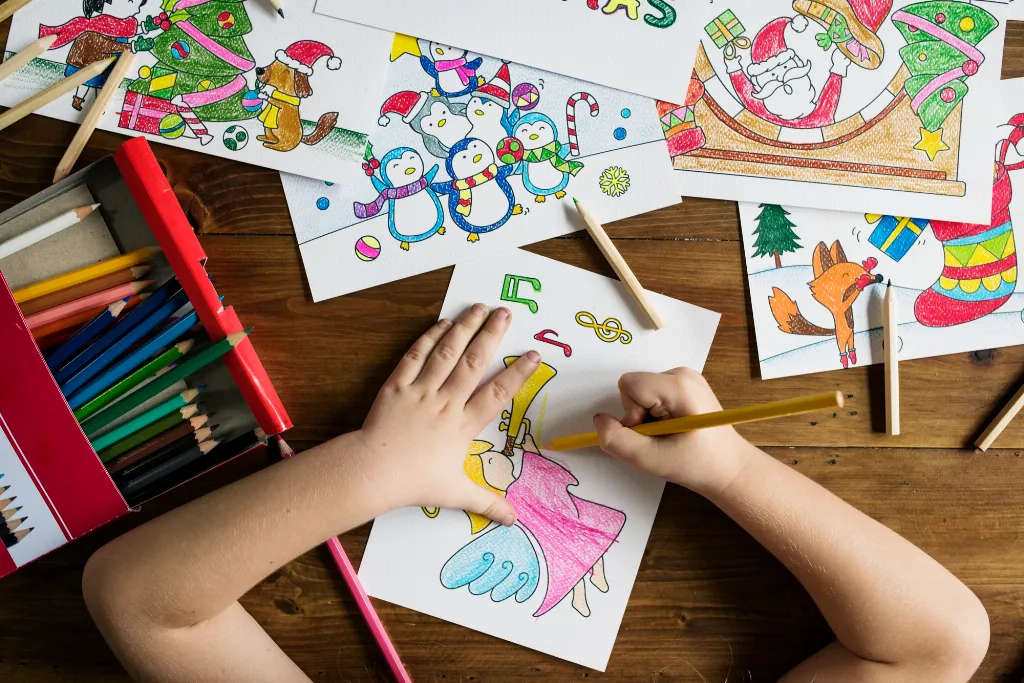
 Watch a child pick a #crayon and a #color at the art table. Those small choices can tell you a lot about the child’s #development and feelings while they play with #art in your classroom. Keep reading to learn simple, respectful ways to notice color choices and use them to support children and families.
For background on color meaning and ideas for talking with kids, see the ChildCareEd post The Secret Life of Crayons.
1) What do common crayon colors usually mean?
Children often pick colors for feelings, play, or memories. Use colors as clues, not facts. A simple guide used by many teachers:
- 🔴 Red — energy, big feelings, or attention seeking. See ideas about color and emotion in ChildCareEd.
- 🔵 Blue — calm, quiet, or thoughtful moments. Blue can also be a favorite toy or blanket color.
- 🟡 Yellow — happy, bright, or curious moods. It may show interest and excitement.
- 🟢 Green — nature, steady feelings, or comfort with others.
- 🟣 Purple/pink — imagination, play, or comfort depending on the child.
When you see dark colors like black or lots of brown, don’t assume trouble. Sometimes children use those for shadow, costume, or because those crayons were near the paper. For research on how children use color as a communication tool, see Color as a Semiotic Resource and the book Understanding Children's Drawings.
2) How can I read color choices without over-interpreting?
It’s easy to jump to conclusions. Keep your reading simple, gentle, and based on patterns. Steps to do that:
- 🔎 Observe: Notice the color choices for a few days. Patterns matter more than one picture.
- 🗣️ Ask: Use open questions like, “Tell me about your picture.” Let the child explain.
- 🧾 Record: Keep a short note: date, child, colors used, and what the child said.
- 🤝 Check: Talk with the child’s family to learn cultural or home meanings for colors. Family meanings matter.
Why this helps: color meanings vary by culture, age, and the child’s day. For example, some colors are taught in books or songs, and some children copy colors they like from a favorite shirt. For tips on sensory and inclusive color teaching, see Color Without Vision.
3) How should I use art and color choices to support learning and feelings?
Use art as a chance to help children make choices, practice skills, and name feelings. Here are practical steps you can try in your program:
- 🎨 Create open invitations: Offer mixed materials and let children choose. Read more about open-ended art at Open-Ended Art Activities.
- ✍️ Encourage language: When a child colors, say things like, “I see lots of blue — tell me about it.” This builds vocabulary and trust.
- 🧩 Link skills: Use coloring to practice fine motor work (grip, control), spatial thinking (inside/outside lines), and choices. Developmental context is explained in sources like the CDC milestones and Scholastic’s milestones on coloring skills (CDC, Scholastic).
- 📚 Use books and props: Read stories that link colors and feelings (e.g., color-feelings books) to open conversation. You can also use a bilingual coloring book that reinforces colors and numbers while celebrating National Coloring Book Day and engaging families.
- 🧯 Follow safety and licensing rules: state requirements vary - check your state licensing agency when using food, scents, or special materials.
Document and display process work (photos, notes) so families see the learning, not only the final picture. For program-level ideas about balancing product and process art, see Process Art or Product Art.
4) What common mistakes do teachers make and how do I answer family questions?
Common errors and simple fixes help everyone feel confident. Use this short guide in staff meetings and when you talk to families.
- ❌ Mistake: Reading one drawing as a diagnosis.
✅ Fix: Look for patterns across time. Use notes and child words before drawing conclusions. - ❌ Mistake: Forcing all art to match a sample (product-only craft).
✅ Fix: Mix 1–2 product projects with frequent open-ended invitations. See benefits of balanced practice at ChildCareEd. - ❌ Mistake: Not checking cultural meanings with families.
✅ Fix: Ask families what colors mean at home. Family notes help you respect culture and avoid mistakes.
FAQ for families and staff (short):
- Q: Does a child’s color mean they are sad? A: Not by itself. Check patterns and ask the child.
- Q: Should we change a child’s color choice? A: No. Let color choice be theirs. Offer words and ask about meaning.
- Q: How do we share with parents? A: Send photos and a one-line note about the child’s choice and words. Invite family input.
Final tip: Use color as a doorway—ask, listen, document, and teach. Color choices are clues that help you support children’s growth, choice-making, and #children’s social and emotional learning.
Selected sources and further reading: ChildCareEd posts on crayon meaning (The Secret Life of Crayons), inclusive color teaching (Color Without Vision), open-ended art (Open-Ended Art Activities), and process vs product art (Process Art or Product Art). For research on developmental stages and drawing meaning see Understanding Children's Drawings and Color as a Semiotic Resource.
- Many Colors, One Canvas: MD ECE Conference
- Power of Art: Bldg Self-Esteem & Positive Behavior for ALL Abilities
- CDA Bridge Bundle: Family Child Care
- CDA Bridge Bundle: Family Child Care without Portfolio Review
- CDA Bridge Bundle: Infant/Toddler without Portfolio Review
- CDA Bridge Bundle: Preschool without Portfolio Review
- Emergent Learning & Development
- 45-Hour Infant and Toddler Curriculum
- Creating Environments that Nurture Growth and Community
- Texas Director Credential
- CDA Certification en Español: Recursos y Consejos para Educadores Bilingües
- 🤯 ¿Por qué este niño está teniendo un comportamiento difícil de repente?
- 🩺 Cumplimiento de Salud e Inmunización en Cuidado Infantil de Nevada ✔️
- 🚌 ¿Qué Significan las Regulaciones de Transporte de Illinois para las Excursiones Infantiles? 🚦
- 🚨 Reporte Obligatorio en Nevada
- Apoyo en Español para Capacitaciones Grupales Presenciales y por Zoom en Cursos Selectos
- Regulaciones de Licenciamiento de Cuidado Infantil en California para Centros y Hogares de Cuidado Infantil Familiar
- Proporciones de Cuidado Infantil y Tamaños de Grupo por Edad en Maryland (Guía Rápida para Centros y Hogares)
- Lista para Guardería en Casa en Illinois: Cómo Iniciar una Guardería en el Hogar
- Ejemplos de Crianza Respetuosa vs. Crianza Permisiva
- Consejos de Supervisión Activa para Salones de Preescolar y el Juego al Aire Libre
- Cómo Trabajar en el Cuidado Infantil en California: Requisitos y Pasos
- Las Mejores Ideas de Excursiones para Guarderías en Dakota del Norte
- Crayon Activities for Preschoolers: Color, Creativity, and Fine Motor Skills
- Crayon Colors and What They Mean in Children’s Art
- Crayon Activities That Support Toddler Development
- Fun Crayon Activities for Toddlers and Preschoolers
- Can doodling and drawing build fine motor skills and creativity?
- Crayon Colors Meaning: Favorite Color, Feeling, or Just the Crayon They Grabbed?
- How Can Educators Respond When a Child Says Their Drawing Is “Nothing”?
