When a pre-K child can act out, identify, and name a feeling, a confusing moment becomes an opportunity for communication. Playful guessing games give providers practical ways to build emotional vocabulary, empathy, and self-regulation; for deeper professional learning, explore CDA Subject Area 3  Buy Now $80.00 to strengthen classroom practices and earn training hours related to children’s social-emotional development.
Why Do Emotion Games Matter in Pre-K?
Young children experience intense emotions before they have the language, perspective, or impulse control to explain them. Emotion games create a low-pressure rehearsal space where children can observe facial expressions, body posture, voice, and actions. Rather than waiting for a child to become overwhelmed, providers can practice these skills during calm, connected moments.
Emotional literacy involves recognizing, labeling, and understanding feelings in oneself and others. CSEFEL explains that a richer feeling vocabulary helps children communicate internal experiences and participate in social problem-solving. This connects directly to classroom goals: children who can say “I feel frustrated” are more prepared to ask for help, try another strategy, or negotiate with a peer.
Games also support multiple domains at once. Children listen, remember, move, take turns, interpret visual information, and use expressive language. Keep the activity playful rather than evaluative. A child may interpret the same face as worried, surprised, or excited, and that ambiguity is an invitation to discuss clues—not proof that the child is wrong.
How Can Providers Prepare a Guess-the-Feeling Game?
Preparation can be simple and inexpensive. Begin with two or three familiar emotions, such as happy, sad, mad, or calm. Add more nuanced words—worried, proud, disappointed, excited, or frustrated—after children show comfort with the basic vocabulary.
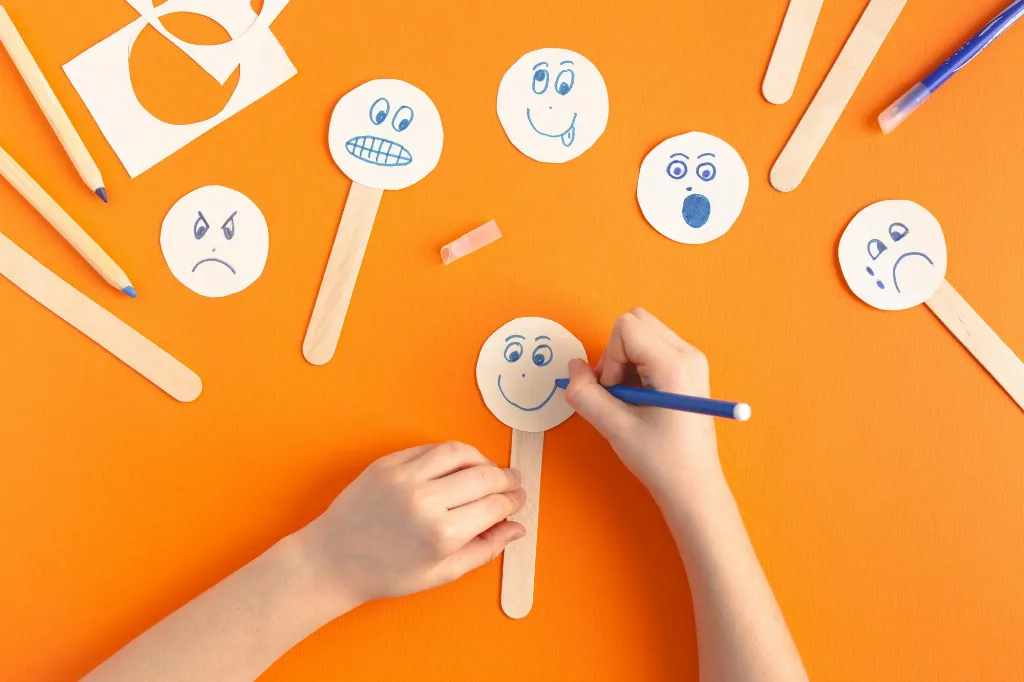
- Use photographs, mirrors, puppets, dolls, or hand-drawn cards.
- Choose expressions that reflect diverse children, cultures, abilities, and ways of communicating.
- Post the feeling word with a visual cue or translation when useful for multilingual learners.
- Plan one follow-up question: “What clue helped you guess?”
- Pair each feeling with a safe next step, such as breathing, asking for help, taking space, or using words.
A helpful opening script is: “I will show a feeling with my face and body. You can guess, point, copy me, or tell a story about when someone might feel this way.” Offering several response modes supports children who are shy, still developing language, or communicating with gestures, signs, or assistive tools.
Keep rounds brief—often five to ten minutes is enough. Stop while children are engaged, then make the cards available in a learning center for voluntary practice.
Which Emotion Games Can Pre-K Children Play?
1. Guess My Face: Select a card secretly and make the expression without saying the word. Children guess and explain the evidence they noticed. Invite them to copy the expression, then switch roles.
2. Voice Detective: Say a neutral sentence such as “The blocks are here” in a happy, tired, worried, angry, or excited voice. Children identify the feeling and describe how the voice changed. Use this game to emphasize that emotions are communicated through more than facial expressions.
3. Puppet Problem-Solving: Have a puppet lose a toy, wait for a turn, or feel excluded from play. Children identify the puppet’s feeling and suggest a helpful response. This separates the discussion from any child’s current behavior and supports empathy.
4. Emotion Freeze Dance: Play music and invite movement. Pause the music, name an emotion, and ask children to freeze with a matching face and body. Use calm, slow movements for tired or peaceful and energetic movements for excited.
5. Story Feeling Stop: During a read-aloud, pause at a meaningful moment. Ask, “How does the character feel? What clues do you see? What might the character need next?” Story-based discussion helps children connect emotions with causes, intentions, and solutions.
6. Emotion Sorting: Place cards into labeled “emotion homes.” Children may sort by feeling, intensity, body clue, or what might help. The emotion sorting activity guide offers additional classroom variations.
😊 Add a joyful challenge by letting children invent a new movement for each emotion, then explain why that movement fits.
How Should Providers Adapt Games for Individual Children?
Developmental appropriateness means adjusting the task, not lowering expectations for connection. Younger or less verbal children may need only two choices and large, clear visuals. Ask, “Happy or sad?” rather than requiring an open-ended answer. Let children point, gesture, use a communication device, mirror an adult, or select a card.
For children who are ready for greater complexity, introduce intensity and mixed emotions: “Is this a small, medium, or big worry?” or “Could someone feel excited and nervous at the same time?” Avoid presenting facial expressions as universal rules. Some children may show emotion differently because of culture, temperament, disability, neurodivergence, or personal experience.
- For sensory-sensitive children: reduce volume, avoid forced eye contact, and offer seated or puppet-based participation.
- For multilingual learners: teach the feeling in the home language and classroom language, using family input when possible.
- For children with limited speech: provide choice boards, photographs, gestures, and emotion symbols.
- For highly active groups: use movement stations or outdoor emotion charades.
- For children who become distressed: stop the scenario, validate the feeling, and offer co-regulation.
Adults should also monitor their own emotional state. Research on co-regulation emphasizes that children benefit from responsive caregivers who notice and manage their own arousal. A calm voice, slower movements, and genuine curiosity communicate, “Feelings are safe to explore, and we can return to calm.”
How Can Games Lead to Regulation and Problem-Solving?
Guessing the feeling is only the beginning. After children identify an emotion, guide them through a short sequence: notice, name, connect, choose, and try. For example: “You guessed frustrated. What clues showed frustration? When might someone feel that way? What could help? Let’s practice asking for a turn.”
Use concrete, teachable strategies rather than vague commands such as “calm down.” Children might practice:
- taking three slow breaths;
- squeezing playdough or a soft ball;
- moving to a cozy space with an adult;
- using a sentence starter: “I need help with…”;
- trying again or choosing another activity;
- checking whether a solution is safe, fair, and helpful.
Providers can embed these conversations throughout the day. During arrival, children may point to a feeling card. During conflict, an adult can narrate: “Your hands are tight and your voice is loud. You may be angry. I will keep everyone safe, and we can find a solution.” After recovery, briefly revisit the event without shame.
Document observations over time: Which feeling words does the child use? Can the child identify emotions in stories? Does the child seek help or use a coping tool? These observations can inform individualized planning and family communication while avoiding labels that define a child by behavior.
What Common Mistakes Should Providers Avoid?
Emotion games are most effective when they preserve dignity, flexibility, and connection. Several well-intended practices can unintentionally turn emotional learning into a test.
- Correcting feelings: Instead of “You are not mad,” try “You might be mad or disappointed. Tell me what happened.”
- Using only positive emotions: Include anger, sadness, worry, and disappointment while teaching that every feeling is acceptable, though some actions are unsafe.
- Forcing participation: Invite children to watch, point, use a puppet, or join later.
- Overloading children: Start with two or three emotions and repeat them across routines.
- Relying on stereotypes: Treat faces and body language as clues, not definitive evidence of another person’s internal state.
- Teaching only during crises: Practice when children are regulated so the strategy is available during challenging moments.
Directors can support consistency by creating a shared feeling-word list, placing visuals in classrooms, and coaching staff to use similar language. State requirements vary - check your state licensing agency before counting any course toward a specific training obligation.
FAQ
What if a child guesses incorrectly? Ask what clues informed the answer and offer another possibility gently. Multiple interpretations can be reasonable.
Should children act out anger? Yes, when the action is safe and clearly framed as pretend. Pair the expression with a regulation strategy, such as stomping in place and then breathing.
How long should the game last? Follow the group’s attention. Short rounds of five to ten minutes are usually more effective than a long lesson.
Can emotion games prevent challenging behavior? They can strengthen communication and coping skills over time, especially when adults consistently model, validate, and teach alternatives. They are not a quick fix or a substitute for individualized support.
Which professional courses support this work? ChildCareEd offers several relevant options:
- Brighter Futures: Social Emotional Development Buy Now $16.00—focuses on emotional development and responsive interactions.
- From Tantrums to Triumphs: Equipping Preschoolers with Self-Regulation Skills Buy Now $25.00—connects playful strategies with self-control and challenging behavior support.
- Social Foundations and Responsive Classrooms Buy Now $24.00—examines relationships, self-regulation, conflict resolution, and responsive environments.
- Staying Positive: Guidance for Preschoolers Buy Now $24.00—supports positive guidance and social-emotional development.
- The ABCs of Behavior: Turning Challenges into Learning Opportunities Buy Now $55.00—helps providers interpret behavior and respond with empathy and consistency.
Conclusion
So, can you guess the feeling? More importantly, can children learn to notice, name, and respond to feelings through play? With short, inclusive games, children practice reading emotional cues, expanding their vocabulary, taking another person’s perspective, and choosing supportive actions. Start with familiar emotions, honor different forms of expression, model regulation yourself, and connect every feeling to a safe next step. When these practices become part of everyday classroom life, pre-K children gain more than game skills: they gain language and relationships that help them participate, recover, and belong.
- The ABCs of Behavior: Turning Challenges into Learning Opportunities
- Bienvenido! Welcoming All Families
- Birth to Five CDA Credential with Portfolio Review
- Opportunity for Growth: Emotional Development
- Pediatric RSV First Aid & CPR/AED
- 24 Hour Texas Pre-Service
- CDA Bridge Bundle: Family Child Care without Portfolio Review
- Art from the Heart for Preschoolers: Open Ended Art Projects that Build Self-Esteem
- CDA Bridge Bundle: Infant/Toddler without Portfolio Review
- Texas Director Credential
- Party Hats and Emotional Regulation: Helping Little Ones Navigate Big New Year Feelings
- Pizza or Kale Chips? Kid-Friendly Nutrition Tips to Start the Year Right
- CDA Certification en Español: Recursos y Consejos para Educadores Bilingües
- 💛🧩 ¿Cómo puedo hacer que mi enseñanza sea inclusiva para los niños con autismo?
- ¿Cómo afecta la dopamina a los niños: señales, efectos e influencias diarias?
- Cómo Celebrar el Día Nacional del Kindergarten
- Celebrando la amistad en el cuidado infantil durante el Día de los Mejores Amigos
- Canciones, juegos y preguntas de círculo para niños
- Emotion Sorting Activities for Social-Emotional Learning
- How to Teach Feelings with an Emotion Sorting Activity
- Emotion Sorting for Kids: Learning Feelings Through Play
- How can child care teams help children manage big feelings?
- Can we tame the ‘monsters’ of big emotions in young children?
- Can a Superhero Week Help Preschoolers Learn to Name and Manage Emotions?
- How can we help children identify and express emotions in child care?
- How can child care providers teach children to name and manage emotions?
- How can we build emotional vocabulary through books and play?
- Feelings Activities for Toddlers: Building Social and Emotional Skills
- Feelings Activities for Toddlers: Point, Move, Match, and Name It
- Can You Guess the Feeling? Emotion Games for Pre-K Kids
