Introduction: Why organize materials and routines?
As a fellow child care provider, you know that small changes in how materials and routines are arranged can make huge differences. When things are organized, children feel more secure and teachers spend less time fixing problems. Focus on clear #routines, simple #visuals, organized #centers, calm #transitions, and engaged #children. These five ideas make days smoother for everyone.
Why it matters:
1. Children learn better when they know what comes next. Predictable routines reduce anxiety and behavior problems. See guidance on building strong schedules in How to Create a Classroom Schedule.
2. Organized materials help children make choices and finish work more independently. For ideas on centers and layout, check How to Design Centers That Promote Both Play and Learning and tips on classroom space at Tips for designing your early childhood classroom space.
1) How should I set up materials and shelves so children can help themselves?
Good shelving and clear spots speed up play and clean-up. Try these steps:
- 🔍 Keep only a few choices out. Too many piles confuse children. Rotate extras to a teacher cupboard.
- 📏 Put materials at child height. When children can reach things, they make smarter choices and clean up faster. See Montessori shelf ideas at Shelves, Rugs, and Trays.
- 🧺 Use clear trays or small baskets so each activity has its own kit. A tray = one complete set = less lost pieces.
- 📚 Label with pictures and words at eye level. Visual labels help nonreaders and English learners find and return items.
- 🧭 Make simple traffic paths. Keep rugs and tables away from main walking lanes so children don't get stuck.
How to teach it:
- 🙂 Model: Do a brief clean-up lesson and show exactly where one item goes.
- 🕐 Practice: Let children practice carrying a tray or rolling a rug as a short lesson.
- ✅ Give jobs: Use helper roles like "Shelf Checker" to make tidy routines part of the day. For more layout ideas, visit ChildCareEd classroom space tips.
2) What schedule and visual supports help children follow the day?
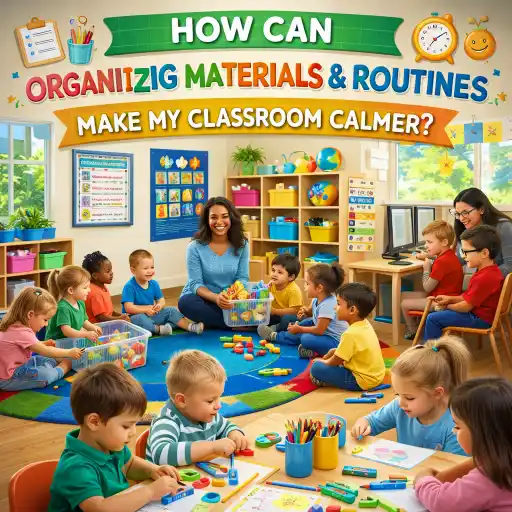
Children understand pictures faster than long directions. A visual schedule and simple daily flow keep everyone calm. Try this plan:
- 🖼️ Create a picture schedule: Use photos or clip art for arrival, circle time, centers, snack, outside, rest, and home. See step-by-step guidance at How to Create and Implement a Visual Schedule.
- 🔁 Post it low on the wall so children can touch and move pictures if appropriate.
- ⏳ Use simple time cues: a 5-minute warning, a 1-minute warning, and a song for cleanup. ChildCareEd explains why warnings and timers help in How Can I Make Transitions and Daily Routines Easier?.
- 📋 Teach the schedule: Review it each morning. Let children point to the next activity so they know what to expect.
- 🔄 Keep big blocks steady: Arrival, morning group, learning centers, snack, outdoor play, rest, small groups, and departure work well. For sample schedules and staff planning tools, see Create a Classroom Schedule.
Tip: Use a portable visual board for trips or changes so children see differences ahead of time. Visual supports reduce surprises and build independence.
3) How can I plan transitions and routines so the day stays calm?
Transitions are the times when the classroom can feel rushed. Plan them like short mini-lessons:
- 🔔 Give warnings: 5 minutes, 2 minutes, then 1 minute. Keep your words short and kind.
- 🎵 Use a consistent cue: the same clean-up song or movement bridge helps children know it’s time to switch. ChildCareEd’s transition tips are helpful: Transitions and Daily Routines.
- 🧑🤝🧑 Offer short helper jobs: carry a basket, line leader, or tray checker. Jobs lower resistance and build pride.
- 🕹️ Keep waiting short: plan for only a few minutes of standing or waiting. Use quick songs or counting games while waiting for sinks.
- 🧩 Use "First–Then" language: First clean-up, then outside. This sets clear expectation and reward.
Make transitions teachable. For example so children learn lining up: practice walking quietly with a counting rhyme. If a child needs more help, give an individual picture schedule or a quiet signal. For training ideas you can use with staff, see the workshop Moving About the Classroom: Effective Transitions.
4) How do we keep staff and families consistent and avoid common mistakes?
Consistency across adults and home helps children thrive. Follow these steps:
- 👥 Staff meetings: Pick 2–3 core routines to teach the team well (arrival, clean-up, and outdoor line-up). Practice them together once a week.
- 📣 Share with families: Send a short weekly picture schedule home or a quick note. Families who know the routine can support it at drop-off. ChildCareEd suggests family communication tools in Classroom-tested strategies.
- 🔁 Use brief coaching: Directors can do quick walk-throughs and praise the routines that work.
- ⚠️ Common mistakes to avoid:
- ❌ Rushing transitions — build the time into your schedule.
- ❌ Giving too many choices — limit to two useful options.
- ❌ Using different signals across staff — pick one song or phrase and stick with it.
- 📘 When to get help: If a child’s behavior is frequent, intense, or hurts others, involve families and your director. Use individualized supports and consult resources like the CSEFEL brief Helping Children Understand Routines.
Conclusion: Quick next steps and reminders
Start small and pick one change this week. For example:
- 🟢 This week: add one picture to your visual schedule and teach it in the morning.
- 🟢 Next week: pick one shelf to simplify and add tray labels.
- 🟢 After that: practice one transition cue and give children helper jobs.
State requirements vary - check your state licensing agency. For more resources and ready-to-use tools, visit ChildCareEd pages on schedules, visuals, centers, and transitions like visual schedules, designing centers, and classroom schedules.
You’ve got this. Small, repeatable habits create calmer days and more time for teaching.
- CDA Infants/Toddlers: Importance of Consistent Care
- CDA Bridge Bundle: Preschool
- CDA Bridge Bundle: Family Child Care
- CDA Bridge Bundle: Infant/Toddler
- Positive Attention: Interactions & Supervision for Infants & Toddlers
- Staff Supervision, Observation & Feedback
- Texas Director Credential
- Behind the Scenes: Baby Routines ONLINE
- Anxiety: Signs & Strategies
- Every Moment Matters: Schedules and Transitions
- 💛🧩 ¿Cómo puedo hacer que mi enseñanza sea inclusiva para los niños con autismo?
- 👶 ¿Cuáles son las proporciones y grupos requeridos en Dakota del Norte? 🏫
- ¿Cómo Crear Rutinas Saludables Para Niños Pequeños (sin estrés)?
- Recursos en Español sobre el Sueño Seguro del Bebé
- 10 Ejemplos de Cómo la Cultura Influye en el Desarrollo Infantil
- Proporciones de Cuidado Infantil y Tamaños de Grupo por Edad en Nueva Jersey (Guía Rápida para Centros y Hogares)
- Proporciones de Cuidado Infantil y Tamaños de Grupo por Edad en Virginia (Guía Rápida para Centros y Hogares)
- Cómo Ser Maestra de Preescolar en Maryland
- How can Washington, D.C. child care providers keep children safe during transitions, drop-off, and pick-up?
- How can I create calm classroom spaces that help children learn?
- How can Washington early childhood educators manage classrooms with routines, calm transitions, and choice?
- Celebrando la amistad en el cuidado infantil durante el Día de los Mejores Amigos
- Canciones, juegos y preguntas de círculo para niños
- Cómo simplificar la capacitación para sus empleados de daycare
- How Can Child Care Providers Create Sensory-Friendly Learning Spaces for All Children?
- How Can Child Care Programs Balance Indoor and Outdoor Learning Across the Week?
- How Do Classroom Labels Support Toddler Independence and Vocabulary?
- What Should You Review When a Preschool Day Feels Constantly Rushed?
- Why Do Toddlers Keep Asking Where Their Belongings Go?
