Introduction
Preschool classroom management is less about strict control and more about shaping an environment where young children feel safe, understood, and ready to learn. This article pulls together practical, teacher-tested strategies, routines, room design, behavior guidance, family communication, and simple tech or tools so you can apply ideas quickly in your classroom.
The guidance here is drawn from resources that emphasize predictable routines, learning centers, positive behavior guidance, and realistic organizational supports. For hands-on strategies and ready-to-use classroom plans, see our course Classroom Management is Collaboration!  Buy Now $16.00, which focuses on collaborative techniques for addressing challenging behaviors, establishing expectations, and building consistent routines. Citations point to specific ideas so you can follow up and adapt what fits your classroom and students.
What daily routines help preschoolers feel secure and ready to learn?
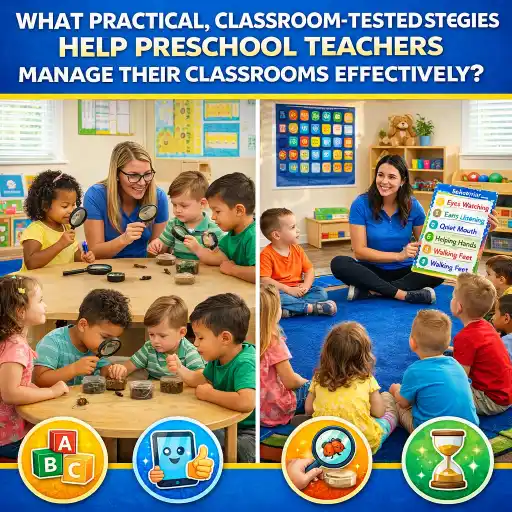
Predictability is the foundation: a consistent daily schedule, visual cues, and explicit practice reduce anxiety and off-task behavior. Use a visual schedule and a focus wall for circle and calendar time so children know what comes next and can orient themselves independently. For concrete examples of visual schedules, routines, and ready-to-use activities you can implement this week, see Preschool Classroom Management Buy Now $0.00.
Teach routines like lining up, handwashing, and clean-up as skills rather than expecting instant compliance; rehearse them, use songs or countdowns for transitions, and build in movement breaks to match preschoolers' energy levels.
Make responsibilities visible with job charts and classroom helpers to build ownership and social skills. When routines are taught, modeled, and reinforced, children feel capable and the classroom runs more smoothly.
How do learning centers and classroom layout reduce behavior problems?
Learning centers (literacy, math, art, sensory, science) let children explore hands-on while giving teachers natural observation and assessment opportunities. Centers support differentiated, play-based practice and small-group instruction that minimizes whole-group overwhelm.
Design the room to reduce overstimulation: clear zones, labeled bins, and predictable traffic flow help children move without conflict. Thoughtful materials organization and thematic binders make transitions faster and reduce searching or arguing over resources.
Structure center rotations with simple cues (timers, songs, or a helper chart) and scaffold expectations for each area. That combination of environment and routine prevents many behavior issues by addressing attention, interest, and accessibility.
What positive behavior guidance strategies work best with preschoolers?
Reframe "behavior management" as "behavior guidance": observe what a child's behavior is communicating, teach replacement skills, and change the environment before defaulting to consequences. This approach treats behavior as teachable rather than merely punishable. For classroom-tested strategies and examples, see Managing Behaviors in the Early Childhood Education Classroom, and consider using a simple Mini Behavior Support Plan Buy Now $0.00 to document triggers, supports, and replacement skills for students who need more structure.
Use positively worded expectations and specific praise: tell children what to do, not just what not to do (for example, "Use your walking feet" instead of "Don't run"). Get down to children's level, model the behavior, and acknowledge genuine attempts so connections remain strong and respectful.
Combine calm-down spaces, taught emotional vocabulary, and consistent adult responses. When teachers remain patient, name emotions, and provide strategies for self-regulation, children learn tools to manage feelings and actions over time.
How should teachers involve families and use simple tools to stay organized?
Keep families informed with concise, positive communication: monthly newsletters, positive notes home, and a parent communication board help build partnership and consistency between home and school.
Use simple tech or systems to reduce administrative load so you can focus on teaching. Tools that handle daily reporting, attendance, and secure pickup free time for planning and behavior supports; still, balance tech with personal touches like portfolios and celebrations to strengthen relationships.
Finally, use assessments and portfolios to individualize instruction and to show progress to families. Reflect on routines and seek professional learning when needed; small tweaks informed by observation often solve recurring challenges.
Summary
Effective preschool classroom management prioritizes structure, relationships, and thoughtful environments. Use predictable routines and visual schedules to create security; design centers and room layout to support independent play and smooth transitions; practice positive, teachable behavior guidance rather than punitive control; and keep families involved while using simple tools to stay organized. These small, consistent practices #routines #visuals #centers #behavior #families when taught, modeled, and reinforced, produce calmer classrooms and more learning-ready children.
For quick implementation, pick one routine, one center tweak, and one communication habit to try this week and observe the difference. Small, concrete changes supported by observation and family partnership often lead to measurable improvements in behavior and engagement.
References
[1] Preschool Classroom Management and Routines
[2] Classroom Management Guide
[3] Preschool Behavior Management - 10 Tips For A More Peaceful ...
[4] Preschool Classroom Management: Tips for Success! - CDA ...
[5] Behavior Management in the Preschool Years
[6] Top 5 Tips on Preschool Classroom Management - CloudBB
[8] Preschool Classroom Management: 150 Teacher-Tested Techniques
- Moving About the Classroom: Effective Transitions for Everyday
- Lesson Planning for Preschoolers
- CDA Home Visitor Subject Area 3 Part 3 Birth to 5
- CDA Home Visitor Subject Area 2 Part 3 Birth to 5
- Social Foundations and Responsive Classrooms
- CDA: A Closer Look at Assessments
- From Tantrums to Triumphs: Equipping Preschoolers with Self-Regulation Skills
- Birth to Five CDA Credential with Portfolio Review
- Emergent Learning & Development
- Every Moment Matters: Schedules and Transitions
- A humorous look at children's nervous system: Why stretching and breathing are key
- CDA Certification en Español: Recursos y Consejos para Educadores Bilingües
- ¿Cómo empiezo mi certificación CDA en Florida en línea?
- 10 Ejemplos de Cómo la Cultura Influye en el Desarrollo Infantil
- Proporciones de Cuidado Infantil y Tamaños de Grupo por Edad en Nueva Jersey (Guía Rápida para Centros y Hogares)
- Retraso del Habla en la Guardería: Cómo Pueden Ayudar los Proveedores
- How can preschool teachers use simple classroom management techniques that really work?
- Classroom Management in Preschool: Simple Strategies That Work
- Celebrando la amistad en el cuidado infantil durante el Día de los Mejores Amigos
- What small changes make child care classrooms feel more welcoming?
- How Can Recycled Materials Create Engaging Learning Centers?
- When a Favorite Teacher Is Absent, How Can Child Care Providers Support Children Through the Change?
- What Makes Task Cards a Great Tool for Mixed-Age Classrooms?
- How Can Teachers Build Emotional Regulation Into Daily Routines?
- What Is Co-Regulation and How Can Child Care Teachers Use It?
- How Can Teachers Help Two Children Build Together When They Disagree on the “Right” Way?
- How Can Early Childhood Teachers Encourage Problem-Solving Without Giving the Answer?
