Hands-on play in a sandbox is perfect for early #STEM learning with toddlers. In this article, you will find simple science ideas that work in Minnesota daycares. The activities are low-cost and follow safe practices. They help toddlers explore, ask questions, and practice skills in your #daycare. State requirements vary - check your state licensing agency.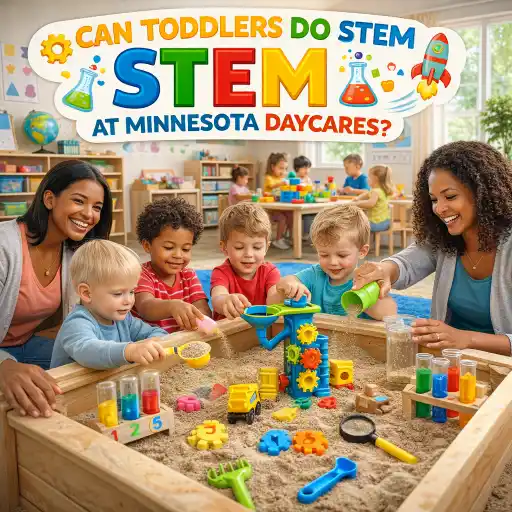
1) What simple STEM sandbox activities can toddlers try right away?
- 🔹 Pour and measure: Fill cups with sand and water. Let toddlers compare full, half, and empty. This teaches volume and words like "more" and "less."
- 🔸 Hide and find: Bury shells or safe toys. Toddlers dig and make guesses. This builds observation and patience.
- 🔹 Wet vs dry sand: Make two zones. Let children shape wet sand and draw in dry sand. They see how water changes texture — a simple science test.
- 🔸 Sand funnels and sieves: Use sieves and funnels to sort grains and small stones. Toddlers practice fine motor skills and sorting.
- 🔹 Build and test: Encourage small towers. Count how many scoops it takes. Then pour water to test how towers hold. This brings early engineering play.
For more on why messy play matters, see this child care guide on messy play as part of messy play. For outdoor ideas that pair well with sand, check outdoor play. If you need seasonal ideas for Minnesota, look at seasonal science.
2) How do sandbox activities support toddler learning and development?
- 🟢 Cognitive skills: Toddlers notice cause and effect (e.g., add water, sand changes).
- 🟢 Language: Teachers add words. Ask, "What happens when we add water?"
- 🟢 Motor: Scooping, pouring, and sifting build hand strength and control.
- 🟢 Social: Sand play encourages sharing, turn-taking, and simple teamwork.
- 🟢 Early math & science: Counting scoops, sorting colors, and testing materials practice measurement, classification, and prediction.
These skills align with early learning goals you can include in lesson plans. For help with toddler lesson planning, see this lesson planning guide. Assessment can be short notes or photos to show growth. For classroom science assessment ideas, this research overview is useful: assessment for preschool science.
3) How do I set up a safe, licensed-friendly sandbox STEM area?
- 🔒 Location: Put the sandbox where you can see it from all sides. Good supervision is key.
- 🧼 Clean sand: Use play sand made for children. Keep a cover to protect from animals and debris.
- 🧰 Tools and storage: Provide rounded scoops, plastic cups, sieves, and small buckets. Store tools clean and dry.
- 🩺 Health, safety, and wellness: To help staff confidently manage health routines and safety standards around sensory and outdoor play, ChildCareEd's Healthy Starts: Safety, Nutrition, and Wellness in Child Care
 Buy Now $55.00 is a 6-hour online course covering safe environment practices, hygiene routines, and wellness basics — a practical complement to the sandbox safety and licensing steps outlined in this guide.
 - 📋 Documentation: Note plans and accidents. Keep records for licensing reviews.
Common mistakes and how to avoid them:
- ❌ Too many toys in the sandbox — offer fewer tools to spark creativity.
- ❌ No cover — always cover the sandbox overnight to prevent contamination.
- ❌ No plan for inclement weather — have an indoor sand option (kinetic sand) for rainy or cold days.
For Minnesota licensing training or staff courses, consider local trainings listed on ChildCareEd Minnesota courses.
4) How can we connect sandbox STEM to Minnesota standards and outdoor learning?
Link sandbox activities to Minnesota's goals and local nature programs. Project Learning Tree materials connect to Minnesota standards and have preschool correlations. See PLT correlations. You can also tie outdoor walks and nature finds to sand play.
- 🌿 Nature link: Collect small natural items (pine needles, small stones) on a walk in your outdoor area. Bring them back to the sandbox for sorting and testing.
- 🌦️ Seasonal science: In winter, compare frozen sand or ice in the sand to melting indoors. Use ideas from Winter Wonders.
- 🌳 Outdoor classroom: If you run a nature-based program like a forest preschool, sand play can be a calm station near trails.
- 📚 Standards tie: Note simple objectives (counting scoops, describing wet/dry) and record them in lesson plans to show alignment with early learning goals. Project Learning Tree resources can help make clear links to standards.
FAQ (quick):
- Q: How long should a sand activity last? A: 10–30 minutes, depending on toddler attention.
- Q: Can we use natural beach sand? A: Use play-grade sand from a trusted supplier and follow safety guidance.
- Q: What if a child eats sand? A: Follow your health policy and notify families. Teach handwashing and supervise.
- Q: Can sand play count for lesson goals? A: Yes. Document the learning with notes and photos.
For more Minnesota ideas and to build staff skills, check local training at ChildCareEd MN courses. For creative sand activities, see lists of ideas at 25 Sand Activities and sand play challenge ideas at Sand Sensory Play Challenge.
Conclusion: How can you start tomorrow?
1) Pick one simple activity from section 1. 2) Gather 3–5 safe tools (scoop, cup, sieve). 3) Add a short learning goal to your plan (for example: "Toddlers will try pouring and say ‘more’ or ‘less’"). 4) Supervise and note one photo and one sentence of what you saw.
🌿 Outdoor and exploration environments: For staff who want to strengthen how they design and manage outdoor learning spaces, ChildCareEd's Environments That Inspire Independence and Exploration Buy Now $55.00 is a 6-hour online course that covers creating stimulating, child-led spaces where toddlers can explore freely and build early STEM skills — directly supporting the sandbox setup and outdoor classroom ideas in this article.
Programs using Montessori approaches can adapt these sandbox activities; see Supporting Our Littlest Montessori Scientists for practical, Montessori-aligned strategies to scaffold curiosity and introduce simple science experiences for infants and toddlers.
Sandbox STEM is easy to add and powerful for young learners. It is hands-on, joyful, and shows real learning. Your toddlers will build #toddlers thinking, fine motor skills, and curiosity while playing in the #sand. Keep safety and licensing in mind and use local Minnesota resources like PLT and training to support your team. Happy experimenting in your #Minnesota #daycare!
Here are easy activities you can set up in a sandbox. Use the items you already have. Why it matters: Sandbox STEM helps toddlers learn with their hands. Play builds language, motor skills, early math, and science thinking. These moments are real learning. Young children learn by doing. That is the big idea in early learning and play-focused teaching, explained in Little Hands, Big Learning. Safety and licensing matter. Also, state requirements vary - check your state licensing agency. Below are clear steps to create a safe and supportive sandbox.
- Professional Presence in Early Childhood
- Family Child Care Health Essentials
- Creating Environments that Nurture Growth and Community
- Texas Director Credential
- CDA Infants/Toddlers: Health and Safety
- Enhancing STEM Education for Infants and Toddlers
- CDA Infants/Toddlers: Smart Nutrition & Feeding
- Supporting Families and Caregivers in Language and Literacy
- Rooted in History: Early Childhood
- CDA Certification en Español: Recursos y Consejos para Educadores Bilingües
- Cuáles Son las Señales de Alerta en el Desarrollo Infantil que Todo Educador Debe Conocer?
- Recursos en Español sobre el Sueño Seguro del Bebé
- Que es Título 22 en California?
- ¿Cuáles son los pasos, requisitos y opciones en línea para la certificación de 90 horas en cuidado de Infantes/Toddlers en Maryland?
- 10 Ejemplos de Cómo la Cultura Influye en el Desarrollo Infantil
- Cómo Empezar una Guardería en Casa: Requisitos y Pasos
- ¿Cómo solicito la licencia para una guardería en California?
- Proporciones de Cuidado Infantil y Tamaños de Grupo por Edad en Nueva Jersey (Guía Rápida para Centros y Hogares)
- Proporciones de Cuidado Infantil y Tamaños de Grupo por Edad en Virginia (Guía Rápida para Centros y Hogares)
- Lista para Abrir una Guardería en Casa en Carolina del Norte: Cómo Empezar
- Lista para Abrir una Guardería en Casa en Dakota del Norte: Cómo Empezar
- Lista para Guardería en Casa en Illinois: Cómo Iniciar una Guardería en el Hogar
- Lista para Guardería en Casa en Texas: Cómo Iniciar una Guardería en el Hogar
- Capacitación Previa al Servicio para Proveedores de Cuidado Infantil en Dakota del Norte
- Can Toddlers Do STEM in the Sandbox at Minnesota Daycares?
- Diversión fresca de verano: actividades del Día Nacional del Helado para niños
- Canciones, juegos y preguntas de círculo para niños
- Cómo simplificar la capacitación para sus empleados de daycare
- Reglas y regulaciones de guarderías en Minnesota 2026: Requisitos actuales y próximos cambios
