Want to turn the small, repeatable moments of your day into powerful, low‑prep math lessons that build confidence and readiness? Embed short, playful prompts into arrival, snack, transitions, and centers so that every routine becomes intentional practice in number sense, measurement, spatial thinking, and reasoning. For a practical next step, explore Math Foundations in Early Childhood  Buy Now $16.00, a self‑paced course that shows how to convert routine moments into documented learning that strengthens classroom practice and can add training hours toward staff development; you might also review No Such Thing as Boring Math Buy Now $24.00 for playful activity ideas and progression guidance.
This article is written for directors and providers who want practical, evidence‑aligned ways to weave #math into the ordinary flow of the day. Expect specific, age‑appropriate routines, quick assessment approaches, family partnership strategies, and staff development steps you can try Monday morning. State requirements vary - check your state licensing agency.
How can everyday routines become reliable math‑learning moments?
Routines are high‑frequency opportunities to practice small, measurable skills: counting (how many plates), comparison (which row is longer), spatial language (under/behind), and data collection (attendance graph). Treat each routine as a short lesson loop: notice → name → prompt → record. A single 60‑ to 90‑second exchange repeated over several days yields stronger conceptual gains than a one‑hour lesson once a week.
Practical moves you can try immediately:
- At arrival: have a child place a name card on a class graph and ask, “How many are here?” — build counting and early data skills.
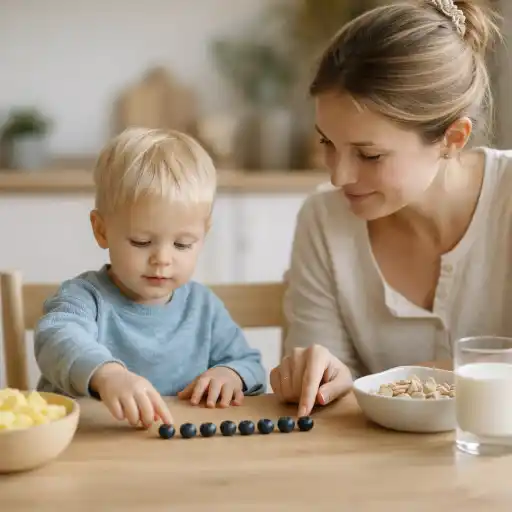
- During snack: invite children to divide crackers into equal plates, introducing the words more/fewer and halves.
- When lining up: count steps, then ask which group has more people — practice one‑to‑one correspondence and comparison.
- In cleanup: use positional language (put the red car behind the truck) and let children follow a two‑step direction to strengthen spatial reasoning.
Why it matters: brief, repeated practice in authentic contexts supports transfer to new problems and reduces the pressure of isolated drills. Embed math talk (ask “How do you know?”) and model multiple representations (gesture + manipulatives + words) to move children from action to representation. These small routines make #routines into predictable, scaffolded learning windows.
What age‑appropriate routine activities work for infants, toddlers, and preschoolers?
Match tasks to attention span, motor control, and representational understanding. The goal is to keep activities short, highly scaffolded, and meaningful.
Infants & toddlers (0–2): focus on comparatives, patterns, and simple counting cues embedded in care routines. For example, during diapering or feeding narrate amounts (“one wipe, two wipes”) and compare sizes using stacking toys. Use sensory bins with large counters for sorting (no small parts for under‑3) and narrate the child’s actions to build math language.
Three‑year‑olds: practice 1:1 correspondence with snack counting, use roll‑and‑graph games for early data, and provide sorting trays for attributes (color, shape). Keep sessions to 3–5 minutes and repeat.
Four‑ and five‑year‑olds: build complexity — ten‑frames, simple story problems with props, measurement with nonstandard units (blocks, hands), and block challenges that emphasize position words. Rotate one activity on your math shelf weekly so children see repeated variation rather than novel tasks every day.
Use materials you already have: plates, spoons, blocks, balls, and stickers. For printable activity ideas and measuring projects see ChildCareEd resources such as the Measuring Gingerbread activity Buy Now $0.00 and themed roll‑and‑graph PDFs.
How can I assess math learning quickly and keep documentation low‑burden?
Assessment in routine‑based teaching is purposeful observation. Replace heavy forms with short, actionable records that inform the next step. Aim for one 10–30 second observation per child during a focused routine each week and a single sentence noting behavior and the next instructional move.
- 📝 Quick tools you can use:
- One‑line observation notes: “Luca counts to 7 with 1:1 correspondence during snack.”
- Short task probes: matching numeral to dot card, completing a 5‑piece puzzle, or sorting by two attributes.
- Work samples: a photo of a block structure with the child’s explanation or the class’s roll‑and‑graph result saved weekly.
- Triangulate: combine observation, a brief task, and a sample to reduce false signals and plan individualized next steps.
Common mistakes and how to avoid them:
- Relying on worksheets — favor manipulatives and conversations.
- Teaching too many vocabulary words at once — pick 2–3 words per routine and loop them across the day.
- One‑size‑fits‑all pacing — observe to identify each child’s zone of proximal development and scaffold accordingly.
Keep in mind: state requirements vary - check your state licensing agency when counting training hours or documenting assessment data.
How do I engage families so home routines reinforce classroom math?
Families are natural partners for routine‑based math because they already share repeated contexts (meals, errands, play). Invite families to try micro‑activities that require no prep and model math talk. Tip: send one micro suggestion weekly rather than a long packet so families can try the idea and report back.
Concrete family strategies:
- Send a single, simple prompt: “Count the steps to your mailbox tonight and tell us which is longer — your walk or mine.”
- Share an at‑home roll‑and‑graph (a photocopy or PDF) children can complete at the table; photograph results to share with the class.
- Host a brief math‑play evening or record a 5‑minute clip showing how to play a snack‑time counting game.
What practical steps build staff capacity and sustain a math‑friendly culture?
Scaling a routine‑based approach requires short, focused professional learning, accessible materials, and predictable team habits. Create a sustainable plan that reduces friction for busy staff.
Start with these steps:
- Pick one program‑level math goal per month (e.g., 1:1 correspondence to 10), then identify three daily routines where the goal will be practiced.
- Create a “math shelf” with 4–6 ready‑to‑use games and printed prompts so teachers can rotate materials without prep time.
- Use 15‑minute weekly huddles for reflection: share one successful observation and one question for the coming week.
Recommended courses to grow team skillsets (quick links): Letter & Number Planning in Child Care Buy Now $24.00 (for planning lessons linking literacy and numeracy), Building Early Science Foundations Buy Now $16.00 (to integrate measurement and inquiry), and Enhancing STEM Education for Infants and Toddlers Buy Now $16.00 (for infants/toddlers). These short, targeted courses help staff convert daily routines into documented learning and strengthen program coherence.
Conclusion: What should you try this week?
Make a tiny experiment: choose one math goal, slot it into three routines (arrival, snack, cleanup), and record one short observation per child. Rotate one activity on your math shelf and send a single micro‑activity to families. Small, repeated routine moves—backed by intentional prompts, manipulatives, and brief assessment—create durable gains in children’s #play, number sense, and spatial reasoning. If you want guided training that aligns with these steps, begin with Math Foundations in Early Childhood Buy Now $16.00 and layer in course modules for staff. Remember: state requirements vary - check your state licensing agency. Your daily routines already contain the seeds of mathematical thinking—plan for them, observe, and celebrate the small wins.
Key focus words: #math #routines #play #assessment #families
- 45 Hour Child Growth and Development
- Moving About the Classroom: Effective Transitions for Everyday
- Early Mathematics Through Play
- Pediatric RSV First Aid & CPR/AED
- Math Foundations in Early Childhood
- Texas Director Credential
- Letter & Number Planning in Child Care
- Every Moment Matters: Schedules and Transitions
- Mathematical Skill Development
- CDA Certification en Español: Recursos y Consejos para Educadores Bilingües
- Cómo Trabajar en el Cuidado Infantil en Carolina del Norte: Requisitos y Pasos
- How Can I Use Fun Math Activities for Preschoolers Every Day?
- Cómo simplificar la capacitación para sus empleados de daycare
- How can North Dakota child care providers build number sense in everyday routines?
- How can everyday play build number sense in young children?
- How can preschool programs intentionally support early math skills every day?
- How Can I Use Everyday Materials for Meaningful STEM Exploration in My Preschool Classroom?
- How can I introduce STEM concepts in early childhood?
- How can I teach early math through everyday routines?
- How Can Even vs. Odd Sorting Introduce Early Number Sense?
- How Can Child Care Providers Build Strong Early Math Skills Every Day?
- How Can Early Math Activities Build Young Children’s Mathematical Thinking?
- How Can Independent Practice Connect Numerals and Number Words?
- How Can Toddler Classroom Jobs Build Early Math Beyond Counting?
- What Are Simple Ways to Help Children Notice Patterns in Everyday Activities?
