Curious how a simple bucket of water, a box of blocks, or a tray of recycled bits can spark big thinking in young children? If you want practical strategies that fit busy days and licensing realities, start with a focused, developmentally appropriate approach. Explore Building Early Science Foundations  Buy Now $16.00 to gain classroom-ready routines and training hours that strengthen your team’s science practice, and consider Enhancing STEM Education for Infants and Toddlers Buy Now $16.00 for strategies with the youngest learners—both are practical next steps to improve instruction and documentation.
Introduction
This article equips directors and providers with clear, evidence-aligned moves to introduce #STEM in ways that honor play, build language, and support later learning. You’ll find ready-to-use invitations, teacher prompts, documentation ideas, and links to targeted courses—so your team can translate ideas into practice tomorrow. Remember: state requirements vary - check your state licensing agency.
What STEM concepts are developmentally appropriate for infants, toddlers, and preschoolers?
Young children grasp foundational science, technology, engineering, and math ideas through everyday experience: cause-and-effect, measurement, patterns, and simple design thinking. Emphasize process over facts—observing, predicting, testing, and representing results—and choose content that connects to children’s interests and routines. For more ideas for engaging STEAM activities with infants and toddlers, see Full STEAM Ahead.
Why it matters: Early exposure builds dispositions—curiosity, persistence, and the habit of asking "why"—that support later achievement in many domains. Research (e.g., Karen Worth; RAND; OECD) shows that early STEM activities also enhance vocabulary and problem-solving.
- Core ideas to introduce: change & states (melting, evaporation), forces & motion (ramp races), measurement (comparing volumes, lengths), patterning and classification, and simple engineering challenges.
- Age examples:
- Infants/toddlers: sensory exploration, cause-and-effect toys, large manipulatives.
- Preschoolers: sink/float tests, seed-to-sprout observations, block engineering problems.
- Assessment focus: notice if children can predict, test, and explain; use short portfolios or photos to show progress.
Keep in mind the classroom culture: small, supported experiments repeated over time deepen learning. Use the hashtagged ideas below to make concepts discoverable across your planning: #preschoolers #inquiry #handsOn #classroom #STEM
How do I design short, hands-on STEM invitations using everyday materials?
Design invitations as quick, low-prep provocations with one clear question, a small set of materials, and a simple way to record results. The goal is to invite children to hypothesize and test—not to deliver answers. Practical structure: prompt → explore → document → revisit.
- Keep materials limited (3–6 items) to focus exploration and avoid overwhelm.
- Example invitations:
- Sink or float: 6 small objects + basin + prediction chart.
- Color mixing: droppers, clear cups, primary-colored water.
- Ramp races: cardboard ramp + different wheeled toys to compare distance.
- Teacher planning card: learning goal, open prompt, safety note, and documentation step.
- 📸 Document quickly: photo + one child quote per invitation keeps records manageable.
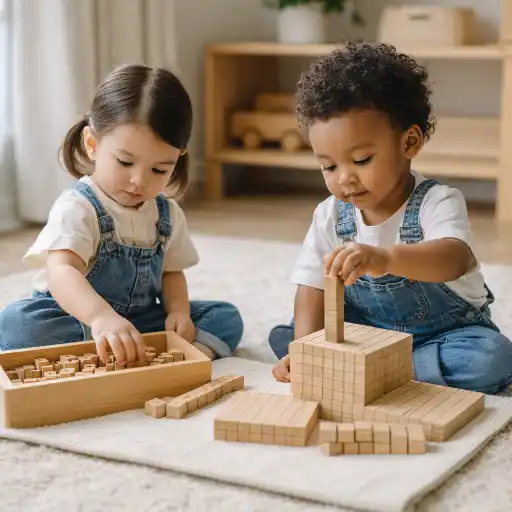
For practical course-based templates and activity banks, see Beautiful Junk: Using Recycled Materials in the Classroom and Basic Science in Early Childhood Buy Now $25.00 for implementation tools.
What teacher moves deepen scientific thinking without taking over play?
Your stance matters: aim to be a co-investigator and language-builder rather than a director. Research and practice recommend gentle scaffolding that preserves child agency while stretching thinking.
- Observe first—let children try before you prompt.
- Ask one simple open question: “What do you notice?” or “What do you think will happen?”
- Invite a prediction, encourage a single test, and then ask for an explanation.
- 🔧 Offer a targeted challenge: "How could you make your tower stronger?" and step back.
- Use precise vocabulary (sink, float, angle, more, less) and label actions for language development.
Teacher reflection: after the session, note one next-step prompt and one vocabulary word to reinforce during free play. If your staff needs focused PD on adult moves that build STEM talk, Math Foundations in Early Childhood Buy Now $16.00 pairs well with science trainings to boost math talk.
How can I document and assess early STEM learning without overtesting?
Assessment in early STEM should be short, authentic, and linked to daily practice. Use observation-based evidence that captures children’s reasoning rather than formal tests. The aim is to make learning visible for planning and family engagement.
- Quick tools to use:
- Photo + exact child quote (1–2 lines).
- Simple checklist: predicted, tested, explained, represented (draw/gesture/photo).
- Portfolio page: 2–3 entries across a project to show change over time.
- Use documentation to inform differentiation and next invitations.
- Share with families: send a photo and one question to try at home—this strengthens home–school continuity. state requirements vary - check your state licensing agency.
For staff-ready assessment strategies and templates, the Building Early Science Foundations Buy Now $16.00 course includes documentation examples you can adopt immediately.
How do I adapt STEM to include diverse learners and involve families?
Inclusive STEM honors every child’s strengths and backgrounds. Simple adaptations make activities accessible and culturally relevant while inviting family knowledge into the classroom.
- Adaptations:
- Infants/toddlers: prioritize sensory, safe, large-scale materials; shorter exploration windows.
- Children with fine-motor needs: provide larger tools, two-handed materials, or partner work.
- Dual language learners: label materials in home languages, accept explanations in the child’s preferred language, and capture bilingual quotes.
- Family engagement: invite donations of culturally familiar loose parts, send home one-photo challenges, and host short, hands-on family nights.
- Equity tip: low-cost materials (recycled bits, nature items) democratize access—see Beautiful Junk for ideas and templates.
Common mistakes: what to avoid and quick fixes?
- Too much adult instruction — Fix: ask one question and wait 10–20 seconds for thinking.
- Overloading materials — Fix: limit choices to 3–6 items; rotate weekly.
- Avoiding mess — Fix: use trays, smocks, and short cleanup routines so you keep high-value investigations in the program.
- No documentation — Fix: one photo + one child quote per invitation keeps records useful and brief.
Conclusion
Introducing #STEM in early childhood is realistic, low-cost, and high-impact when you center play, one clear question, and purposeful adult moves. Start small—one well-designed invitation per week, a simple documentation routine, and targeted staff PD—and you’ll see growth in children’s curiosity, language, and problem-solving. If you want practical tools and CEUs, explore Building Early Science Foundations Buy Now $16.00, Enhancing STEM Education for Infants and Toddlers Buy Now $16.00, and supporting courses like Basic Science in Early Childhood Buy Now $25.00, Beautiful Junk, and Math Foundations in Early Childhood Buy Now $16.00 to build staff skill and confidence. Your next step: pick one invitation, prepare materials tonight, and try it tomorrow—small, repeated invitations build big learning.
FAQ
- Q: Do I need expensive kits? A: No—everyday & recycled items are powerful.
- Q: How long should invitations run? A: 10–20 minutes for quick invites; multi-day projects for change-over-time work.
- Q: How do I include infants? A: Focus on sensory experiences, large safe materials, and adult narration.
- Q: Where can I find activity templates? A: See the linked ChildCareEd courses and activity pages for printable invitations and teacher cards.
- Basic Health & Safety and Breastfeeding Awareness
- 45 Hour Preschool Methods and Materials
- Play Safe, Think Big: Literacy Through Play
- Pediatric RSV First Aid & CPR/AED
- CDA Bridge Bundle: Family Child Care without Portfolio Review
- CDA Bridge Bundle: Infant/Toddler without Portfolio Review
- CDA Bridge Bundle: Preschool without Portfolio Review
- Texas Director Credential Renewal
- Texas Director Credential
- Preschool Arithmetic Activity
- Mathematical Skill Development
- Counting Candy Canes: The STEM of Holiday Fun for Early Learners
- CDA Certification en Español: Recursos y Consejos para Educadores Bilingües
- 👶 ¿Cuáles son las proporciones y grupos requeridos en Dakota del Norte? 🏫
- Recursos en Español sobre el Sueño Seguro del Bebé
- Cómo Trabajar en el Cuidado Infantil en Carolina del Norte: Requisitos y Pasos
- Cómo Ser Maestra de Preescolar en Illinois
- Cómo simplificar la capacitación para sus empleados de daycare
- How can pumpkin science create meaningful, hands-on fall learning for preschool classrooms?
- How can I introduce STEM concepts in early childhood?
- How Do I Introduce Measurement to Young Children?
- STEM for Preschoolers: Fun Activities That Encourage Curiosity
- Rosh Hashanah Kindergarten Lesson Plans: 5 Days of Apples, Kindness, and New Beginnings
- How Can Child Care Providers Create Low-Cost STEM Activities With Items They Already Have?
- How Can Loose Parts Play Turn Everyday Objects Into Powerful Learning Opportunities?
- How Do Light vs. Heavy Activities Build Early Measurement Skills?
- How Can Child Care Providers Extend Ten-Frame Learning from 11 to 20?
- Can a Floor-Sized City Fit on a Table? Exploring Scale Through Reconstruction
