Introduction
Spring brings warmer days, more outdoor #play, and fresh learning chances. This short guide helps childcare providers and directors make a simple, useful spring outdoor safety checklist. Use numbered steps, ready rules, and quick checks so every teacher knows what to do before children go outside. State requirements vary - check your state licensing agency. For more daily tools, see the ChildCareEd weather chart resource here Buy Now $0.00.
Why it matters: Outdoor time helps kids grow strong, learn, and calm down. A good checklist keeps play fun while protecting children from heat, storms, ticks, poor air, and playground hazards. Research shows outdoor play supports health and development (Canada review). Follow national safety standards too CFOC.
Find five quick words to remember: #outdoor #safety #supervision #sun #play.
1) What should be on a basic spring outdoor safety checklist?
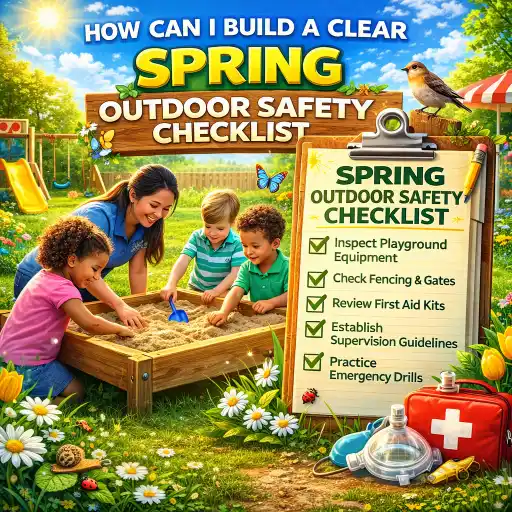
Make 1 sheet that staff can use every time. Use simple yes/no checks. Number the items so staff can scan fast.
- Weather & conditions check (temperature, feels-like, chance of storms). For a ready chart try ChildCareEd's weather chart tool Buy Now $0.00.
- Air quality & smoke (wildfire season): if the air is poor, shorten or cancel outdoor time. See California tips for smoke rules.
- Sun & heat steps: water, shade, sunscreen with parent permission, hat rules. ChildCareEd has heat-day ideas in their outdoor planning courses (outdoor classroom)
 Buy Now $16.00.
 - Pest checks: ticks & mosquitoes—plan checks and clothing reminders. Use CDC tick prevention guidance here.
- Playground surface & equipment walk-through: hot slides, loose boards, wet or slick spots. Use playground planning resources on ChildCareEd.
Tip: Post the checklist near the door and on staff phones. Make it a short habit: check once in the morning and once before afternoon outdoor time.
2) How do we check weather, air quality, and pests before outdoor time?
Do three quick checks and write the result on your checklist. Number your steps so staff follow the same routine.
- 🌤️ Check weather and sun: Look at temperature, wind, and UV index. If it’s very hot, use shade and shorter play blocks. ChildCareEd gives sunny-day ideas and shade planning here.
- 😷 Check air quality: If smoke or pollution is high, move inside. Centers in wildfire areas use an air-quality plan and indoor movement activities (indoor activities) Buy Now $24.00.
- 🐜 Check pests and ticks: Walk the play area for ant mounds or standing water. Teach staff to do a quick tick check after outdoor play. Use CDC tips for preventing tick bites here and local tick-check routines from preschool guidance Preschool-Plan-It.
Why do these checks help? They stop problems before they start. For example, checking the ground catches slick spots and ant mounds. Checking air quality protects children with asthma. Small steps keep kids safe and let play stay outside more days.
3) How should we set up supervision, hydration, and sun protection?
Clear roles and simple supplies keep outdoor time safe. Use numbered rules and small lists so staff can follow quickly.
- 👀 Supervision zones: Divide the yard into numbered zones and assign a staff member to each one. Do a headcount when children move zones.
- 💧 Hydration plan: Offer water before, during, and after play. Mark water breaks on the daily schedule. On hot days, increase water checks.
- 🧴 Sun protection: Use parental permission for sunscreen and store a labeled bottle. Encourage hats and light clothing. Post shade areas and rotate activities there during peak sun hours.
- 🛝 Equipment rules: Post age-appropriate signage and quick safety rules (no running on wet slides, one child at a time on swings). Inspect equipment every morning.
- 🩹 First aid & meds: Keep first-aid kit, inhalers, and epi-pens ready and trained staff on site. Follow child health plans and document any treatments.
Training idea: Practice a 60-second outdoor drill for storms or a lost-child scenario. ChildCareEd courses on active-play balance and observation help staff prepare here Buy Now $16.00 and here Buy Now $16.00.
4) What emergency steps, communication, and documentation should be on the checklist?
Your checklist should include quick, numbered actions for problems and how to tell families. Keep copies of emergency numbers, child health plans, and incident forms near the door.
- 📞 Emergency contacts: List 1) local emergency number, 2) nearest urgent care, 3) child’s parent/guardian, and 4) on-call supervisor.
- 🚑 Incident steps: If a child is injured, 1) move to a safe spot, 2) give first aid, 3) call for help if needed, 4) notify family, 5) document on the incident form.
- 📋 Documentation: Keep a simple incident/near-miss form. Record time, staff on duty, what happened, and action taken. This helps with future prevention and licensing reviews.
- 📣 Family communication: Send a short message after incidents and a weekly note about outdoor plans (sun hats, jackets, boots). Use templates so messages are quick and consistent.
- 🔁 Review and update: Number a monthly review on your staff calendar to update the checklist and practice procedures. Include state rules in your review; state requirements vary - check your state licensing agency.
For water safety, use Red Cross guidance when planning trips near pools or lakes Red Cross.
Conclusion
Use one clear checklist that staff can use every day. Number the steps, make short yes/no boxes, and post it where everyone can see it. Practice the routines and review monthly. Small habits—checking weather, inspecting the yard, assigning supervision zones, and knowing your emergency steps—keep children safe and let them enjoy the benefits of spring #outdoor #play. For more detailed training and tools, explore ChildCareEd courses and outcomes on outdoor classrooms and safety materials and implementation.
FAQ
- Q: How often should we update the checklist? A: Review monthly and after any incident.
- Q: Who signs off on daily checks? A: The staff member assigned to outdoor time should initial the chart.
- Q: Can parents apply sunscreen? A: Yes—use written permission and label the bottle. Follow your center policy.
- Q: What if there is sudden thunder? A: Follow the rule: "Thunder = indoors now." Move children inside immediately.
Common mistakes and how to avoid them
- ❌ Mistake: No clear supervision zones. ✅ Fix: Number zones and assign staff each day.
- ❌ Mistake: Skipping tick checks. ✅ Fix: Add a one-minute post-play tick check to your checklist and share tips with families.
- ❌ Mistake: No indoor backup plan on hot or smoky days. ✅ Fix: Keep a short list of indoor movement activities from ChildCareEd.
- 45 Hour Child Growth and Development
- Creating the Natural Outdoor Classroom
- Administering Basic Health and Safety ONLINE
- 1,2,3, Eyes on Me: Classroom Safety
- Bienvenido! Welcoming All Families
- Texas Director Credential Renewal
- Texas Director Credential
- Family Child Care: Building, Premises, and Outdoor Safety
- Free Childcare Training
- Seasonal Changes and School Prep: Adapting to Weather and Activities
- Tips for Child Care Professionals: Adapting to Seasonal Changes
- Gross Motor Spring Activities for Kids: Fun Ways to Build Strength and Coordination
- ❄️ What Outdoor Activities Work Well for Illinois Kids in Every Season? 🌷🍂
- 👶 ¿Cuáles son las proporciones y grupos requeridos en Dakota del Norte? 🏫
- Last Day of Winter Activities: Learning Centers and Outdoor Play Ideas
- How can I build a clear Spring outdoor safety checklist for my childcare program?
- What should be on a playground safety checklist for child care centers?
- How can child care programs use outdoor learning ideas for all seasons?
- Cómo Empezar una Guardería en Casa: Requisitos y Pasos
- Lista para Guardería en Casa en Illinois: Cómo Iniciar una Guardería en el Hogar
- Consejos de Supervisión Activa para Salones de Preescolar y el Juego al Aire Libre
- How can childcare teams lead safe, fun nature walks in Georgia parks and gardens?
- How can we use nature-based learning through Minnesota's outdoor seasons?
- Cómo simplificar la capacitación para sus empleados de daycare
- How can school-age daycare use outdoor activities to teach, play, and stay safe?
- How can I build a nature-based curriculum for my New York program?
- How can seasonal activities (spring, summer, fall, winter) combine fun with clear educational goals?
- Can You See the Wind? 8 Outdoor Spring Activities That Help Children Explore It
