Introduction
This article helps child care providers and directors make a clear, easy-to-use #playground safety #checklist for everyday use. It is written in simple steps so staff can check the yard fast and keep children safe. Why it matters: outdoor play builds strong bodies, social skills, and creativity. A good checklist helps children stay safe while they learn and play.
Keep this in mind: state requirements vary - check your state licensing agency. Use this article with your center rules and training. For sample checklists and printable tools, see the ChildCareEd playground checklist and resources: Playground Safety Checklist (ChildCareEd) Buy Now $0.00 and the general playground safety guide: The Ultimate Playground Safety Checklist.
What should be on a daily playground safety checklist?
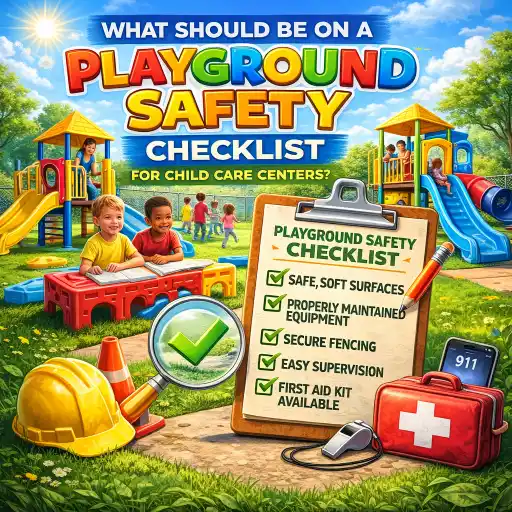
Use a short numbered list staff can fill quickly each day. Numbered checks help everyone follow the same routine.
- Inspect equipment: 1) look for broken parts, loose bolts, rust, splinters, and missing guardrails. See ChildCareEd tips: Playground Safety.
- Check surfacing: 2) confirm shock-absorbing material (wood chips, sand, rubber) is deep enough and even. Playground Guidelines Buy Now $0.00 explain safe surfacing.
- Scan for hazards: 3) look for glass, trash, animal waste, holes, or tripping objects.
- Temperature check: 4) touch slides, metal rails, and seats—too hot? Keep children off until cool.
- Age signs: 5) confirm age-appropriate zones are used and signage is clear.
- Daily log: 6) staff initials, time, and notes. Keep records for repairs and licensing reviews.
Cite a full checklist and printable PDF at ChildCareEd Buy Now $0.00. A short habit (morning and before afternoon play) keeps the #playground ready.
How do we supervise and plan outdoor play to prevent injuries?
Good supervision is the most powerful safety tool. Use clear roles and easy rules so every adult knows what to watch.
- Assign zones: 1) divide the yard into numbered zones and assign one staff per zone. Post the zone map near the door.
- Use active supervision: 2) move so you can see all children, scan often, and predict risky moments. ChildCareEd describes the S.A.F.E. strategy (Supervision, Age-appropriate, Fall surfacing, Equipment maintenance) in detail: S.A.F.E. playground ideas.
- Keep ratios & counts: 3) do head counts when children change areas, enter or leave the yard.
- Communicate: 4) use walkie-talkies or clear hand signals when needed. Make sure substitutes know the plan.
- Train and practice: 5) rehearse a 60-second drill for storms, a lost-child scenario, or an injury. See active supervision strategies at Six strategies for active supervision Buy Now $0.00.
Small steps—numbers, zones, and drills—help staff act fast. Good supervision reduces most playground injuries and keeps play fun for #children.
How do we handle weather, sun, pests, and water safety?
Weather and outdoor hazards change each day. Use a short weather and safety routine every time you head outside.
- Check weather & air quality: 1) before outside time, check temperature, rain, storms, and air quality. If air is poor or there is thunder, move indoors. For guidance, see ChildCareEd spring checklist: Spring Outdoor Safety Checklist and CDC outdoor safety: CDC Outdoor Play and Safety.
- Sun & heat steps: 2) schedule play in shade during peak sun, offer water breaks often, and use sunscreen with parental permission.
- Bug and tick checks: 3) remove standing water, wear long sleeves when ticks are active, and teach staff to do a quick tick check.
- Water safety: 4) fence pools, keep constant close supervision, and follow pool chemical rules. See ChildCareEd water safety guidance: Playground and Water Safety Guidelines Buy Now $0.00.
Always remind families about sun hats, swimsuits with permission, and footwear. Remember: state requirements vary - check your state licensing agency for rules on sun protection, water play, and air quality limits.
What should we do when something goes wrong and how do we document and improve?
Have clear, numbered steps for incidents so staff act calmly and parents get the right information.
- Immediate steps: 1) move the child to safety, give first aid, call 911 if needed, and keep other children away.
- Notify family: 2) call the parent/guardian, share what happened and what care was given.
- Document: 3) complete an incident form with time, staff on duty, witnesses, actions taken, and follow-up. Use ChildCareEd incident templates and resources: First Aid and Incident Forms (ChildCareEd).
- Repair and report: 4) tag broken equipment out of use and report needed repairs to the director. Schedule maintenance right away.
- Review & train: 5) at the next staff meeting, review the incident and steps to prevent a repeat. Add needed items to the checklist.
Common mistakes and how to avoid them:
- ❌ Skipping the morning check. ✅ Fix: make the checklist a required sign-in step.
- ❌ No clear supervision zones. ✅ Fix: post a zone map and assign staff every day.
- ❌ Not documenting near-misses. ✅ Fix: record near-misses to prevent more serious incidents.
-
Daily playground checklist + active supervision plan (zones, scanning, head counts, and preventing injuries outdoors), include Preventative Health and Safety
 Buy Now $24.00—it covers identifying indoor/outdoor safety concerns and active supervision practices that match your article’s supervision and prevention sections.
 -
For training that strengthens the “fix it before it hurts someone” mindset behind your checklist (spotting hazards, documenting, and maintaining safe spaces), add Building and Physical Premises Safety
Buy Now $10.00—it focuses on identifying building/physical premises hazards and ways to prevent risk, which ties directly to equipment checks, repairs, and licensing-ready documentation.
Summary
- Inspect daily: equipment, surfacing, and hazards. Log results. (ChildCareEd checklist Buy Now $0.00).
- Supervise actively: use zones, counts, and practice drills. See active supervision tips at active supervision guide Buy Now $0.00.
- Plan for weather, sun, pests, and water using short checks and family communication. CDC guidance: CDC.
- When incidents happen: act, document, repair, and review.
- Train regularly and remember: state requirements vary - check your state licensing agency.
For more tools and training for directors and staff, explore ChildCareEd courses on building and physical premises safety and outdoor classrooms: Building and Physical Premises Safety.
Thank you for the careful work you do. Small daily checks keep play safe, and safe play helps children grow. Keep your checklist simple, post it, and practice it with the team. Together you make your #playground a safer place for every child.
FAQ
- Q: How often should we inspect the playground? A: Inspect twice a day—morning and before afternoon play—and after bad weather.
- Q: Who signs the checklist? A: The staff member leading outdoor time should initial and date the form.
- Q: Can parents apply sunscreen? A: Yes, with written permission and labeled bottles.
- Q: What surfacing is best? A: Loose-fill (wood chips, sand, pea gravel) or poured rubber that meets safety depth for fall zones.
- Q: Where can we find sample forms? A: ChildCareEd free resources have downloadable checklists and incident forms: Playground Safety Checklist Buy Now $0.00.
- 45 Hour Child Growth and Development
- CDA Home Visitor Subject Area 3 Part 3 Birth to 5
- 45 Hour Preschool Methods and Materials
- 45 hour Growth and Development Birth-age 12 ONLINE
- 24 Hour Texas Pre-Service
- Texas Director Credential
- 10 Hour Health and Safety Orientation Training
- Family Child Care: Building, Premises, and Outdoor Safety
- Normas de Licenciamiento de Cuidado Infantil en Virginia para Centros Diurnos Infantiles y Hogares Diurnos Familiares
- Proporciones de Cuidado Infantil y Tamaños de Grupo por Edad en Maryland (Guía Rápida para Centros y Hogares)
- Consejos de Supervisión Activa para Salones de Preescolar y el Juego al Aire Libre
- How can childcare centers use simple health and safety best practices every day?
- How can Florida child care programs keep kids safe from snakes, insects, and harmful plants on the playground?
- How can child care programs keep playgrounds safe every day?
- How can child care programs keep playgrounds safe every day?
- How can child care programs keep playgrounds safe every day?
- Bright from the Start, Ready for Inspection: What Georgia Providers Should Know About Rules for Learning Centers and Family Child Care Homes
- How can child care programs keep playgrounds safe every day?
- How can child care programs keep playgrounds safe every day?
- How can child care programs keep playgrounds safe every day?
- How can child care programs keep playgrounds safe for infants through school-age children?
- How can child care programs create safe climbing and movement experiences for toddlers?
- How Can Child Care Programs Keep Outdoor Play Safe?
- Playground Safety Checklist Template for Child Care Programs
- MN Daycare Rules and Regulations 2026: Current Requirements and Upcoming Changes
- Playground Safety Checklist for Daycares: 10 Hidden Hazards Staff Often Miss
- Pre-Service Training for Child Care: What Must You Finish Before Your First Day?
- What Should Child Care Staff Check Before Outdoor Play?
