Young children in busy programs do best when adults give clear steps each day. In your #classroom in #Florida, clear #routines and smooth #transitions help #children feel safe, follow directions, and learn. This short guide gives friendly, practical ideas for directors and providers to manage active groups with easy, repeatable routines. Use visuals, songs, helpers, and simple charts so kids k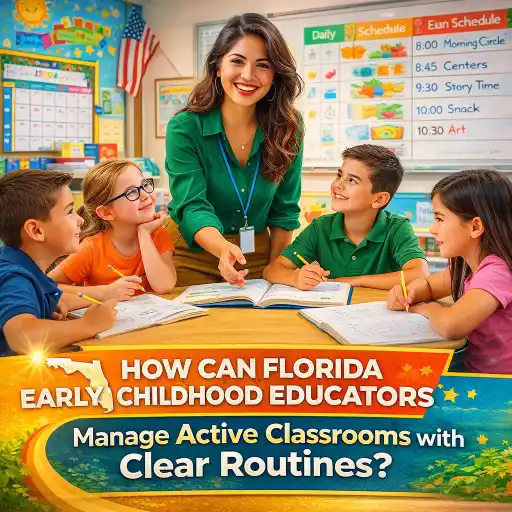 now what comes next and staff feel calm and steady. Also, state requirements vary - check your state licensing agency.
How can clear routines calm an active Florida classroom?
- 😊 Start with a welcome routine: greet each child, hang coats, and show the visual schedule for the day. See practical visuals at Smooth Days Start Here.
- 📋 Post one picture schedule at the child's eye level that shows: arrival, circle, centers, snack, outdoor play, rest, and home.
- 🎵 Use a short signal (song, bell, or phrase) for attention. Practice it every day until it is automatic.
- 🏅 Teach 3 classroom rules in positive language (e.g., “Hands are gentle,” “Walking feet,” “Use kind words”). Reinforce with specific praise.
- ⏱️ Add transition cues: 2-minute warning, 30-second reminder, then the clean-up song or timer.
Why this works: routines cut down surprises and give children chances to practice skills. When staff use the same words and visuals, the group becomes predictable and safer. For more scripts and sample schedules, check How Can I Make Transitions and Daily Routines Easier in My Classroom?.
What simple tools help manage transitions and reduce meltdowns?
- 🖼️ Visual Schedules: Show \"now\" and \"next\" with pictures. Children check the board and feel included. ChildCareEd’s visuals guide is helpful: Visual schedule ideas.
- ⏳ Timers & Countdowns: A sand timer or digital timer makes “two minutes” concrete. Pair it with a warning phrase.
- 🎶 Transition Songs & Signals: One short song or clap pattern tells children what to do. Songs work because they are fun and repeatable.
- 🧰 Job Charts & Helpers: Give each child 1 small job (line leader, shelf helper). Jobs build responsibility and shorten waiting time.
- 🧸 Calm Corner: A cozy spot with books or fidgets helps children self-regulate after a big activity.
Research and practice show these steps cut meltdowns by making expectations clear. For more evidence-based tips, read CSEFEL’s brief on transitions and ChildCareEd’s article How to Handle Transitions Without Meltdowns. Small, fun routines repeated daily become habits and save time for teaching.
How should staff and families work together to keep routines consistent?
- 🤝 Share the schedule: Send a one-page picture schedule to families each week or post it at drop-off.
- 📬 Give 1 positive note daily: A quick strength plus one small goal helps families stay connected.
- 👩🏫 Train staff together: Practice one routine in staff meetings so everyone uses the same words and signals.
- 📞 Ask families what works at home: Use that idea in the classroom when possible (bedtime, snacks, language cues).
- 📑 Document patterns: Keep short ABC notes (Antecedent, Behavior, Consequence) to share with families when a pattern appears.
Use local supports like the Florida PBIS Project for ideas on teaching expectations at the program level. Also, include simple guidance in family materials about practice at home. Remember, state requirements vary - check your state licensing agency. Consistent messages between school and home reduce confusion and help children feel supported.
What are common mistakes, and how can we avoid them?
Even good plans can stumble. Here are common missteps and quick fixes:
- 🚫 Mistake: Too many rules. Fix: Teach 3 simple rules and practice one at a time.
- 🚫 Mistake: Changing routines often. Fix: Keep the main routine for at least 2 weeks before changing.
- 🚫 Mistake: Long verbal directions. Fix: Use short steps, visuals, and a model of the behavior.
- 🚫 Mistake: Different signals from different staff. Fix: Pick one song or phrase and use it program-wide; training helps.
- 🚫 Mistake: Ignoring data. Fix: Take ABC notes and check for patterns. Use the Pyramid Model and PBIS tools like those at NCPMI and CSEFEL when behavior is persistent.
FAQ (quick):
- Q: How long to practice a new routine? A: 1–2 weeks of short daily practice usually shows improvement.
- Q: What if one child resists? A: Use an individual picture schedule, give limited choices, and involve the family.
- Q: When to ask for help? A: If behavior is intense or persistent, consult specialists and use data to guide decisions.
Conclusion
Managing active classrooms in Florida is easier with clear, practiced routines. Use visuals, timers, songs, and helper jobs. Train staff together and partner with families. Track what happens with simple notes and get help early if a pattern continues. For ready resources and courses, explore ChildCareEd’s articles and trainings like Smooth Days Start Here and Every Moment Matters: Schedules and Transitions. Small steps repeated kindly lead to big gains for children and staff. You’re not alone—use the tools, check your rules, and celebrate small wins every day.
Clear routines create calm because children know what to expect. Try these steps you can start this week: When families and staff use the same routines, children get clear messages in both places. Try this 5-step partnership plan: Transitions are high-energy times. The right tools make them fast and calmer. Use these classroom-tested supports:
- Stress Release for Florida Teachers
- ChildCareEd: Advancing Early Childhood Education Online
- CDA Certification en Español: Recursos y Consejos para Educadores Bilingües
- Why Florida Loves CDA: The Value of Certification in a Growing Field
- 🎈 Ready for Sunshine & Smiles? Discover Florida’s Favorite Training Bundles for Early Educators!
- Cómo Abrir Una Quardería En Casa Sin Dinero?
- Proporciones de Cuidado Infantil y Tamaños de Grupo por Edad en Nueva Jersey (Guía Rápida para Centros y Hogares)
- How can Florida early learning programs include every child with exceptionalities?
- How can Florida child care providers use ChildCareEd self-paced courses to meet training needs?
- How Can Florida Early Childhood Educators Manage Active Classrooms with Clear Routines?
- How can I support inclusion in Florida play and daily routines?
- How Can Educators Prepare to Become a Child Care Director in Florida?
- What are the supervision basics for child care providers in Florida?
- How can Florida providers connect early learning, health, and family support in 2026?
- Cómo simplificar la capacitación para sus empleados de daycare
- VPK Victory: Why Does Florida’s Push for Stronger Pre-K Funding Matter to Providers and Families?
- Why Does the 3 PM Safety Gap Make Florida After-School Programs So Important?
- Child Care Administration Course: Are You Ready to Manage Adults, Not Just Classrooms?
- Preschool Teacher Requirements in Florida: Do You Need a CDA, FCCPC, or College Degree?
