Everyday caregiving routines—including feeding, diapering, napping, dressing, and brief play experiences—are powerful learning opportunities for infants. In group care, these repeated one-on-one interactions help build secure relationships while supporting early language, motor development, emotional regulation, and emerging social skills. This article explains how infants learn through responsive caregiving and provides practical strategies for following individual cues, describing actions, encouraging participation, creating predictable routines, and turning ordinary care moments into meaningful developmental experiences. To strengthen these practices, explore ChildCareEd’s self-paced online course Balancing Act: Schedules and Routines  Buy Now $16.00, which helps infant and toddler educators create individualized routines that promote skill development, and The First Year: Feeding Infants Buy Now $16.00, which focuses on responsive feeding, appropriate schedules, nutrition, and infants’ changing developmental needs. Remember that state requirements vary, so always check with your state licensing agency.
1) How do routines actually teach infants?
2. Routines create scaffolds for learning. Each diaper change or feeding is an opportunity to name body parts, narrate actions, and model gentle touch. Those short, repeated verbal and physical cues build vocabulary and body maps in the infant’s #brain.
3. Modeling and social routines teach prosocial behavior. Recent research shows infants learn to help by watching caregivers model tasks during shared activities—so simple acts like putting a toy away can prompt helping behavior later (see the longitudinal study summarized in MedicalXpress).
4. Predictable care reduces toxic stress. When infants receive warm, consistent responses, stress hormones stay lower and exploratory learning increases. For practice-focused definitions and tips, visit ChildCareEd’s practical guide on responsive caregiving.
2) What everyday care moments offer the richest learning—and how should we use them?
- 🍽️ Feeding (language + social):
- Narrate tastes, textures, and actions: "You’re sipping milk—so warm!"
- Hold eye level, pause for the infant’s cues, and use short phrases to extend vocalizations—practice described in ChildCareEd’s responsive caregiving resources (responsive caregiving).
- 🧴 Diapering (body awareness + language):
- Narrate steps, count toes, or sing a quick rhyme—turn this private moment into a small lesson on body, sequence, and safety (see Making the Most of Care Routines with Infants).
- 😴 Nap prep (self-regulation):
- Use consistent wind-down cues (dim lights, same song) to teach settling and predictable transitions—tie practice to safe-sleep rules in ChildCareEd’s safe sleep resources. For more detailed strategies on young children’s sleep and practical guidance for balancing infant sleep needs with caregiver well-being, see Cracking the Code of Children’s Sleep (And Your Sanity).
- 🧸 Short play/tummy time (motor + sensory):
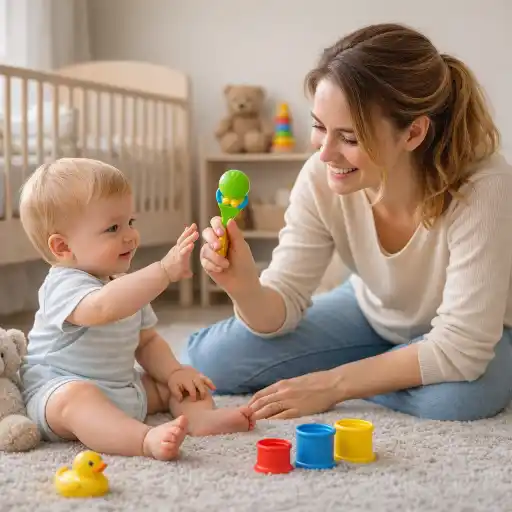
- Offer 1–5 minute sensory-rich moments repeatedly: rattles, textured cloths, or reach-and-grasp toys to promote coordination and curiosity (see ChildCareEd lesson-planning tips: Infant Lesson Plans).
- 🔁 Transitions (language + behavior):
- Use predictable verbal cues and short choices to help infants learn sequence and reduce fussing (see PBS guidance on routines: The Whole Child).
3) How can we design flexible room rhythms so every infant’s needs are met in group care?
- Define the loop: 1) diaper/feed → 2) connection (face-to-face talk) → 3) short play/tummy time → 4) rest. Keep the order but let timing float for each child. ChildCareEd describes this approach in Daily Routine Examples.
- Implement primary caregiving when possible:
- Assign one or two adults to be each baby’s main contacts for feedings, naps, and family communication—this boosts #attachment and consistency (see ChildCareEd on primary caregiving models: Arizona responsive caregiving).
- Use simple shared tracking: bottles, diapers, naps, and moods on a visible log (digital or paper) to smooth shift handoffs. Require a 2-minute verbal update at each change of staff.
- Stagger intensive care tasks so one teacher is never pulled in all directions (e.g., split diapering and feeding into overlapping blocks so staff can support each other).
- Practice the rhythm: do a 5–10 minute role-play at staff meetings and spot-check with short coaching cycles.
Why this matters operationally: flexible rhythms reduce crying, protect sleep quality, and make staffing more sustainable. For practical templates, see ChildCareEd’s sample schedules and room-rhythm guidance (Daily Routine Examples).
4) What training, policies, and supports make caregiving routines reliably learning-centered?
Programs need policies plus ongoing training to make good practice stick. Here is a prioritized checklist you can audit this week:
- 📚 Training requirements:
- Ensure staff complete core topics: responsive caregiving, safe sleep, feeding safety, illness prevention, and developmental monitoring. ChildCareEd offers both short modules and a complete 45-hour Infant & Toddler curriculum useful for deep staff development.
- 📝 Written policies:
- Post and share safe-sleep, feeding (breast milk/formula handling), primary caregiving, and shift-handoff policies at enrollment and in staff files. Keep signed family acknowledgements on file.
- Post and share safe-sleep, feeding (breast milk/formula handling), primary caregiving, and shift-handoff policies at enrollment and in staff files. Keep signed family acknowledgements on file.
- 🔁 Practice and coaching:
- Use micro-coaching (5–10 minutes) after a nap or feeding block to give specific feedback. ChildCareEd recommends short role-plays and spot observations to change practice quickly (responsive caregiving).
- 🌿 Staff wellbeing:
- Schedule brief debriefs, provide mental health supports, and assure coverage so caregivers aren’t rushed—availability of calm adults matters to infants as much as policy does.
- 🏥 Compliance and documentation:
- Keep training records organized (scan certificates), note any medical exception orders, and remember: state requirements vary - check your state licensing agency.
Operational note: include safe-sleep spot-checks and an incident protocol (e.g., shaken-baby prevention training). For public-health alignment, reference CDC guidance on infant care and milestones (CDC Positive Parenting Tips: Infants).
5) How can providers partner with families, measure infant progress, and avoid common pitfalls?
Partnering with families and measuring small wins keeps learning visible and prevents misunderstandings. Use this practical workflow:
- Daily, share one short WIN note (What we did / Improvement / Next step). Simple messages build #trust and let families replicate routines at home—see ChildCareEd’s communication tips: Improve Parent Communication Skills.
- Use milestone tools collaboratively. Invite families to use CDC checklists and share observations—early check-ins help identify concerns: CDC milestones.
- Measure progress with micro-assessments:
- 📸 One photo + one short bullet per week that ties to a weekly goal (reach, grasp, vocalizing).
- 📋 A 3-item cue audit each week for a few infants: noticed? responded? Timed response?
- Avoid these common mistakes (with fixes):
- ❌ Following the clock over cues → ✅ Use flexible blocks and cue charts.
- ❌ Weak shift handoffs → ✅ Require a 2-minute verbal update plus a written log.
- ❌ Only contacting families for problems → ✅ Share positives daily and invite their expertise.
- Invite family voice in planning: ask what soothes their child, which songs they use, and how feeding is handled at home—incorporate that into your room rhythm for consistency. When routines shift during holidays and family gatherings, share science-backed strategies for managing tantrums and transitions with families (holiday parenting hacks rooted in science).
When evaluation is framed as collaborative and strengths-based, families feel respected, and infants benefit from consistent care across home and program. For printable family engagement tools and enrollment templates, see ChildCareEd’s free resources: Family Voices Matter and other downloadable handouts.
Conclusion
Every diaper change, meal, nap, and brief play moment is an intentional opportunity to teach. Use these numbered actions to start this week:
- Pick one routine (diapering or feeding) and add one language or motor cue to it.
- Post a simple room rhythm and try a 2-minute handoff policy at every shift change.
- Run a 10-minute role-play on reading one infant cue at your next staff meeting and schedule one micro-coaching check this month.
Your team’s steady, responsive care is the best curriculum for young children. For more practice tools and course options, explore ChildCareEd’s practical articles on responsive caregiving, lesson plans, scheduling, and the 45-hour infant-toddler curriculum (links above). And remember: state requirements vary - check your state licensing agency.
Use the following prioritized list to plan intentional teaching moments inside routine care loops. Tie each learning goal to a repeated cue so it becomes both predictable and meaningful. Directors and lead teachers can change a fixed clock into a dependable, flexible room rhythm that supports individual #infants while keeping the classroom flow manageable. Here’s a stepwise plan you can adopt:1. Babies learn by repeated, predictable interaction loops. Responsive, timely answers to a baby’s signals—often called "serve-and-return"—strengthen neural pathways underlying emotion regulation, language, and social learning. See ChildCareEd's summary of how caregivers support infant brain growth as part of How Can Child Care Providers Support Infant Brain Development?.
- Positive Attention: Interactions and Supervision of Infants and Toddlers: For Workforce Solutions
- 45 Hour Infant and Toddler Methods and Materials
- Pediatric RSV First Aid & CPR/AED
- 24 Hour Texas Pre-Service
- The Best Promotion is Play
- Positive Attention: Interactions & Supervision for Infants & Toddlers
- Staff Supervision, Observation & Feedback
- Texas Director Credential
- Everyday Safety: Creating Healthy Environments
- Supporting Families and Caregivers in Language and Literacy
- CDA Certification en Español: Recursos y Consejos para Educadores Bilingües
- Recursos en Español sobre el Sueño Seguro del Bebé
- Lista para Guardería en Casa en Texas: Cómo Iniciar una Guardería en el Hogar
- How can Georgia’s infant-toddler coaching help teachers build secure attachments?
- How Do Infants Learn Through Everyday Caregiving Routines?
- How can responsive caregiving during feeding, diapering, and rest improve infant care in group settings?
- How Can Child Care Providers Build Secure Attachments with Infants?
- How Do Infants Learn Through Everyday Caregiving Routines?
- How Do Infants Learn Through Everyday Caregiving Routines?
- What Makes Babies Stressed in Child Care? 7 Nursery Changes That Can Help
- What Does Compassion Look Like in Child Care? 10 Everyday Moments That Matter
- How Can Child Care Providers Support Language Development in Young Children?
- How Can Child Care Providers Support Healthy Toddler Development?
- How Can Child Care Providers Turn Everyday Routines into Learning Opportunities?
- How Can Child Care Providers Build a Developmentally Appropriate Curriculum for Infants?
- Knowing Baby Better: How Family Information Supports Responsive Care
- How Can Providers Notice Developmental Progress Hidden in an Infant’s Daily Routine?
- What Should Be Included in an Infant Daily Schedule?
- How Can Infant Care Routines Become Everyday Learning Opportunities?
- Infant Room Storage: How Can You Keep Extra Items Out of Sleep Spaces?
