Summer in North Dakota brings sun and playtime — and some health risks for young children. This short guide helps directors and providers spot the dangers and use simple steps to protect kids. You will find clear, practical actions you can add to your daily routine. Remember: state requirements vary - check your state licensing agency.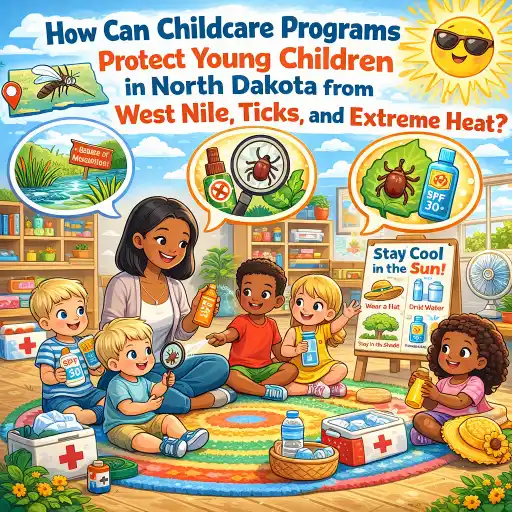
Why does this matter for our program?
- Children rely on adults to keep them safe from bugs and heat. #children
- Illness from mosquitoes or ticks, or heatstroke, can be serious. #WestNile
- Small changes in routine can prevent most problems. #prevention
What summer health risks should we watch for in North Dakota?
1. Mosquitoes and West Nile: Mosquitoes spread West Nile. Most people have no symptoms, but some get sick. Severe cases are rare but can be serious. See the CDC West Nile information for details. North Dakota health officials also remind residents to prevent mosquito bites and remove standing water near homes and programs (North Dakota HHS guidance).
2. Ticks: Ticks in the Upper Midwest can carry Lyme disease and other infections. Learn which ticks matter and how to reduce exposure from state sources like the Minnesota Dept of Health, which has clear prevention and removal steps.
3. Heat: Young children get hot quickly and need help to stay cool and hydrated. The CDC heat tips for children explain risks and what to watch for.
Short checklist to share with staff:
- Scan outdoor areas for standing water.
- Check tall grass and brush before play.
- Watch the weather and plan shade times and water breaks. #heat
How can we prevent mosquito bites and lower West Nile risk?
1. Remove mosquito breeding spots:
- 🪣 Empty or turn over buckets, wading pools, birdbaths, and planters every few days.
- 🌿 Keep gutters clean and yards trimmed to reduce damp hiding places.
2. Use screens and time outside wisely:
- 🪟 Keep screens in good repair and close doors to keep mosquitoes out.
- ⏰ Limit outdoor activity at dawn and dusk when many mosquitoes are most active; move active play to mid-morning or late afternoon when safe.
3. Use repellents safely:
- 🧴 With parent permission, apply EPA-registered repellents per label instructions. See the ChildCareEd Guide to Insect Repellants Buy Now $0.00 and EPA safety tips (EPA repellent guide).
- 💡 Apply repellent to your hands first, then to the child; avoid the hands, eyes, and mouth.
4. Program-level steps:
- 📋 Add a water-check and yard-check to your daily playground checklist (see ChildCareEd playground safety tips).
- 🛡️ Injury prevention and safety habits: To help staff build the consistent daily safety routines that protect children from summer hazards, ChildCareEd's Injury Prevention: Their Safety Is In Your Hands
 Buy Now $24.00 is a 3-hour online course covering how to identify hazards, set up safer environments, and build prevention routines — a direct match for the morning yard checks, playground checklists, and staff huddle steps outlined in this guide. For a concise overview of the course content and the practical modules that apply directly to summer hazards like ticks, mosquitoes, and heat, see the Their Safety Is In Your Hands article.
 - 📣 Share facts with families and post quick tips at drop-off.
For local case updates and detailed clinical info on symptoms and care, consult the CDC symptoms and treatment page and North Dakota health notices linked above.
How do we reduce tick exposure and spot tickborne illness?
Ticks live in tall grass, brush, and leaf litter. Protect children with simple routines before and after outdoor play.
1. Yard and route planning:
- 🌱 Keep play areas mowed and remove leaf piles or brush near play zones.
- 🛤️ Create clear paths and avoid games in tall grass or wooded edges.
2. Clothing and gear:
- 👕 Dress children in light-colored clothing, long pants, and tuck pants into socks during high-risk outings.
- 🧢 Cover strollers and baby carriers with netting if in tick habitat.
3. Repellents and permethrin:
- 🧴 Use EPA-registered repellents on exposed skin when parents agree. See the ChildCareEd repellent guide Buy Now $0.00 and the CDC Yellow Book summary on repellents (CDC Yellow Book).
- 👚 Treat clothing and gear with permethrin (not on skin) for longer protection when appropriate; follow label directions.
4. Tick checks and removal:
- 🔎 Check children and their clothing after outdoor play. Teach older children to tell staff if they find a tick.
- ✂️ Remove ticks promptly with fine-tipped tweezers. Pull straight up without twisting. For how-to steps and videos, see state resources like the Minnesota Dept. of Health tick videos.
5. Watch for symptoms: fever, rash, or tiredness. If you suspect illness after a tick bite, contact healthcare and notify families.
What steps keep children safe during extreme heat?
Young kids can’t cool themselves well. Plan with clear steps to prevent heat illness and to respond fast if a child shows warning signs.
1. Plan and schedule:
- ⏰ Move active play out of the hottest hours (midday to mid-afternoon). Use early morning or late afternoon for long playtimes.
- 🌳 Increase shaded play using trees, pop-up canopies, or indoor quiet activities when it’s very hot.
2. Hydration and clothing:
- 🥤 Offer water often — before children ask. Encourage sips every 15–20 minutes on hot or active days.
- 👕 Dress kids in light-colored, loose clothing and hats. Change wet clothing quickly to avoid chills after water play.
3. Watch for heat illness signs and act fast:
- 😓 Heat exhaustion: heavy sweating, weakness, headache. Cool the child, move to shade, give water, and monitor.
- 🚨 Heatstroke: confusion, fainting, very high temperature, little or no sweating. Call 911 and cool the child while waiting for help. See the Nemours KidsHealth heat first-aid steps and ChildCareEd first aid for heat illness Buy Now $0.00.
4. Program tools:
- 📋 Add a heat-check to your outdoor checklist and assign a staff member to monitor hydration and shade breaks.
- 🌿 Everyday safety and healthy environments: For staff who want to strengthen their overall outdoor health and safety practices across the summer season, ChildCareEd's Everyday Safety: Creating Healthy Environments Buy Now $55.00 is a 6-hour online course covering how to anticipate risks, maintain safe outdoor spaces, and build consistent health routines — directly supporting the heat planning, tick check, hydration scheduling, and repellent safety steps described throughout this article.
- 🧰 Keep a first-aid kit, cooling supplies, and emergency contacts with the group. See ChildCareEd's Heat Awareness resources Buy Now $0.00 for training and handouts.
Conclusion: What are quick actions and common mistakes to avoid?
Quick actions (do these now):
- 🧹 Remove standing water and trim grass daily.
- 🧴 Use EPA-registered repellents per label and parent permission. #prevention
- 🥤 Schedule shade and water breaks; never leave children in a parked car. #heat
- 🔎 Do daily tick checks and teach staff removal steps. #ticks
- 📋 Add these checks to your daily playground checklist and staff huddle.
Common mistakes and how to avoid them:
- ❌ Skipping the morning yard check — Fix: require the checklist as part of staff sign-in (ChildCareEd checklist tips).
- ❌ Forgetting to get written parent permission for repellents — Fix: include repellent permission in enrollment forms.
- ❌ Letting kids play during peak heat or mosquito times — Fix: move active play times and add indoor options.
FAQ
- Q: Can we use DEET on toddlers? A: DEET is approved for use on children with label directions. Always follow label and parent permission; see EPA and ChildCareEd guidance Buy Now $0.00.
- Q: How often should we check for standing water? A: Daily checks are best, and after heavy rain.
- Q: When do we call 911 for heat illness? A: If the child is confused, passed out, having seizures, or shows very high body temperature — call 911 immediately.
- Q: Do we need special training? A: Yes — first-aid, tick removal, and heat-illness training help. Use ChildCareEd and FEMA preparedness resources (FEMA for childcare Buy Now $0.00).
Thanks for the work you do to keep children safe and joyful in summer. For more printable checklists and staff training, see ChildCareEd resources like the Summer Safety Tips and the 10 Actions to Create a Culture of Safety Buy Now $0.00. Stay alert, use simple routines, and share updates with families. #children
North Dakota sees three common summer hazards for young children: mosquito-borne West Nile virus, tick bites that can spread disease, and extreme heat. Each risk needs a clear plan. Why it matters: Prevention is simple and powerful. Use a few reliable steps every day.
- CDA Certification en Español: Recursos y Consejos para Educadores Bilingües
- 🔍 ¿Qué ves cuando observas a un niño aprender?
- ⏰📘 ¿Cuáles son los requisitos de capacitación anual en el cuidado infantil en Dakota del Norte?
- 👶 ¿Cuáles son las proporciones y grupos requeridos en Dakota del Norte? 🏫
- Recursos en Español sobre el Sueño Seguro del Bebé
- 10 Ejemplos de Cómo la Cultura Influye en el Desarrollo Infantil
- Proporciones de Cuidado Infantil y Tamaños de Grupo por Edad en Maryland (Guía Rápida para Centros y Hogares)
- Proporciones de Cuidado Infantil y Tamaños de Grupo por Edad en Nueva Jersey (Guía Rápida para Centros y Hogares)
- Proporciones de Cuidado Infantil y Tamaños de Grupo por Edad en Virginia (Guía Rápida para Centros y Hogares)
- Lista para Abrir una Guardería en Casa en Dakota del Norte: Cómo Empezar
- Cómo Trabajar en el Cuidado Infantil en Carolina del Norte: Requisitos y Pasos
- Cómo Ser Maestra de Preescolar en Dakota del Norte
- Capacitación Previa al Servicio para Proveedores de Cuidado Infantil en Dakota del Norte
- Las Mejores Ideas de Excursiones para Guarderías en Dakota del Norte
- How can childcare programs protect young children in North Dakota from West Nile, ticks, and extreme heat?
- Celebrando la amistad en el cuidado infantil durante el Día de los Mejores Amigos
- Canciones, juegos y preguntas de círculo para niños
- How can North Dakota child care programs keep children safe from West Nile and tick-borne illness this summer?
- Cómo simplificar la capacitación para sus empleados de daycare
- How can child care programs keep kids safe on the Fourth of July in North Dakota?
