Looking for practical ways to celebrate young learners while strengthening family ties, staff skills, and your program’s profile? The Week of the Young Child is a chance to design short, meaningful celebrations that support learning, build relationships, and showcase your program’s quality. Consider beginning with training like Community and Family Engagement in Childcare  Buy Now $24.00 and Creating Environments that Nurture Growth and Community Buy Now $55.00 to turn celebration ideas into sustainable practice—these courses help you plan family-friendly events, document learning, and improve classroom routines while earning professional development credit. Explore those courses to gain tools and templates that save planning time and strengthen your #children-centered celebrations.
What is the Week of the Young Child and why should our program celebrate it?
The Week of the Young Child (WOYC), sponsored by NAEYC, spotlights young learners, their families, and the adults who support them. Celebrating WOYC is more than a calendar event: it’s an intentional opportunity to center play, highlight developmentally-appropriate experiences, and invite families and partners into your program’s educational mission. Thoughtful observances amplify learning through short, theme-driven days—music, food, teamwork, art, and family connection—and they make everyday learning visible to families and community partners. Using small, repeatable activities helps children practice language, motor, and social skills while letting families see learning in action. You can draw ready-to-use ideas from resources like Week of the Young Child activities Buy Now $0.00 and adapt them to your age groups and space.
How can we design daily themes and activities that support learning (not just entertainment)?
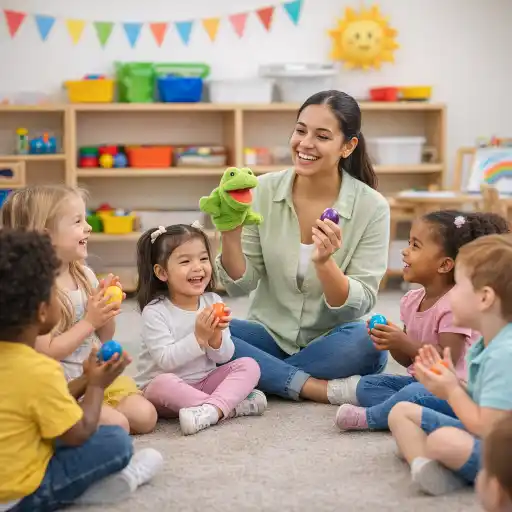
Design each day around one observable learning goal and 2–3 low-prep activities so staff can implement with fidelity. For example, Music Monday could focus on auditory discrimination and turn-taking: teach a call-and-response chant, use simple instruments, and add a short listening game. Tasty Tuesday can target vocabulary and math—measure ingredients, compare sizes, and describe textures. Work Together Wednesday becomes a teamwork & problem-solving lesson: build a community mural or construct a block city with assigned roles. Artsy Thursday emphasizes process art and fine motor practice; Family Friday centers relationship-building with short family-led stations or a shared story.
- Start with a single learning objective per day and age-appropriate scaffolds.
- Use short rotations (12–20 minutes) to keep attention strong.
- Document with photos and a 1–2 sentence learning note for each child—this transforms celebration into assessment.
- Include sensory-friendly options and translations to be inclusive—state requirements vary - check your state licensing agency.
- 📌 Tip: adapt activity packs from ChildCareEd's Week of the Young Child resources to save prep time.
How can we involve families and community partners so events feel authentic and manageable?
Family and partner involvement is the heart of WOYC impact. Start with low-effort invitations: ask families to share a favorite song, photo, or a 30–60 second video clip. Invite one community partner—library, local artist, or public health nurse—to host a short station. Use a small, clear outreach plan: announce the theme, offer 3 participation options (in-person, recorded, drop-off item), and include simple permission language. For larger events consider a resource fair model—local agencies rotate brief tables while your staff run activity stations (see the example of Oklahoma’s resource fair that connected community supports and programs). Practical steps:
- Map potential partners and choose one shared goal (enrollment, health checks, or arts exposure).
- Offer flexible times or a mix of on-site and virtual participation to reduce barriers.
- Provide short volunteer roles (10–20 minutes) and easy take-home materials for families who can’t attend.
Training like Building a Community of Families Buy Now $16.00 or Community and Family Engagement in Childcare Buy Now $24.00 can sharpen outreach strategies, help you collect family voices respectfully, and turn WOYC into sustained family engagement rather than a one-day event.
How do we manage logistics, safety, and measurement so celebrations are smooth and meaningful?
Logistics make or break events. Plan a one-page run sheet for each day with staff roles, required materials, and a brief safety checklist. Keep these practical points in mind:
- Staffing: assign a lead and at least one floater to manage transitions and the calm corner.
- Permissions & privacy: use a short opt-in/opt-out form for photos and guest visitors. state requirements vary - check your state licensing agency.
- Accessibility: set up a quiet area, translation supports, and non-food alternatives for sensory or allergy concerns.
- Supply plan: centralize materials in labeled bins and create an easy clean-up plan—this reduces staff stress and maintains program quality.
Measure impact with simple metrics: participation counts, family feedback (one-question survey), and one observed learning note per child. These quick data points help you report outcomes to staff, families, and funders while guiding next-year planning.
How can we avoid common mistakes, learn why this matters, and answer frequent questions?
Why it matters: WOYC can strengthen your program’s relationships with families (#families), raise public awareness about early learning, and create teachable moments that reinforce curriculum goals. Small, repeated practices—inviting family voices, documenting learning, and linking activities to developmental goals—create lasting benefits beyond one week.
Common mistakes and how to avoid them
- ❌ Over-scheduling big events: keep activities short and purposeful to preserve child well-being.
- ❌ Treating WOYC as only a party: attach a clear learning goal to each activity and document outcomes.
- ❌ One-off family asks that feel demanding: offer multiple, low-effort ways to participate (photo, song title, brief recording).
FAQ
- Q: How long should each WOYC activity be? A: For preschoolers, 10–30 minutes per station plus 5–10 minute group reflections; adjust younger or older ages accordingly.
- Q: Can we do virtual family events? A: Yes—virtual storytimes, recorded greetings, and short live demonstrations widen participation.
- Q: What about food and allergies? A: Use photos or pretend-food stations when possible; if you serve food, label ingredients and get explicit family consent.
- Q: Where can I get activity templates? A: ChildCareEd’s Week of the Young Child activities Buy Now $0.00 and other downloadable packs save prep time.
- Q: How do we turn WOYC into long-term benefits? A: Follow up with families, share learning snapshots, invite partners to ongoing collaborations, and include WOYC reflections in staff meetings.
Conclusion: What should we do first?
Start small: pick one theme (music or teamwork), set one measurable learning goal, and invite families with one low-effort option. Use professional development to scale your plan—courses like Setting the Stage: Story Time Buy Now $25.00 and Enhancing STEM Education for Infants and Toddlers Buy Now $16.00 provide concrete classroom tools to connect WOYC activities to learning outcomes. Celebrate your #children through intentional #play, involve #families and the local #community, and document learning so the Week of the Young Child becomes a visible step toward stronger #engagement all year long.
- 45 Hour Child Growth and Development
- 45 Hour Preschool Methods and Materials
- 45 Hour Infant and Toddler Methods and Materials
- 45 Hour School Age Methods and Materials
- CDA Bridge Bundle: Family Child Care without Portfolio Review
- CDA Bridge Bundle: Infant/Toddler without Portfolio Review
- CDA Bridge Bundle: Preschool without Portfolio Review
- Texas Director Credential
- Today Is Earth Day!
- CDA Certification en Español: Recursos y Consejos para Educadores Bilingües
- Recursos en Español sobre el Sueño Seguro del Bebé
- Cómo Celebrar el Día Nacional del Kindergarten
- First Aid for Young Children: What Kids Can Learn
- How can child care programs promote nutrition and healthy eating habits?
- What Positive Behavior Guidance Techniques Work in Child Care?
- How can I support English Language Learners in Michigan childcare classrooms?
- How Can Early Childhood Classrooms Celebrate Diversity and Inclusion?
- How can Washington classrooms be more inclusive using nature, play, and community?
- How can New York childcare programs help children in the concrete jungle fall in love with nature?
- How Can Early Childhood Programs Encourage Healthy Habits?
- How can child care programs support diversity and inclusion?
- How Did Oklahoma’s Week of the Young Child Resource Fair Show Why Community Partnerships Matter?
- Canciones, juegos y preguntas de círculo para niños
- How Can DC Early Educators Turn Pay Equity Debate into Provider Pride, Family Trust, and Strong Advocacy?
- What are the most important Quality Child Care Indicators?
- How can Georgia educators turn local leadership, wellness, and coaching into better child care programs?
- Can simple kitchen activities teach valuable skills to young children in child care settings?
- How Can Child Care Programs Celebrate the Week of the Young Child?
