Many children in Michigan childcare programs are learning English while they keep their home language. This article gives clear, easy steps for child care providers and directors. You will find ideas for the room, daily teaching moves, working with families, and checking progress. Use what fits your program and your children. Remember: state requirements vary - check your state licensing agency. You will see helpful resources like Supporting Dual Language Learners and Building Bridges for Dual Language Learners Buy Now $25.00.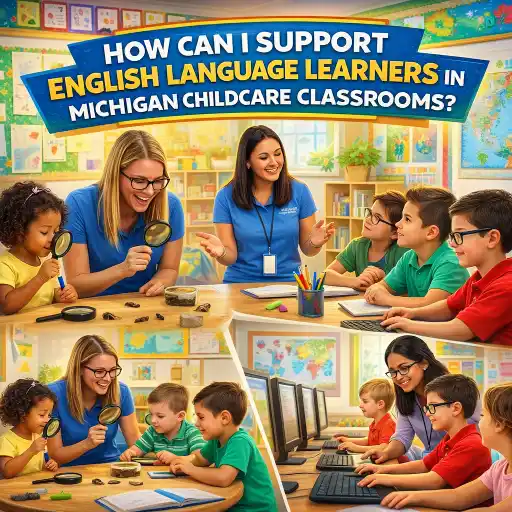
Why does this matter for Michigan programs and children?
2) Programs that welcome languages and cultures build trust with families. Trust helps children feel safe, which makes learning easier. For Michigan-specific preschool supports.
3) Good practices matter for quality and equity. Using culturally responsive steps in daily teaching helps every child belong. For classroom ideas, see Culturally Responsive Teaching.
Why it matters: 1) Children learn faster when they feel safe. 2) Families stay connected to you when you respect their language and culture. 3) Programs meet readiness goals by honoring all languages. Use these ideas to support #Michigan #DLLs #families #language #literacy.
How can I make my classroom welcoming and support daily language learning?
- 📚 Build a bilingual and diverse book corner.
- 1. Add books in children’s home languages and English. See book ideas at Many Languages, One Classroom.
- 2. Rotate 3–5 new books each month, so children see themselves in stories.
- 🏷️ Use labels, pictures, and schedules.
- 1. Label shelves with photos plus words in both languages. ChildCareEd suggests picture labels and routines for DLLs.
- 2. Add a picture schedule for daily routines, so children know what comes next without hearing every word.
- 🗣️ Model language and print knowledge.
- 1. Use short sentences, repeat key words, and point to letters or name cards. For print strategies, see Language & Literacy Strategies.
- 2. Use self-talk (describe what you do) and parallel talk (describe what the child does).
- 🎵 Celebrate home language and culture every week.
- 1. Invite a family to teach a song or share a simple story in their home language.
- 2. Play music, add photos, and use family words in greetings.
- 🔁 Keep routines predictable.
- 1. Routines help children learning a second language relax and try new words. See short tips in How Can Teachers Support Language and Literacy Every Day?.
Quick classroom wins: Add one bilingual label today, read a short book at arrival, and learn five family words. These small steps add up fast and help you support every child.
How can I partner with families and community resources in Michigan?
- 📩 Invite family voice and choices.
- 1. Send a short form: “What words should we know? Favorite song? A family photo?” Use simple slips or text messages.
- 2. Offer options: meet by phone, video, or in person. See family engagement tips at Family Engagement Strategies.
- 🤝 Tap local Michigan supports.
- 1. Use GSRP and local ISD resources for assessments and training: MISD GSRP and Early Childhood Specialists.
- 2. Share community story times or library bilingual resources.
- 🎓 Offer training and clear tips for families.
- 1. Recommend short, practical ideas: read 1 page nightly, sing one song, or point to labels at home.
- 2. Suggest ChildCareEd family-facing materials and the Building Bridges Buy Now $25.00 course for staff.
Staff can also review the role of the CDA in supporting diverse learners to align classroom practices with credential standards.
- 🔁 Use translation and visuals.
- 1. Send pictures, short voice messages, or translated notes when possible. Note: state requirements vary; check with your state licensing agency about translated records and consent.
Partnering tips: 1) Start small and build trust. 2) Honor family choices about sharing culture. 3) Celebrate small wins together.
How do I assess progress and avoid common mistakes?
Assessment helps you know what to teach next. For young DLLs, watch skills in both the home language and English.
- 🔍 Use observation and family input first.
- 1. Take short notes after group times: words children used, gestures, and attempts at sounds.
- 2. Ask families what words the child uses at home. Combine this with your classroom notes.
- 📋 Use recommended tools and guidance.
- 1. Learn about the DRDP guidance for DLLs at DRDP (2015). It asks teachers to consider skills in all languages.
- 2. See assessment ideas at Assessing Dual Language Learners.
- ⚠️ Common mistakes and fixes.
- 1. ❌ Mistake: Asking families to stop the home language. ✅ Fix: Encourage home language use; it supports learning. See How Can Child Care Programs Best Support DLLs.
- 2. ❌ Mistake: Misreading code-switching as confusion. ✅ Fix: Recognize it as normal bilingual behavior and document progress in both languages.
- 3. ❌ Mistake: Using one quick screening only in English. ✅ Fix: Use observations, family reports, and tools that consider home language (DRDP guidance).
- ✅ Track progress with small habits.
- 1. Take a weekly note for each child: 1 sentence on new words heard, 1 photo, 1 next-step idea.
- 2. Set tiny goals: e.g., “This week we will use the word ‘eat’ in English and home language during snack.”
FAQ (short):
- Q: Do I need to speak the child’s home language? A: No. Use visuals, gestures, family words, and invite family help. See Supporting Dual Language Learners.
- Q: Will two languages confuse a child? A: No. Bilingualism is a strength and supports thinking and learning.
- Q: Where can I get quick training? A: Try ChildCareEd courses like Building Bridges Buy Now $25.00 and short modules on print knowledge.
- Q: What about licensing rules? A: State requirements vary - check your state licensing agency.
Conclusion
Start small and steady. Add one bilingual label, read a short book, ask a family for one word, and note one new child word each week. Use local Michigan resources like GSRP and ISD specialists, and use assessment guidance like the DRDP to watch progress across languages. Your respectful, consistent choices help children feel seen and learn better. For more tools and trainings, visit the ChildCareEd pages linked above. You are making a real difference for children and #families every day.
Here are simple, concrete steps you can try right away. Short routines and clear visuals help children understand and join in.1) Young children who learn two languages grow strong thinking skills and social skills. When we support a child’s home language, we also help their English learning and their confidence. See ideas in Many Languages, One Classroom. Partnerships with families are essential. Families know their child best and can share words, songs, and photos that make learning real.
- 45 Hour Child Growth and Development
- 45 Hour Preschool Methods and Materials
- Bienvenido! Welcoming All Families
- Pediatric RSV First Aid & CPR/AED
- 45 Hour School Age Methods and Materials
- CDA Bridge Bundle: Family Child Care without Portfolio Review
- Texas Director Credential Renewal
- Texas Director Credential
- Building Bridges for Dual Language Learners
- Language for Our Littlest Learners: Building Communication From the Start
- CDA Certification en Español: Recursos y Consejos para Educadores Bilingües
- 💛🧩 ¿Cómo puedo hacer que mi enseñanza sea inclusiva para los niños con autismo?
- 👶 ¿Cuáles son las proporciones y grupos requeridos en Dakota del Norte? 🏫
- Apoyo en Español para Capacitaciones Grupales Presenciales y por Zoom en Cursos Selectos
- 10 Ejemplos de Cómo la Cultura Influye en el Desarrollo Infantil
- Lista para Guardería en Casa en Texas: Cómo Iniciar una Guardería en el Hogar
- Apoyo en Preescolar para Retrasos del Habla: Estrategias Simples que Ayudan
- Retraso del Habla en la Guardería: Cómo Pueden Ayudar los Proveedores
- How can child care programs best support Dual Language Learners?
- How can Michigan early educators use culturally responsive teaching in their classrooms?
- How can I support English Language Learners in Michigan childcare classrooms?
- How can Michigan classrooms teach children about the Great Lakes with hands-on science activities?
- How can preschool classrooms best support language development?
- Canciones, juegos y preguntas de círculo para niños
- How can Michigan PreK classrooms support inclusion and children with special needs?
- Cómo simplificar la capacitación para sus empleados de daycare
- How can I help quiet children feel comfortable participating?
- Why Do Bilingual Classroom Activities Matter for Dual Language Learners?
