Young children learn so much from the food we serve, the way we talk about meals, and how we invite families to join. This article helps child care providers and directors create simple, practical plans to support good #nutrition for every child. You will find clear steps, easy activities, safety tips, and family engagement ideas. Remember: state requirements vary - check your state licensing agency.
Why does healthy eating matter for the children in my program?
2. Healthy meals help behavior and learning. When kids eat balanced meals they are calmer and more ready to join activities. The CDC explains how early experiences shape later habits in Good Nutrition Starts Early.
3. Long-term health and community impact. Teaching healthy routines lowers risk for obesity and chronic illness and supports stronger families and classrooms. ChildCareEd covers why habits now last a lifetime in How Can We Help Children Develop Lifelong Healthy Eating Habits?.
Why it matters (short):
- Children need nutrient-rich foods to play and learn.
- Mealtime routines teach self-control and social skills.
- Working with families makes healthy habits stick.
Use these ideas as your program’s mission: offer variety, model good choices, and connect with families. See ChildCareEd’s practical tips at How can child care programs teach great nutrition.
What simple routines and menus can we use every day?
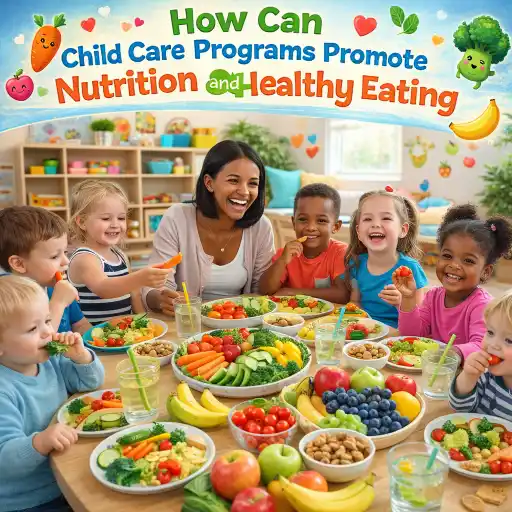
1. Plan with a weekly menu. A menu helps staff, families, and cooks know what’s coming. ChildCareEd offers menu templates and training like On My Plate: Children's Nutrition  Buy Now $24.00 to make planning easier.
2. Aim for balance at each meal. Use the MyPlate idea: fruits/vegetables, whole grains, lean protein, and dairy or alternatives. The USDA MyPlate ideas are explained in ChildCareEd’s Childhood Nutrition post and supported by CDC guidance Foods and Drinks for 6 to 24 Month Olds.
3. Daily habits to follow (simple list):
- 🍎 Serve a fruit or vegetable at every meal. June's National Fresh Fruit and Vegetables Month ideas offer simple, seasonal ways to feature fresh produce in menus and classroom activities.
- 🥛 Offer water all day; provide milk at meals.
- 🍞 Choose whole grains and rotate proteins (beans, eggs, lean meats).
- 🧾 Post the weekly menu and share it with families.
4. Family-style serving when safe: let children serve small portions to learn independence and portion control. ChildCareEd’s family-style tips are helpful: How can preschool programs build healthy eating habits?.
5. Quick practical menu example:
- Whole-grain pita, hummus, carrot sticks, apple slices, water.
- Brown rice, beans, steamed broccoli, orange slices.
- Oatmeal with banana, small yogurt side.
Keep portions small, encourage tasting (no pressure), and rotate menus so children see new foods often.
How do we handle picky eaters, allergies, and mealtime safety?
2. Allergy safety steps (numbered):
- ⚠️ Keep an updated allergy list in the kitchen and each room.
- 🧴 Read labels every time and avoid cross-contact.
- 🩺 Post action plans and train staff in response and CPR.
3. Choking prevention: cut grapes, hot dogs, and raw veggies into small pieces or mash them for young children. Supervise all meals and keep children seated. CDC guidance on choking hazards is useful: How Much and How Often To Feed.
4. Common mistakes and how to avoid them:
- ❌ Forcing bites — Fix: offer choices and small tastes.
- ❌ Serving the same safe-but-limited foods — Fix: rotate new foods with favorites.
- ❌ Not checking allergies before events — Fix: always confirm and inform families.
5. Infant/toddler-specific care: follow written feeding plans, track feedings, clean bottles and pump parts per CDC steps, and avoid honey before 1 year. ChildCareEd’s infant feeding guide has clear steps: How should child care providers handle food, nutrition, and mealtimes for infants and toddlers?.
How can we engage staff and families so healthy habits last?
1. Train staff with short, focused sessions. Use ChildCareEd courses like On My Plate Buy Now $24.00 and hands-on role-play for family-style serving and emergency response.
2. Communicate with families (numbered steps):
- 📣 Send a one-line invite each week: what you’re trying and one tip for home.
- 📸 Share photos or a one-sentence success note when a child tries something new (with permission).
- 👪 Invite families to share recipes or cultural foods to include on menus.
3. Quick family engagement activities:
- 🍽️ Taste-at-home: send a small idea (e.g., "Try sliced pear this week").
- 🧾 One-question surveys: “What is your child’s favorite veggie?”
- 🥗 Family recipe swap: post simple recipes shared by families.
4. Use program supports like CACFP for meal reimbursement and standards. See CACFP details at your state site or general info like the Massachusetts CACFP page: Child and Adult Care Food Program. And remember: state requirements vary - check your state licensing agency.
Summary
1. Start small: post a menu, add a fruit/veg to every meal, and model healthy choices.
2. Use simple routines, safe practices, and family partnerships to make changes last.
3. Train staff, track small wins, and celebrate effort. For more tools and training, explore ChildCareEd resources like How can child care programs teach great nutrition and How to Promote Healthy Eating Habits in Young Children.
Working together, your program can help children build lifelong, #healthy #eating habits. Good luck — your daily work matters for every child, family, and classroom.
1. Healthy food helps children grow and learn. Good #nutrition builds strong bones, bodies, and brains. For quick guidance about what to serve and why it matters, see ChildCareEd’s summary on Nutrition in Early Childhood.1. Picky eaters: be patient and use repeated, low-pressure exposure. The CDC has child-friendly tips in Tips to Help Your Picky Eater. ChildCareEd’s tips on trying new foods are also a great classroom match: How to Promote Healthy Eating Habits in Young Children.- 45 Hour Child Growth and Development
- Healthy Habits From the Start
- Nutrition Essentials for Child Care Providers
- Healthy Starts: Safety, Nutrition, and Wellness in Child Care
- Texas Director Credential
- Wellness in Action: Teaching Healthy Habits to Children
- On My Plate: Children's Nutrition
- CDA Infants/Toddlers: Smart Nutrition & Feeding
- Healthy Habits from the Start
- Healthy Cooking for Picky Kids
- National Eat Your Vegetables Day June 17
- Eat, Play, Grow: Essential Nutritional Tips for Growing Minds
- Snack Attack! The Best Brain Foods for Growing Minds
- Cocoa, Cookies, and Cognitive Development: The Holiday Nutrition Guide for Little Learners
- A Nutcracker’s Guide to Nutrition: Teaching Healthy Holiday Eating Habits
- Kickstart a Healthy Routine for Kids That Actually Sticks Past January
- Mental Health for Tiny Elves: Supporting Kids Through Winter Blues
- Menos Estrés a la Hora de Comer: Rutinas Simples Que Sí Funcionan
- How can child care programs teach great nutrition and healthy eating habits?
- How can preschool programs build healthy eating habits for young children?
- How Can New York Childcare Providers Prevent Childhood Obesity with Better Nutrition?
- How can Michigan daycares teach healthy eating habits to toddlers?
- How can child care programs promote nutrition and healthy eating habits?
- How Can Early Childhood Programs Encourage Healthy Habits?
- How can Michigan child care programs use CACFP and Summer Meals to keep children nourished when school is out?
- How can early childhood programs effectively support children's oral health?
- How can child care programs build healthy eating habits that last?
- How Can Child Care Providers Build Healthy Habits for Young Children?
