Preschool learning through play is a simple idea: children learn best when they play. This article helps child care providers and directors use play to grow skills in language, thinking, social play, and small motor control. You will find clear steps, short lists, and links to useful guides from ChildCareEd and trusted sources. Use #playbased in your plans and put #children first in every choice. Make your #classroom a place for joyful #learning for every #preschooler. Remember: state requirements vary - check your state licensing agency.
Why it matters:
1) Play builds real skills that last. 2) Play makes children want to try new things. 3) Play helps teachers see what each child can do. For research and friendly background, see Play-Based Learning and Cognitive Growth and Getting started with play-based learning. For a concise summary focused on the social-emotional and developmental benefits of play, see Hungry for Play: The Power of Play-Based Learning in Early Education.
How does play help preschoolers learn?
Play is the way young children practice important skills. Here are simple reasons play helps learning:
- 🧠 Brain growth: Play gives children chances to solve problems and remember steps. See ChildCareEd for plain language ideas.
- 🗣️ Language: Pretend games and stories make new words and longer sentences.
- 🤝 Social skills: Children learn sharing, taking turns, and solving fights during play.
- 🔢 Early math and thinking: Counting, measuring, and planning show up in block play and simple games. For game ideas, see Playful Learning.
- 🎨 Creativity and confidence: Open play encourages new ideas and boosts pride when children finish projects.
Why this is useful for programs:
- Programs that protect play help children get ready for school. See summaries at ChildCareEd.
- Play keeps learning joyful so children stay curious and try harder.
How do we set up a classroom for learning through play?
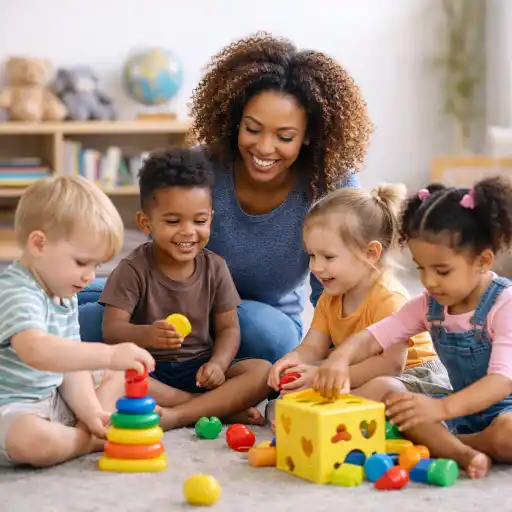
Small changes make big differences. Use these numbered steps to get started:
- 🧱 Create clear centers: 1) blocks, 2) dramatic play, 3) art/sensory, 4) book corner, 5) messy table, 6) quiet spot. See How can play-based learning help preschool teachers and programs?.
- 🎨 Offer open-ended materials: fabric, boxes, loose parts, simple props. Rotate weekly to keep interest.
- 📋 Label bins with pictures and words so all children choose and return items.
- ⏱ Protect long play blocks: aim for 30–60 minutes of uninterrupted play each day. State requirements vary - check your state licensing agency.
- 🌳 Include outdoor play daily for movement and risk-taking; see Benefits of Outdoor Classrooms.
Room tips that save time:
- 🧺 Keep materials in baskets for easy choice and clean-up.
- 2. Use picture schedules so children know the flow of the day.
- 3. Put small print or number cards in play areas to bring #learning into every center.
How should teachers guide play without taking over?
Good teacher moves are short and respectful of the child’s lead. Practice these five steps:
- 👀 Observe first: watch to learn each child’s interest and skill level. Use notes or photos to track growth; the CDC has helpful monitoring ideas at Developmental Monitoring and Screening.
- 🤝 Join briefly: add a new word, offer a prop, or model one idea, then step back.
- 🗣️ Ask open questions: “What are you building?” or “How many do you need?”
- ⏸ Step back: let children try ideas and fix problems with friends.
- 📝 Record learning: take one photo and write one short note about the skill you saw. Share with families.
Use guided play to teach counting, new words, and social rules. For teacher training and practice ideas, see What are play-based learning approaches? and ChildCareEd course listings.
What common mistakes should we avoid and how do we show results to families?
Here are usual pitfalls and easy fixes. Use these numbered tips to avoid problems:
- ⚠️ Too much adult control — Fix: let the child lead at least 70% of play time. Model once, then wait.
- ⚠️ Rushing play — Fix: protect longer, uninterrupted play blocks in your daily schedule.
- ⚠️ Narrow, single-use toys — Fix: choose open-ended materials that invite many ideas.
- ⚠️ Not observing with purpose — Fix: use quick checklists, one-photo notes, or short anecdotal records.
How to show results to families (quick 4-step routine):
- 📸 Take a photo or short video of the child during play.
- 📝 Write one sentence: what the child did and which skill you saw.
- 🔁 Send one simple home idea that families can try that night.
- 📆 Save 2–3 examples per child each month to show growth and progress.
Share why play matters with families using plain language and links like What Is Play-Based Learning and Why Does It Work? For family engagement ideas, see Creative Ways to Keep Families Engaged.
Common FAQ (short):
- Q: Will play delay academics? A: No. Play builds the skills children use for reading and math.
- Q: How long should play blocks be? A: Aim for 30–60 minutes when possible.
- Q: How to include children with extra needs? A: Use adaptations like picture schedules, thicker tools, or peer helpers. See Adaptations That Support Children's Learning.
Conclusion
1) Protect time for play. 2) Set simple centers and open materials. 3) Train teachers to watch, join briefly, and step back. 4) Share short evidence with families. Play is not playtime only — it is powerful #learning. For more hands-on tools and courses, explore ChildCareEd articles and trainings like Playful Learning and Play-Based Learning and Cognitive Growth. Your choices today make a big difference for children and for your classroom.
- CDA Home Visitor Subject Area 3 Part 3 Birth to 5
- CDA Home Visitor Subject Area 2 Part 3 Birth to 5
- The Best Promotion is Play
- Play Safe, Think Big: Literacy Through Play
- The Best Promotion is Play
- Play, Learn, Grow
- Play with Purpose: Supporting Children with Autism
- Texas Director Credential
- Montessori Cultural Activities: Exploring the World Through Play and Learning
- Tiny Hands, Big Dreams: Fostering Creativity in Preschoolers
- What age-appropriate learning activities should we use for infants, toddlers & preschoolers in New York?
- How can I teach colors, shapes & numbers through play in Michigan classrooms?
- Celebrando la amistad en el cuidado infantil durante el Día de los Mejores Amigos
- Superhero Activities for Preschoolers: Play, Create, and Learn
- Daycare Activity Ideas for Infants, Toddlers, and Preschoolers
- What simple early literacy activities really work for preschoolers?
- How can preschool programs build early literacy every day?
- What Do Superheroes Teach Kids About Kindness and Courage?
- Can Counting Activities Really Feel Like Play?
- Mixed-Age Daycare Schedule: How to Plan a Day for Different Age Groups
- How Much Structured Learning Do Preschoolers Really Need?
- Why Do Preschoolers Fight Over Toys—and How Can Teachers Help?
- How Much Outdoor Play Do Preschoolers Need Each Day?
- How Can You Create a Daily Routine That Helps Preschoolers Feel Secure?
- How Can Preschool Educators Encourage Learning Through Play?
- What Are the Best Ways to Support Cooperative Play in Preschool?
- Teaching Syllables Through Play: What Should Preschoolers Notice?
- How Can Simple Fall Activities Support Kindergarten Readiness Through Play?
- How Can November Classroom Activities Help Preschoolers Build School Readiness Skills?
