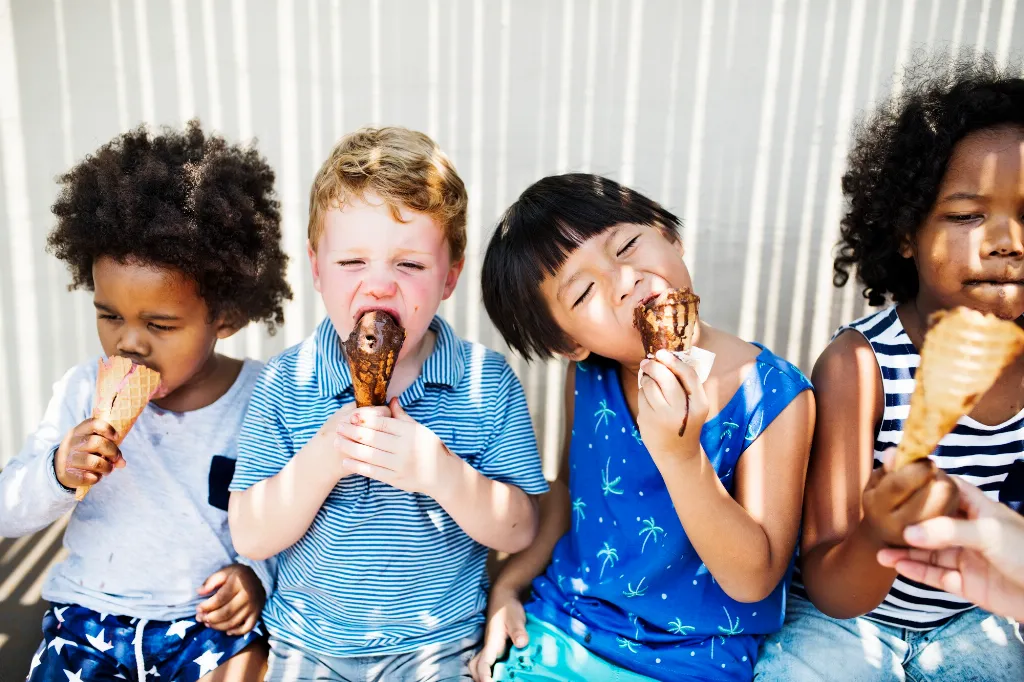
National Ice Cream Day is a fun way to bring play, learning, and sweet memories into your child care center. Preschoolers love hands-on activities, and an ice cream theme is easy to connect to math, science, language, art, and social skills.
For ready-to-use ideas and step-by-step center plans, see Sweet National Ice Cream Day Activities Kids Will Love and Creative National Ice Cream Day Ideas for the Classroom.
Why should we celebrate National Ice Cream Day in our center?
It Supports Learning Through Play
Preschoolers learn best when they can touch, move, talk, and explore. Ice cream activities can help children practice many skills at one time.
When children scoop pretend ice cream, count toppings, or take a pretend order, they are learning. They can practice math, language, fine motor skills, and social skills.
What Ice Cream Activities Can Preschoolers Try?
1. Make-Your-Own Ice Cream Station
A make-your-own ice cream station can be a fun science activity. You can use a small bag, mason jar, or bag-in-a-bag method. Adults should handle any steps that may be messy or unsafe. Children can help measure, pour, shake, stir, and watch what happens.
This activity can teach children about:
- Measuring
- Following steps
- Cold and warm temperatures
- Freezing
- Melting
- Taking turns
Ask simple questions like:
- What do you notice?
- Is it getting colder?
- What changed?
- What do you think will happen next?
For more center ideas, read Sweet National Ice Cream Day Activities Kids Will Love.
2. Art and Fine Motor Station
Art is a great way to build small hand muscles. Children can make ice cream crafts with paper, stickers, tissue paper, pom-poms, cotton balls, or play dough.
Try these simple ideas:
- Paper cone collages
- Play dough ice cream scoops
- Pom-pom scoop sorting
- Ice cream lacing cards
- No-mess fine motor mats
These activities help children practice cutting, pinching, rolling, gluing, sorting, and using both hands together.
For more low-prep pencil-and-paper activities that build fine motor control and early writing skills, see Pencil and Paper Activities.
For more ideas, see Ice Cream Fine Motor Mats and Ice Cream Lacing Cards.
3. Literacy and Math Station
An ice cream theme makes letters and numbers feel fun. You can use cones, scoops, and toppings to build early reading and math skills. For classroom-tested story problems and narrative-based counting activities that extend these experiences, see Math Stories.
Try:
- Name-spelling cone puzzles
- Letter matching games
- Counting scoops
- Color patterns
- Simple addition with pretend sprinkles
- Favorite flavor graphs
For example, children can vote for their favorite flavor. Then the class can count how many children picked chocolate, vanilla, strawberry, or another flavor. This helps children compare numbers and use math words like more, less, same, and most.
For more printables and games, see Ice Cream Worksheets for Kindergarten.
4. Dramatic Play Ice Cream Parlor
A pretend ice cream shop is a favorite center for many preschoolers. Set up a small parlor with menus, cups, spoons, play money, order pads, and pretend scoops.
Children can take turns being the customer, server, or cashier. This helps them practice social language and problem-solving.
They can say:
- “What flavor would you like?”
- “How many scoops?”
- “That will be two dollars.”
- “Thank you!”
- “May I have chocolate, please?”
This center supports speaking, listening, counting, sharing, and imagination. For more dramatic play ideas, see Ice Cream Theme for Preschool.
5. STEM and Science Table
Use ice cream activities to teach simple science ideas. Children can watch ice melt, mix colors, or learn how liquid can freeze.
You can ask:
- What happens when ice gets warm?
- Why does ice cream melt?
- What happens when we mix colors?
- How does the liquid change?
- What do you see?
The bag-in-a-bag or coffee-can method is a simple way to show states of matter. PNC’s lesson We Like Ice Cream explains the science and steps.
End the day with a quiet read-aloud about ice cream. You can also make a class chart of favorite flavors. Add photos and notes to child portfolios to show families what children learned.
How do we avoid common mistakes and handle problems if they come up?
Common mistakes happen when we rush planning. Use this checklist to avoid pitfalls:
- 🚫 Not checking allergies or permissions. Fix: Send home a quick form and confirm replies at least a week before the event. See allergy planning tips at ChildCareEd.
- 🧊 Leaving perishable foods unrefrigerated. Fix: Use coolers, frozen gel packs, or timed snack windows. Follow CDC chilling rules at CDC.
- 🧑🍳 Poor supervision during food tasks. Fix: Assign adults to each station and limit group sizes for shaking or serving.
- 🎲 Sensory materials assumed edible. Fix: Label bins and use taste-safe fillers for toddlers; see sensory bin safety ideas at Fantastic Fun & Learning.
- 🧹 Mess and slow cleanup. Fix: Use trays, pre-measured toppings, and make cleanup a short group job with a song.
Emergency actions: If a child shows signs of a serious allergic reaction, follow the child’s action plan, call 911, and give emergency medicine only as allowed by your program and training. For step-by-step protocols, refer to How to handle food allergies in child care. Remember: state requirements vary - check your state licensing agency.
Quick FAQ
- Q: Can we serve real ice cream? A: Yes, with parent permission and allergy-safe options.
- Q: What non-food options work best? A: Pom-pom scoops, play dough, cotton-ball sensory bins, or pretend parlors.
- Q: How long are stations? A: Aim for 10–20 minutes per rotation for preschoolers.
- Q: Where to find ready plans? A: Start with ChildCareEd lesson posts and linked teacher resources above.
Summary
National Ice Cream Day can be safe, inclusive, and packed with learning when you plan simple stations, collect allergy info, and keep adult-to-child ratios steady. Use a mix of edible and non-edible options so every child can join the fun. Document learning, share with families, and enjoy the smiles and language that come with scoops and stories. #Safety and #sensory thinking will help your team run a smooth, joyful day.
- 45 Hour Child Growth and Development
- Early Mathematics Through Play
- 45 Hour Preschool Methods and Materials
- From Tantrums to Triumphs: Equipping Preschoolers with Self-Regulation Skills
- Bienvenido! Welcoming All Families
- Engaging Indoor Activities for Inclement Weather
- Pediatric RSV First Aid & CPR/AED
- Emergent Learning & Development
- Texas Director Credential
- Ice Cream and Asteroids!
- Cómo Celebrar el Día Nacional del Kindergarten
- Creative National Ice Cream Day Ideas for the Classroom
- How to Celebrate National Ice Cream Day in Your Center
- Sweet National Ice Cream Day Activities Kids Will Love
- Celebrando la amistad en el cuidado infantil durante el Día de los Mejores Amigos
- Cool Summer Fun: National Ice Cream Day Activities for Kids
- National Ice Cream Day: Sweet Activities for Preschoolers
- Diversión fresca de verano: actividades del Día Nacional del Helado para niños
- Celebrate Ice Cream Day with Fun Activities for Children
- Ice Cream Day Crafts, Games, and Learning Activities
- How can Pennsylvania child care programs celebrate National Ice Cream Day safely and with learning?
- How can Oklahoma child care providers celebrate National Ice Cream Day safely and with learning fun?
- How can Minnesota child care providers celebrate National Ice Cream Day safely and with fun activities?
- How can Michigan child care providers celebrate National Ice Cream Day safely and with learning?
- How can Florida child care providers celebrate National Ice Cream Day safely and with learning fun?
- How can child care providers in DC celebrate National Ice Cream Day safely and with learning?
- How can Alabama child care providers celebrate National Ice Cream Day safely and with learning?
- How can New York child care providers safely celebrate National Ice Cream Day with fun activities?
- How Does Word Sorting Build Phonics and Vocabulary Skills?
