Play-based learning is when children learn by playing. It looks like building with blocks, pretend shops, messy art, and short games that teach counting. For child care leaders and #teachers, understanding play helps you plan strong days for #children. Play grows thinking, language, social skills, and self-control. Good play is more than fun — it is real #learning for #earlychildhood development.
Why it matters:
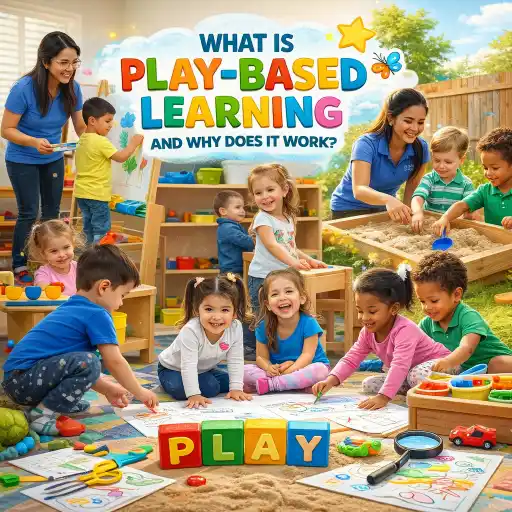
1. Play prepares children for school by building important skills like language, memory, and cooperation. See how play boosts brain development in Play with a Purpose.
2. Play builds happy, confident kids. When children lead play, they practice making choices and solving problems — skills that last a lifetime. Research and guidance from Cambridge and resources like Play-Based Learning and Cognitive Growth back this up.
What is play-based learning and what does it look like in the classroom?
- 🎭 Dramatic or pretend play (house, doctor, store) — great for language and social rules. ChildCareEd explains dramatic play ideas in How to Bring Play into the Classroom.
- 🔨 Construction play (blocks, loose parts) — builds spatial thinking and early #math skills.
- 🎨 Creative play (art, music, storytelling) — supports expression and vocabulary; see PBS on creative play.
- 🌳 Outdoor play (nature time, running, risky play) — boosts motor skills and confidence; see the Canadian review on outdoor play here.
- 🧠 Board and number games — short, guided games can strengthen counting and number sense (see the board game research roundup reported by Phys.org).
Good play setups use open-ended materials (blocks, fabric, props), clear routines, and enough time. For training ideas, check the ChildCareEd course Play, Learn, Grow Buy Now $25.00.
How does play help children’s brains, language and math skills?
Concrete ways play helps:
- 🧩 Cognitive growth — Problem solving during play helps children try ideas and test solutions. Research on child-initiated learning from ECRP shows that child-led activity can support long-term school success.
- 🗣️ Language — Talking in pretend play, stories, and songs builds vocabulary and conversation skills. See Boosting Language Through Play for ideas.
- 🔢 Early math — Counting games, measuring in block play, and board games improve number sense. Short, playful board game sessions can lift early numeracy (see the board game review at Phys.org).
- 🤝 Social skills — Play teaches turn-taking, negotiation, and empathy. Use family engagement strategies from ChildCareEd to connect learning at home and at the center.
Play-based activities don’t replace learning — they are the context where learning happens. For practical examples and lesson ideas, see The Power of Play.
How can providers plan and support purposeful play without losing group control?
Balance is key. You can support child-led play and keep a safe, smooth schedule with planning and simple scaffolds. Try these steps:
- 🧰 Prepare the environment: offer labeled stations (blocks, art, dramatic play), rotate materials weekly, and keep loose parts organized. Guidance from How to Bring Play into the Classroom can help.
- 📋 Build routines: set long blocks of uninterrupted play time each day so children can dive deep. State requirements vary - check your state licensing agency for ratios and time rules.
- 👀 Observe and document: use observation notes to see what children are learning and when to step in. The CDC’s Watch Me! training offers tips on talking with families about development.
- 🗣️ Use guided questions: ask “What are you planning?” or “How will you share that?” to extend thinking without taking control. Training like The Best Promotion is Play Buy Now $35.00 shows how to scaffold play.
- 🤝 Partner with families: share simple home play activities and invite family input. See family engagement strategies at ChildCareEd and the OECD brief on family engagement here.
Teachers who join play briefly can introduce new vocabulary or math ideas, then step back to let children lead. For support, consider staff training or the Play, Learn, Grow Buy Now $25.00 workshop.
What common mistakes should we avoid and how can families be involved?
Common pitfalls and how to avoid them:
- ⚠️ Mistake: Too much adult control (over-directing). Fix: Offer prompts and materials, then observe. Research warns against overly academic preschool that limits play (see Marcon).
- ⚠️ Mistake: Rushing play time. Fix: Schedule longer blocks and reduce interruptions to let play deepen.
- ⚠️ Mistake: Single-use toys that limit imagination. Fix: Choose open-ended materials that can be many things.
- ⚠️ Mistake: Not involving families. Fix: Share short home play ideas and invite family stories; see Family Engagement Strategies.
FAQ (quick):
- Q: Will playing delay academic skills? A: No. Play builds the skills children need for later academics; overly didactic preschool can sometimes slow long-term motivation (see research).
- Q: How long should play blocks be? A: Aim for at least 30–60 minutes of uninterrupted play for preschoolers when possible, plus outdoor time.
- Q: How do I justify play to directors or parents? A: Share concrete outcomes: language growth, problem-solving, and social skills. Cite ChildCareEd summaries like Play-Based Learning and Cognitive Growth.
- Q: How do I meet licensing rules? A: State requirements vary - check your state licensing agency for staff ratios, documentation, and safety rules.
Conclusion
Play-based learning is a research-backed, joyful way for children to grow. Use open materials, plan long play blocks, observe, and coach gently. Invite families to play at home and share observations. For helpful courses and practical ideas, explore ChildCareEd resources like Play, Learn, Grow Buy Now $25.00 and The Power of Play. When we protect time for play, children practice the big skills they’ll use for life.
Key ideas: support #playbased classrooms, fill your #classroom with open-ended #play, center children and families in #learning, and honor the power of #children’s play.
Play-based learning means adults set up the space and materials, then children explore and lead. Teachers watch, listen, and step in to extend learning without taking over. Types of play you’ll see include: Play is practice for the brain. When children pretend, negotiate, or solve problems, they strengthen memory, flexibility, and self-control — skills known as executive function. These skills support later reading and school success. The ChildCareEd article Play with a Purpose explains the brain benefits in friendly terms.- 45 Hour Preschool Methods and Materials
- Bienvenido! Welcoming All Families
- 45 Hour School Age Methods and Materials
- The Best Promotion is Play
- Play, Learn, Grow
- Play with Purpose: Supporting Children with Autism
- Texas Director Credential
- CDA Infants/Toddlers: Brain Development and Gene Expression
- CDA Infants/Toddlers: Stages of Development
- Montessori Cultural Activities: Exploring the World Through Play and Learning
- 😫🧸 ¿Qué hacer cuando un bebé no quiere dormir la siesta en el aula?
- 👧 ¿Cómo iniciar y abrir una guardería en Texas? Lo que necesitas saber
- Qué capacitación se requiere para ser director de cuidado infantil en Texas?
- Que es Título 22 en California?
- ¿Cómo puedo usar escenarios de juego de roles de primeros auxilios en mi aula?
- Regulaciones de Licenciamiento de Cuidado Infantil en California para Centros y Hogares de Cuidado Infantil Familiar
- Actividades de Otoño Fáciles para Preescolares esta Temporada
- Ejemplos de Crianza Respetuosa vs. Crianza Permisiva
- Cómo Ser Maestra de Preescolar en Wisconsin
- Capacitación Previa al Servicio para Proveedores de Cuidado Infantil en Dakota del Norte
- Canciones, juegos y preguntas de círculo para niños
- What Makes a Great Home Daycare? 10 Things Parents Notice First
- More Than ABCs and 123s: The Real Importance of Early Childhood Education
- Teacher-Directed or Child-Directed? Finding the Right Classroom Balance
- Learning Through Choice: Why Do Classroom Choice Boards Work?
- How Can Child Care Providers Support Learning Through Play?
- How Can Child Care Providers Use Learning Styles Responsibly in Early Childhood Classrooms?
- How Can You Keep a Learning Center Useful After the Novelty Wears Off?
- What Should Child Care Providers Prioritize When Preschool Readiness Goals Compete for Time?
