A child who talks freely at home may be quiet at preschool, while a child who follows classroom routines may unravel after pickup. These differences can leave families and educators wondering what they mean, but comparing perspectives can reveal the context a child needs to thrive. Explore ChildCareEd’s Culture, Communication, and Collaboration in Assessment  Buy Now $55.00 to strengthen culturally responsive observation and family conversations, and consider Engaging Families for Child Success Buy Now $55.00 for practical strategies to plan conferences and work with family priorities.
Why can a child’s skills look different across settings?
Children do not perform skills in a vacuum. What they show depends on relationships, routines, expectations, materials, language, sensory conditions, and how safe or comfortable they feel. A child may use complex vocabulary with familiar relatives but speak little in a busy classroom; another may manage transitions at school with visual cues yet need more adult support at home.
Different behavior is not automatically evidence that one observer is mistaken. It is information about the child’s experience in each context. Research examining preschool social skills found only modest agreement between parent and teacher reports in many domains, underscoring the value of considering both perspectives rather than treating either as the complete account. Family knowledge extends beyond the classroom, while educators observe children with peers and across group routines.
For providers, this means asking what circumstances make a skill easier or harder to demonstrate. Consider whether a child has more time, choice, one-to-one attention, familiar language, or predictable support in one setting. A difference is a starting point for inquiry—not a reason to label the child or blame a family or program.
- Skills are influenced by setting, relationships, routine, and expectations.
- Children may communicate or participate differently with different people.
- Comparing observations can reveal useful supports and conditions.
What might explain differences in what adults observe?
Several everyday factors can shape a child’s performance. Preschool often includes group directions, peer negotiation, waiting, transitions, and adult-led activities. At home, a child may have more familiar routines, individualized attention, or greater choice. Conversely, a structured classroom, peer models, and visual schedules may help a child demonstrate skills that are harder to see in a less predictable setting.
Effort also matters. Some children work hard to meet classroom expectations and appear composed, then release accumulated stress in a familiar home environment. Other children feel relaxed at home but become quiet or hesitant when faced with unfamiliar adults, language demands, noise, or group participation. Fatigue, hunger, changes in routine, health, sleep, and recent stress can influence what a child can do on a particular day.
Culture and language are essential context, too. A child learning more than one language may understand directions before choosing to speak, or may use different words and communication styles with different people. Adults should avoid judging competence from a single language, activity, or interaction. Ask families what communication, independence, play, or emotional expression looks like at home, and consider whether classroom expectations align with the child’s experience.
- Notice the activity, group size, time of day, and adult support.
- Consider language, culture, temperament, sensory needs, and transitions.
- Ask what changed recently before interpreting a new pattern.
How can providers gather a fuller, fairer picture?
Purposeful observation helps move the conversation from impressions to evidence. First, define the skill you want to understand—such as asking for help, joining peer play, following a two-step direction, or using words to express a need. Observe more than once, across different routines and days, and note what happened before, during, and after the behavior.
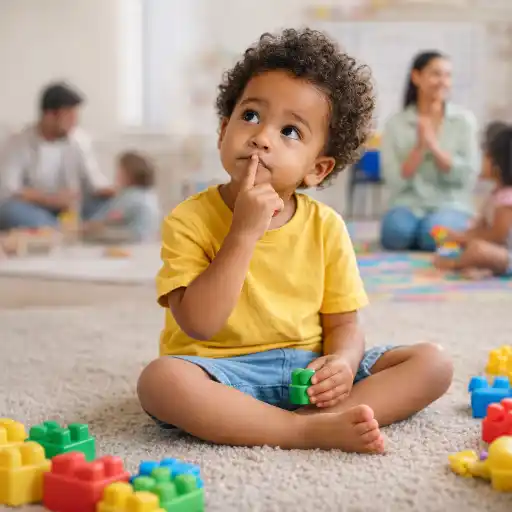
Keep notes factual and specific. Instead of writing, “Kai is shy,” record, “During morning meeting, Kai watched the group and did not answer the teacher’s question; during block play later, Kai asked a peer for a red block.” The concrete examples show variation and give the team something practical to discuss. NAEYC’s guidance on observing, planning, and guiding emphasizes teachers’ role as careful observers who use children’s play to inform responsive teaching.
Ask the family to contribute examples, too. What does the child do during meals, dressing, play, or conversations with familiar people? What language or cues are used? Is the child’s behavior different with siblings or in community settings? A shared record can combine brief anecdotes, work samples, family comments, and classroom observations. ChildCareEd’s Parent Conference Notes Buy Now $0.99 form offers a structure for documenting strengths, growth areas, family concerns, and agreed next steps.
- 📝 Record observable actions, exact words, setting, and date.
- Look for strengths and emerging skills as well as support needs.
- Use multiple observations and family input; avoid relying on one snapshot.
How can a conference turn different observations into partnership?
A conference is most useful when it is a two-way exchange, not a presentation of a verdict. Prepare a few dated examples, begin with a genuine strength, and explain what you have noticed without implying that the child should behave identically everywhere. Invite family expertise with open questions such as, “What do you notice at home?” and “What helps your child feel ready to try?” Listen carefully and allow time for differences in perspective.
Use accessible language and consider the family’s preferred communication method and language. When interpretation is needed, arrange appropriate language support rather than asking the child to translate. Be curious about routines, cultural expectations, family circumstances, and the child’s home language without making assumptions. ChildCareEd’s conference guidance recommends preparing concrete examples, inviting dialogue, and agreeing on manageable goals.
Use the Parent Conference Notes form to capture strengths, family insights, classroom evidence, and the plan. Agree on one or two realistic strategies to try, who will take each step, and when you will reconnect. For example, the program might offer a visual transition cue while the family shares whether a similar cue is familiar or helpful at home. The purpose is not to make both settings identical; it is to build consistent understanding and support.
When should providers follow up or seek additional guidance?
Variation alone does not establish a developmental delay or a diagnosis. Continue observing and adjusting the environment when differences seem connected to predictable factors such as group size, transitions, unfamiliar language, or fatigue. Share what you have seen with the family and ask what they are seeing; their knowledge may suggest new ways to support participation.
If a concern persists across time, affects the child’s participation or well-being, or appears in multiple settings despite thoughtful supports, follow program procedures and consult a supervisor. Share objective examples and discuss appropriate next steps with the family, which may include speaking with the child’s health care provider or exploring local developmental resources. Screening can identify a reason to look more closely; it does not diagnose. Maintain confidentiality and document discussions according to program policy. State requirements vary - check your state licensing agency.
Common pitfalls include interpreting a single difficult day as a fixed trait, comparing a child with peers, assuming a family’s report is inaccurate, or making a referral based on impression alone. Replace these shortcuts with curiosity, multiple observations, culturally responsive communication, and specific follow-up. Directors can support staff by providing observation time, shared documentation practices, and coaching on respectful conferences.
- Review whether classroom routines or supports need adjustment.
- Bring persistent concerns to the director and follow program guidance.
- Partner with the family on next steps; do not diagnose or label.
Conclusion: What should providers remember about differences between home and preschool?
A child may show different skills at home and preschool because each setting brings different relationships, demands, routines, languages, and supports. Such differences are meaningful context—not proof that one adult is wrong or that the child is choosing not to cooperate. The clearest understanding comes from combining family knowledge with objective observations across activities and time.
Notice what the child can do, identify the conditions that support participation, and document examples without labels. Use conferences to listen, share evidence, and agree on practical next steps. The Parent Conference Notes resource can help organize that exchange, while continued observation shows whether the plan is helping. When providers and families approach differences with respect and curiosity, they can create more responsive support for the child’s growth.
Which ChildCareEd courses can support this work?
- Culture, Communication, and Collaboration in Assessment Buy Now $55.00
- Engaging Families for Child Success Buy Now $55.00
- Tracking Progress, Shaping Futures: Observation & Assessment Skills Buy Now $55.00
- Family (or Parent) Conferencing: Developing Trust ONLINE Buy Now $24.00
- Bridging Cultures: Family Communication & Collaboration Buy Now $55.00
- CDA Home Visitor Subject Area 2 Part 3 Birth to 5
- CDA Bridge Bundle: Preschool
- CDA Bridge Bundle: Family Child Care
- CDA Bridge Bundle: Family Child Care without Portfolio Review
- CDA Bridge Bundle: Infant/Toddler without Portfolio Review
- CDA Bridge Bundle: Preschool without Portfolio Review
- CDA Bridge Bundle: Infant/Toddler
- Texas Director Credential
- CDA Home Visitor Subject Area 8 Part 1 Birth to 5
- Nature’s Classroom: Why Fall Is the Best Season for Sensory Learning Outdoors
- CDA Certification en Español: Recursos y Consejos para Educadores Bilingües
- STEM for Preschoolers: Fun Activities That Encourage Curiosity
- Team-Building Games for Preschoolers That Teach Cooperation
- How Can Developmental Observation Strengthen Early Childhood Practice?
- How Can Child Care Providers Use Developmental Screening to Support Every Child?
- When Families and Teachers See a Child Differently, How Can They Build a Shared Understanding?
- What Is Developmentally Appropriate Practice—and What Does It Look Like?
- How Can Preschool Teachers Introduce Inclusive, Culturally Responsive Books?
- What Should a 3-Year-Old Be Learning at Preschool?
- How Can Easter Mazes Build Fine-Motor Skills Without Losing Sight of Learning?
- How Can Valentine’s Day Problem-Solving Activities Help Preschoolers Learn?
- How Can Sorting Help Kindergarteners Understand Odd and Even Numbers?
- How Can You Plan for Two Toddlers the Same Age but with Different Skills?
- How Often Should Preschool Teachers Change Classroom Activities?
- How Can You Plan Developmentally Appropriate Activities for Preschoolers?
- How Often Should Early Childhood Educators Observe Each Child?
- How Can One Science Question Become a Preschool Investigation?
- Why Might a Child Show Different Skills at Home and at Preschool?
