Children reveal new abilities in the middle of ordinary moments—during snack, outdoor play, or a quiet exchange with a friend. A practical observation rhythm helps you notice those changes without turning the classroom day into paperwork; the Observing & Assessing in Child Care  Buy Now $16.00 course can deepen your skills in documenting development and using assessment to plan responsive experiences. Read on for a manageable approach that fits real classroom routines and helps every child’s strengths become visible.
Why is ongoing observation more useful than a single snapshot?
Children do not demonstrate every skill on demand. A child may use rich language with a familiar peer but say little in a large group; a toddler may persist with a puzzle one day and leave it untouched the next. A single observation can therefore tell you what happened in one moment, but repeated observations help reveal patterns, interests, and progress over time.
Ongoing observation is not simply watching more often. It means watching with a question in mind, recording concrete evidence, reflecting on what it may mean, and using it to shape teaching. The National Association for the Education of Young Children describes observation and assessment as ongoing, purposeful, and reflective. Information is most useful when it guides curriculum, interactions, family communication, and educators’ own decisions.
That process benefits children and staff alike. When you understand why a child returns to a particular activity or struggles during a transition, you can adjust the environment or your response instead of relying on assumptions. Observation can make #strengths visible, illuminate support needs, and help educators provide more individualized experiences.
For infants and toddlers especially, behavior and play are important ways of communicating interests and intentions. A careful look at what happens before and after an action may point toward a useful response. The goal is curiosity—not surveillance, labeling, or collecting records for their own sake.
How often should educators plan observations?
There is no single schedule that suits every program, age group, assessment system, or child. Head Start guidance recommends developing a plan so each child is observed regularly; examples include once a day or once a week, depending on the setting and purpose. That is a planning guide, not a universal licensing rule. For many classrooms, brief notes gathered throughout the week, paired with a more focused observation when a question arises, create a workable routine.
Think in terms of an ongoing cycle rather than one formal event. You might make a quick note about a child’s language during play on Monday, observe peer problem-solving outside on Wednesday, and review those examples with the team at the end of the week. When a particular goal or concern calls for closer attention, schedule repeated observations across several days and contexts.
- Build brief, informal noticing into daily routines and play.
- Use a weekly rotation or other shared plan so no child is routinely overlooked.
- Schedule focused observations around an individual learning question or goal.
- Review collected notes regularly; very young children’s skills and needs can shift quickly.
Frequency should be realistic. A consistent, modest plan that staff can sustain is more valuable than an ambitious calendar that quickly becomes unmanageable. Programs subject to specific assessment timelines should follow those applicable rules and policies.
Why should observations happen across different routines and settings?
Children may show different parts of what they know depending on the people, materials, language, and expectations around them. Observing only during circle time, for example, may give an incomplete picture of a child who communicates most comfortably during dramatic play or one-on-one routines. Purposeful observation samples different parts of the day and helps educators understand children in context.
Plan to notice children in indoor and outdoor spaces, during child-led play and adult-supported activities, and in routines such as arrival, meals, transitions, and cleanup. Watch how a child engages with peers and adults, selects materials, communicates, persists, and moves from one activity to another. These moments can show development without asking children to perform a skill on demand.
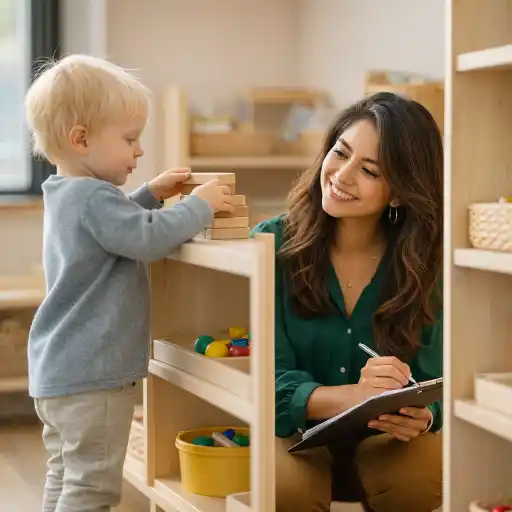
For skills that vary from day to day—such as language, social interaction, or problem-solving—repeat observations before reaching conclusions. Hunger, tiredness, illness, schedule changes, unfamiliar adults, and experiences at home can all influence what you see. One day’s behavior should not define a child’s abilities.
Use spontaneous moments, too. Keep a simple recording method within reach so you can note an unexpected discovery without interrupting meaningful play. The principle is to build a balanced picture: different situations, more than one moment, and evidence of both emerging abilities and areas where support may help. Such a broad view helps teachers respond with respect and avoid reducing a child to a single #observation or incident.
How can a classroom team make observation manageable?
A useful system fits the actual staffing pattern and protects children’s supervision. In a classroom with co-teachers, adults can divide observation responsibilities or coordinate coverage for a longer focused record. A provider working alone may rely on short, embedded notes rather than stepping away from active supervision. Documentation should never take priority over maintaining required supervision and ratios.
Before observing, decide what you want to learn, when the skill or interaction is likely to appear, and how you will record it. Keep the method simple enough to use consistently. Anecdotal notes capture meaningful moments; a checklist can track whether a defined skill has been seen; a portfolio can bring together dated work samples, notes, and family contributions. Choose the tool for the question rather than accumulating paperwork.
- 📝 Record the date, setting, and specific actions or words you notice.
- Use factual descriptions—for example, “stacked five blocks and tried a wider base”—rather than conclusions such as “is advanced.”
- Organize notes by child and review or file them on a regular schedule.
- Protect confidentiality and follow program policies for storage, photos, and recordings.
- Ask families to share what they notice at home, including interests, languages, and new skills.
Directors can make the system more sustainable by providing a shared template, protected reflection time, clear privacy procedures, and staff discussion opportunities. A common routine can support consistency while still allowing each educator to choose documentation methods suited to the child and setting.
How should observation frequency connect to assessment and teaching?
Observation is most helpful when the information changes what adults do next. After gathering evidence, ask: What is this child trying to do? What skills are emerging? What conditions helped the child participate? What experience, material, or interaction might support the next step? This reflection turns observation into formative assessment—information used during learning to guide teaching and individualize experiences.
For instance, if repeated notes show a child experimenting with how objects roll, you might offer ramps, varied materials, and language to compare speed or distance. If a child seeks peers but encounters difficulty sharing materials, observe more than one interaction before deciding on a support. You might then model turn-taking, provide duplicate materials, or arrange a small-group activity, and observe again to see what changes.
Use multiple sources when decisions matter: observations from different days and settings, family perspectives, work samples, and appropriate assessment tools. Head Start regulations require covered programs to conduct structured assessments with sufficient frequency to individualize within the program year and to use informal observations and family information alongside them. The required screening timeline is distinct from everyday observation: for Head Start, the regulation specifies a current developmental screening within 45 calendar days of a child first attending, with a shorter timeline for programs operating 90 days or less.
Screening, assessment, and observation are related but not interchangeable. Screening can identify a need for further evaluation; it does not diagnose. State requirements vary - check your state licensing agency. Keep the aim clear: use evidence to plan responsive care, partner with families, and support each child’s ongoing #development.
Conclusion: What observation rhythm should educators aim for?
Observe each child regularly, not only when a concern appears or an assessment deadline approaches. In practice, that means noticing and briefly documenting children during ordinary routines and play, making sure a planned rotation includes every child, and arranging repeated, focused observations when a learning goal or question calls for closer attention. There is no one universal number of minutes or observations per week that fits all programs.
Seek evidence across days, people, activities, and environments. Keep notes factual, review them promptly, invite family knowledge, and connect what you learn to a practical teaching response. A sustainable observation system should strengthen relationships and support supervision—not create a mountain of paperwork or interrupt children’s learning.
The central question is not simply “How often should I watch?” but “Am I observing often and broadly enough to understand this child and respond well?” A thoughtful rhythm helps educators recognize progress, plan meaningful next steps, and see each child as a whole person rather than a checklist.
Helpful ChildCareEd Courses
- 45 Hour Child Growth and Development
- Teacher-Child Interactions for Stronger CLASS® Outcomes
- 1,2,3, Eyes on Me: Classroom Safety
- Pediatric RSV First Aid & CPR/AED
- CDA Bridge Bundle: Family Child Care without Portfolio Review
- CDA Bridge Bundle: Infant/Toddler without Portfolio Review
- CDA Bridge Bundle: Preschool without Portfolio Review
- Texas Director Credential
- Mastering Observation Techniques in the Montessori Classroom
- CDA Certification en Español: Recursos y Consejos para Educadores Bilingües
- Teaching with Purpose
- Studying ECD online: Why ChildCareEd Should be Your Top Choice
- Online Early Childhood Education Courses: Learn, Grow, and Advance Your Career
- What Counts as Professional Development for Early Childhood Educators?
- What Is the Difference Between Early Childhood Education and Child Development?
- Early Childhood Education Certification: What Do You Need—and How Long Will It Take?
- How Can Developmental Observation Strengthen Early Childhood Practice?
- How Can Child Care Providers Support Healthy Child Growth and Development?
- Why Is Outdoor Learning Growing in Early Childhood?
- What Is the CDA Credential, and How Can Child Care Professionals Earn It?
- What Should a Useful Early Childhood Lesson Plan Include?
- How Often Should Early Childhood Educators Observe Each Child?
- How Can One Science Question Become a Preschool Investigation?
- What Are Simple Ways to Help Children Notice Patterns in Everyday Activities?
