Two toddlers can share a birthday and still approach play, communication, movement, and routines in very different ways. The All About My Toddler: Family Information Form Buy Now $1.49 can help you gather family insights about each child’s routines, favorite toys, communication, and comfort strategies. Combine that information with your observations to plan shared experiences with different ways for each toddler to participate. For practical guidance on adapting activities to children’s ages, abilities, interests, and learning needs, explore Playful Learning: Infant & Toddler Activities Buy Now $25.00. Read on for ways to build on each child’s skills while giving both toddlers room to explore and grow.
Why does individual planning matter when toddlers are the same age?
Age gives educators a useful point of reference, but it does not tell the whole story of a toddler’s development. One child may eagerly climb, imitate words, and join simple pretend play; another of the same age may communicate mostly with gestures, prefer close adult support, or still be refining balance and hand control. Both children bring strengths, and neither needs to be measured against a classmate to be supported well.
Developmentally appropriate practice asks educators to consider general knowledge of child development alongside knowledge of each individual child and the family and cultural contexts in which the child lives. NAEYC emphasizes that teaching should respond to children’s distinct abilities, interests, languages, experiences, and needs. Head Start likewise describes observation, reflection, and responsive planning as a connected process for individualizing care.
When we make one activity accessible in more than one way, both toddlers can participate with purpose. A shared experience can offer different entry points without assigning a “high” or “low” label. That is a practical expression of #inclusion and a way to protect belonging while supporting growth.
- Plan for each child’s current skills, not just their age group.
- Build from interests and abilities as well as areas where practice may help.
- Make participation flexible so every child can engage meaningfully.
How can observation reveal what each toddler is ready to practice?
Begin with careful observation in varied moments: free play, meals, outdoor time, transitions, and one-to-one interactions. Record what you actually see and hear, rather than an interpretation. For example, “Ari put three blocks in a basket, carried it across the room, and repeated the action” gives the team information to plan from. “Ari is advanced” does not identify a teachable next step.
Look for recurring interests, strategies, communication attempts, and situations where a child becomes engaged or needs support. One toddler may persist with a puzzle but need help requesting a turn; another may use several words but avoid small manipulatives. Both profiles are richer than a single milestone label.
Invite families to share what they notice at home: favorite songs, comforting routines, words used in the home language, and ways the child communicates needs. This partnership helps educators understand the child in context and makes planning more culturally and linguistically responsive.
Use milestones as conversation prompts, not as diagnoses or a substitute for formal screening. The CDC explains that milestone checklists support ongoing conversations and can help identify when further screening may be appropriate; they are not diagnostic tools. If you or a family has a concern, share objective observations and encourage discussion with the child’s health care provider or appropriate early-intervention program.
- Observe across several settings and days before drawing conclusions.
- Write brief, objective notes that describe a skill, attempt, or response.
- Ask families what the child enjoys and how they communicate at home.
How can one activity offer different levels of challenge?
Keep the central experience shared, then vary materials, adult support, or the way a child participates. For a block-and-basket invitation, one toddler might carry and fill a large container, while another sorts blocks by size or helps build a simple structure. Both are exploring the same materials, but the task offers individualized challenge.
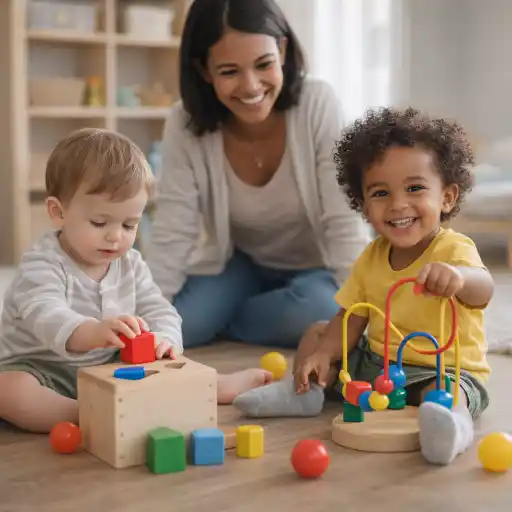
Use a “same experience, flexible pathways” approach:
- Materials: Provide large, easy-to-grasp objects alongside smaller pieces when safe and appropriate.
- Communication: Model key words, accept gestures or pointing, and offer a choice between two items.
- Movement: Place materials within comfortable reach, or create space for a child who wants to carry, push, or climb safely.
- Adult support: Demonstrate, wait, give a brief cue, or step back depending on the child’s response.
- Expression: Let children show what they know by building, moving, vocalizing, choosing, or using words.
NAEYC’s guidance on developmentally appropriate practice supports play, choice, and intentional scaffolding. The goal is not to create separate lessons that isolate children, but to design an inviting experience with multiple ways to enter and continue. That flexibility strengthens #play as a context for exploration and learning.
Watch each child’s response. If the activity is consistently frustrating, simplify one element or offer more support. If the child is ready for more, add a small challenge, such as inviting them to carry two items or build a taller tower.
How can routines and the environment support both children?
Individualized planning happens throughout the day, not only during a scheduled activity. Arrival, snack, diapering, cleanup, and transitions can all provide authentic practice. One toddler may practice choosing a cup by pointing; another may try carrying it to the table. Both are building agency and participating in the same routine.
A predictable environment can reduce unnecessary barriers. Keep frequently used materials visible and reachable, offer uncluttered pathways, and provide a quieter space when a child needs less stimulation. Use simple cues, gestures, or photographs to show what happens next. For children who use a home language or communicate nonverbally, pair spoken words with familiar objects and visual information.
Consider the physical and social setup. If one child prefers observing before joining, let them watch nearby with a familiar object and invite participation without pressure. If another is eager to connect, offer a simple role such as handing a block to a peer. Participation does not have to look identical to be meaningful.
These adjustments need not require a complete room redesign. Moving a basket, offering a stable seat, shortening a group moment, or keeping a favorite book available can make an experience more accessible. Thoughtful spaces and responsive relationships help toddlers feel secure enough to explore and practice new skills.
- Use consistent, simple transition cues and give children time to respond.
- Keep materials accessible, safe, and representative of children’s lives.
- Make room for different ways of joining a group experience.
How can you monitor progress and partner with families?
After an experience, take a moment to consider what each child did, what support helped, and what might come next. A short note may be enough: “During snack, Sam pointed to the banana after I named two choices; tomorrow I’ll pause longer before prompting.” Brief documentation can inform the next plan without turning play into a test.
Look for patterns over time rather than relying on one moment. If a child begins trying a new skill in multiple routines, note the contexts where it appears and share a specific example with the family. Ask families whether they see similar attempts at home and what strategies feel comfortable to continue. Keep conversations strengths-based and descriptive rather than comparing children.
If you notice a persistent concern, follow your program’s procedures, communicate respectfully with the family, and consult appropriate specialists or early-intervention resources when relevant. Educators can share observations and support access to screening; they should not diagnose. If the child has an IFSP or other support plan, coordinate classroom strategies with the family and relevant team members.
Directors can support consistent individualization by providing planning time, a simple shared observation format, and opportunities for staff to reflect together. These routines help the team turn knowledge of each child into practical, coordinated care.
- 📒 Record one specific observation and one possible next step.
- Share progress with families using concrete examples, not comparisons.
- Review plans as a team and adjust supports when children’s needs change.
Conclusion: What should providers remember about toddlers with different skills?
Two toddlers of the same age can have different skills, interests, communication styles, and support needs—and that variation is part of working with young children. Effective planning starts with relationships and observation, then uses what educators learn to offer responsive experiences with more than one way to participate.
Keep the goal shared where possible, but make the materials, adult support, pace, and response options flexible. Include family knowledge, notice progress across everyday routines, and treat milestone resources as guides for conversation rather than diagnostic tools. Small adaptations can make a meaningful difference to a child’s access, confidence, and sense of belonging.
Most of all, remember that individualizing care is not about getting every moment perfect. It is an ongoing cycle of noticing, trying, reflecting, and adjusting—so each toddler can explore, connect, and develop from their own starting point.
To continue building practical activity-planning skills, explore these English-language ChildCareEd courses:
- Playful Learning: Infant & Toddler Activities Buy Now $25.00
- CDA Infants/Toddlers: Individualized Learning and Inclusion
 Buy Now $16.00
 - CDA Infants/Toddlers: Benefits to Observing Buy Now $16.00
- Playing with a Purpose: Infant/Toddler Lesson Planning Buy Now $24.00
- Early Learning with Infants and Toddlers Buy Now $24.00
State requirements vary - check your state licensing agency.
- How to boost fine motor skills: Holiday Edition
- CDA Certification en Español: Recursos y Consejos para Educadores Bilingües
- 💛🧩 ¿Cómo puedo hacer que mi enseñanza sea inclusiva para los niños con autismo?
- 🚨 Reporte Obligatorio en Nevada
- Proporciones de Cuidado Infantil y Tamaños de Grupo por Edad en Maryland (Guía Rápida para Centros y Hogares)
- Proporciones de Cuidado Infantil y Tamaños de Grupo por Edad en Wisconsin (Guía Rápida para Centros y Hogares)
- Proporciones de Cuidado Infantil y Tamaños de Grupo por Edad en Nueva Jersey (Guía Rápida para Centros y Hogares)
- Proporciones de Cuidado Infantil y Tamaños de Grupo por Edad en Virginia (Guía Rápida para Centros y Hogares)
- Celebrando la amistad en el cuidado infantil durante el Día de los Mejores Amigos
- Canciones, juegos y preguntas de círculo para niños
- Mixed-Age Daycare Schedule: How to Plan a Day for Different Age Groups
- Should You Use Corrected Age for an 8-Week-Old Baby Born Prematurely?
- Title 22 Home Daycare Ratios: How Age Mix Changes Your California Capacity
- Proporciones para guarderías en casa bajo el Título 22: Cómo la mezcla de edades cambia su capacidad en California
- How Can Child Care Providers Set Age-Appropriate Expectations for Young Children?
- How Can Child Care Providers Support Healthy Toddler Development?
- What Should a Useful Early Childhood Lesson Plan Include?
- How Can You Plan for Two Toddlers the Same Age but with Different Skills?
- How Can You Plan Rest Time When Children in Your Care Need Different Things?
