A child may be quiet at school, energetic at home, or independent with one caregiver and hesitant with another—and each perspective can be accurate. The Bienvenido! Welcoming All Families  Buy Now $16.00 course helps providers strengthen family engagement, understand family expectations, and create more inclusive communication practices that can be applied immediately in daily care.
Why Can Two Caring Adults See the Same Child Differently?
Families and teachers observe children in different settings, under different conditions, and at different points in the day. A teacher may see a child navigating a busy group activity, while a family member may see the same child relaxed during one-to-one play. Neither perspective is automatically more accurate. Each offers valuable information about the child’s relationships, routines, communication, strengths, and needs.
Differences in perception often emerge around behavior. A teacher might describe a child as withdrawn because the child rarely joins large-group discussions. A family might describe that same child as expressive because the child tells elaborate stories at home. The contrast may reflect context rather than contradiction. Language, sensory demands, fatigue, temperament, cultural expectations, and familiarity with adults can all shape how a child participates.
NAEYC’s developmentally appropriate practice guidance emphasizes that families possess essential knowledge about their own children and that educators should seek and value this expertise. Treating family information as relevant professional data strengthens the #partnership and reduces the risk of making assumptions from limited observations.
The goal is not to decide who is “right.” The goal is to build a fuller picture of the child so that care and teaching become more responsive.
How Do Culture, Language, and Context Shape What Adults Notice?
Adults interpret behavior through personal experience and cultural expectations. Families and teachers may have different ideas about eye contact, independence, adult-child conversation, physical affection, group participation, or appropriate emotional expression. These differences deserve curiosity rather than immediate judgment.
Language is another important consideration. A child may understand directions in a home language more easily than in the program language, or may communicate complex ideas through gestures, play, or a combination of languages. A child who speaks less in English is not necessarily less capable of thinking, connecting, or learning. Culturally responsive observation considers the child’s full communication repertoire.
Contextual questions can prevent premature conclusions:
- What happens immediately before the behavior?
- Who is present, and how familiar are they?
- Is the environment noisy, crowded, rushed, or predictable?
- What language, gesture, routine, or relationship helps the child participate?
- Does the behavior appear across settings or only in one situation?
ChildCareEd’s guidance on culture, communication, and collaboration in child assessment reinforces the importance of interpreting development in context. A strengths-based approach asks what the child is communicating and what conditions support success.
What Communication Practices Turn Different Observations into Useful Information?
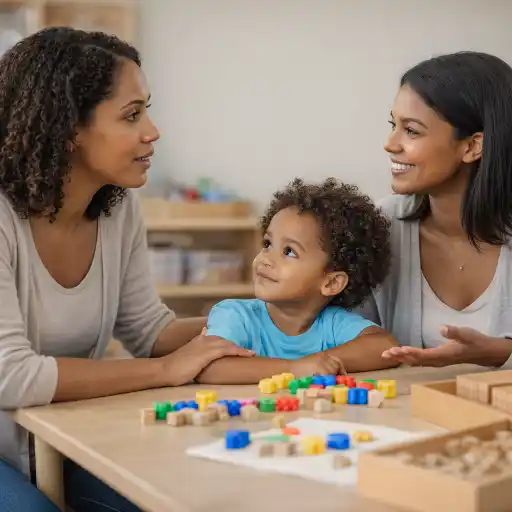
Successful conversations begin with a relationship, not a concern. Regular positive contact makes it easier to discuss differences without implying that anyone has failed. Share specific observations, describe strengths, and invite the family’s interpretation.
Instead of saying, “She does not socialize,” try: “During free choice, she often watches peers for several minutes before joining. What does peer play look like at home?” This language distinguishes observation from interpretation and opens space for meaningful information.
Use active listening throughout the conversation. Maintain appropriate attention, avoid interrupting, summarize what you heard, and acknowledge emotion. The CDC recommends listening carefully, reflecting families’ main points, and recognizing feelings when discussing children’s development or concerns.
Offer communication choices whenever possible. Some families may prefer brief conversations, written updates, phone calls, secure messaging, or an interpreter. NAEYC recommends frequent, two-way communication and advises programs not to rely on children as translators.
- Begin with a genuine strength.
- Use concrete examples rather than labels.
- Ask open-ended questions.
- Pause long enough for the family to respond.
- Confirm shared understanding before ending.
- Document agreed next steps respectfully and confidentially.
These practices communicate that families are collaborators, not recipients of professional judgment.
How Can Teachers and Families Create a Shared Plan?
Once both perspectives are understood, move from comparison to coordinated action. Select one priority that matters to the child and family, define what success will look like, and agree on strategies that can be used in both settings.
For example, if a child struggles during transitions at school but manages routines successfully at home, ask the family what cues or sequence are familiar. The team might use the same visual card, song, countdown, or first-then language in both environments. The plan should be practical, culturally respectful, and realistic for everyone.
A useful shared-plan format includes:
- Shared concern: Describe the situation neutrally.
- Child strengths: Identify interests, relationships, and successful conditions.
- Family insight: Record routines, preferences, language, and priorities.
- Joint strategy: Choose one or two consistent responses.
- Observation period: Decide when and how progress will be reviewed.
- Follow-up: Adjust the plan based on new evidence.
Families should have meaningful input into goals, not merely approve a plan already created by professionals. NAEYC describes reciprocal partnerships as shared responsibility, shared knowledge, and collaborative decision-making. This approach also protects the child from receiving conflicting messages across home and school.
✅ A small, consistent strategy used by caring adults is often more effective than a complicated plan that no one can sustain.
How Can Providers Avoid Common Partnership Pitfalls?
Even well-intentioned conversations can create distance. The most common pitfalls involve assumptions, deficit language, one-way communication, and unclear follow-up.
- Assuming one setting tells the whole story: Gather observations across routines and environments.
- Using labels: Replace “defiant” or “behind” with observable descriptions.
- Overlooking cultural differences: Ask what behavior means to the family before interpreting it.
- Leading with a problem: Share authentic strengths and successful moments regularly.
- Talking more than listening: Build pauses and reflective responses into conferences.
- Making promises without a review date: Document responsibilities and schedule follow-up.
- Ignoring access barriers: Offer flexible times, translated materials, interpreters, and multiple communication methods.
Disagreement does not have to damage trust. When perspectives differ, return to shared goals: the child’s belonging, safety, development, and well-being. Use neutral language, acknowledge uncertainty, and consider whether additional observation or support is needed. Teachers should follow program policies regarding developmental concerns, referrals, and who is authorized to communicate with families.
State requirements vary - check your state licensing agency. Documentation should be factual, confidential, and consistent with applicable law and program policy.
What Practical Tools Can Strengthen Family–Teacher Perspective Sharing?
A structured workbook can help transform informal impressions into thoughtful dialogue. The sellable Family–Teacher Perspective and Partnership Workbook can be used before enrollment, during conferences, after a transition, or whenever adults notice different patterns.
Useful workbook prompts may include:
- What does the child enjoy, initiate, or explain with confidence?
- When does the child appear most comfortable and engaged?
- What routines, words, songs, objects, or people provide reassurance?
- How does the child communicate needs across languages and settings?
- What changes have occurred recently in the child’s life?
- What would the family like educators to understand or prioritize?
- What will each adult try, and when will the team reconnect?
Pair written reflection with actual conversation. A form should support relationships rather than replace them. Review entries together, clarify unfamiliar terms, and invite families to correct or expand the record. Protect privacy by storing information securely and sharing it only with individuals who need it to support the child.
Providers seeking deeper preparation may explore Family Voices Matter: Tools for Meaningful Collaboration Buy Now $55.00, which focuses on culturally and linguistically responsive communication, family participation in assessment and goal setting, and practical partnership tools.
Conclusion: How Can Families and Teachers See the Child More Completely?
When families and teachers see a child differently, the solution is not to choose one perspective over the other. Differences are invitations to investigate context, culture, language, relationships, and routines more carefully. Families contribute intimate knowledge of the child’s history and daily life; teachers contribute sustained observation within a peer learning environment. Together, those forms of knowledge create a more complete and humane understanding.
Effective partnership depends on strengths-based language, active listening, reciprocal communication, culturally responsive practice, and shared planning. Begin with one child, one question, and one respectful conversation. Record what you learn, try a manageable strategy, and return to the family with curiosity rather than conclusions.
Professional learning can make this process more intentional. In addition to Bienvenido! Welcoming All Families Buy Now $16.00 and Family Voices Matter Buy Now $55.00, providers may consider:
- Family (or Parent) Conferencing: Developing Trust ONLINE Buy Now $24.00
- Bridging Cultures: Family Communication & Collaboration Buy Now $55.00
- Engaging Families for Child Success Buy Now $55.00
The central question—how can families and teachers build a shared understanding when they see a child differently?—is answered through partnership: listen carefully, interpret cautiously, plan together, and keep learning from the child and family.
- CDA Certification en Español: Recursos y Consejos para Educadores Bilingües
- 👶 ¿Cuáles son las proporciones y grupos requeridos en Dakota del Norte? 🏫
- Recursos en Español sobre el Sueño Seguro del Bebé
- Cómo Celebrar el Día Nacional del Kindergarten
- Celebrando la amistad en el cuidado infantil durante el Día de los Mejores Amigos
- Why Do Classroom Management Strategies Fail With 3-Year-Olds—and What Works Instead?
- Preschool Classroom Rules: How to Teach Expectations Without Constant Reminders
- Happy or Sad? Preschool Activities That Help Children Read Emotional Clues
- Are You Ready to Be a Lead Teacher? 7 Signs You’re Prepared to Step Up
- Mawlid Around the World: How Kids Can Explore Different Traditions and Celebrations
- From Mealtime to Manners: How Cultural Influences Show Up in Everyday Child Care
- When Families and Teachers See a Child Differently, How Can They Build a Shared Understanding?
- What Makes Task Cards a Great Tool for Mixed-Age Classrooms?
- When Should Providers Be Concerned About Language Delays?
- Why Do Children Behave Differently With Different Teachers?
- How Can Photos Help Children Remember Classroom Routines?
- Getting to Know Toddlers: The Questions That Help Teachers Support Their Needs
- How Can Child Care Providers Create Inclusive Father’s Day Activities for Diverse Family Structures?
- Why Do Two Teachers Respond Differently to the Same Classroom Choice?
