When Halloween decorations come down, your classroom does not need to feel empty—or become a brand-new environment overnight. A thoughtful November reset helps you keep the materials children are still using, retire what has served its purpose, and introduce seasonal invitations grounded in their curiosity; the Lesson Planning for Preschoolers course  Buy Now $24.00 offers practical guidance for developmentally appropriate planning, while the Spicing Up the Classroom: Learning Centers course Buy Now $16.00 can help you make center changes more intentional. Continue for a simple, observation-led approach—and explore either course when you want a more structured learning experience.
Why is a November classroom reset more than a seasonal cleanup?
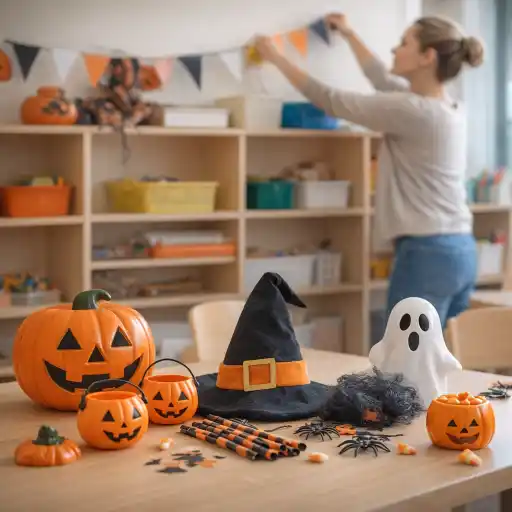
The end of Halloween can prompt a useful pause: Which materials are still supporting meaningful play, and which are taking up space simply because they were part of last month’s theme? This is not a demand to decorate for every holiday or replace everything. It is an opportunity to make the environment more purposeful, calmer, and responsive to the children in front of you.
Seasonal changes can provide authentic contexts for investigation—weather, trees, harvest, food, and the ways families experience this time of year. But a calendar theme should not outrank children’s actual interests or your program’s inclusive approach. NAEYC’s guidance on planning and implementing an engaging curriculum emphasizes meaningful goals, responsiveness to individual children, and play as a central context for learning.
A well-planned reset can also reduce visual clutter and make choices easier to understand. Keep reliable routines and familiar materials in place while refreshing only a few areas. That balance supports children who welcome novelty as well as those who rely on consistency.
- Keep materials that invite sustained, safe, purposeful play.
- Store seasonal items that are no longer in use but may be useful again.
- Use observations—not adult preference alone—to decide what comes next.
How can you decide what to keep, store, or remove?
Start with a short, focused observation period. Notice what children choose, return to, talk about, and use in increasingly complex ways. Also look for signs that a center is confusing or no longer inviting: frequent dumping, quick movement between choices, conflict over access, or materials being used unsafely. One quiet day is not enough evidence by itself; patterns across several days offer a better basis for decisions.
Sort Halloween and fall materials into three practical groups:
- Keep accessible: open-ended or familiar materials children continue to explore, such as blocks, costumes, books, art tools, or pretend-play props.
- Store for later: safe, complete materials that may be useful in another season or project but are no longer relevant now.
- Repair, donate, or discard: broken, incomplete, worn, unsafe, or unsuitable materials, following program policy.
Make decisions with a simple filter: Does the item support an observed interest or learning possibility? Is it safe and developmentally suitable? Can children access and return it with reasonable independence? Does it add something not already provided? This keeps the reset from becoming a purge of materials children still value.
A classroom materials inventory and rotation form Buy Now $0.00 can help teams record what is available, its condition, and the plan for review. A brief note is enough: name the center, what stays, what changes, and what you want to observe next.
What seasonal materials make sense to keep in November?
November does not require a single prescribed theme. Choose materials that connect to children’s real surroundings and family experiences, while leaving room for children who do not celebrate particular holidays. Nature, weather, food, community roles, and changing daylight can offer meaningful entry points without making a holiday the center of every activity.
For instance, if children remain interested in pumpkins, keep a few safe, intact examples for drawing, measuring, or observation. Move away from Halloween-specific props while retaining versatile items such as fabric, baskets, play dishes, and building materials. If leaves, seeds, or pinecones are available, inspect and use them in ways appropriate to the group’s age, supervision needs, and licensing rules.
Consider a small, coherent selection in each area rather than all available items at once:
- Books and photographs about local weather, trees, food, or community life.
- Reusable dramatic-play materials that can become a market, kitchen, or gathering place.
- Open-ended blocks, cardboard, fabric, and figures for construction and storytelling.
- Art materials for drawing, collage, or representing what children have noticed.
Pre-K Pages’ November preschool theme ideas offer examples ranging from harvest and food to seasons and forests. Adapt ideas to your children and community rather than adopting a theme automatically. Let the materials invite conversation and play, not dictate a required product.
How can you refresh centers without overwhelming children?
Keep the room’s familiar structure and change a few elements at a time. Children benefit from knowing where materials belong and what the usual routines are; novelty works best when it appears within an environment they can still recognize. A practical reset might refresh the dramatic-play center and book display first, then revisit other areas after observing children’s responses.
Before introducing a new setup, remove visual overflow, check that materials are complete, and make choices visible. Use labeled baskets or trays and leave enough space for children to use materials without crowding. Introduce the change with a short explanation: “The Halloween decorations are going away. We’re keeping the blocks, and these baskets are here for exploring leaves and trees.” Photos or picture cues can help children who benefit from additional predictability.
- 🧺 Offer a small, related collection rather than every seasonal item you own.
- Keep anchor materials—such as favorite books, blocks, and comfort items—available.
- Change one area or a few materials, then observe before making more changes.
- Invite children to help sort safe items or choose between two appropriate options.
- Use calm spaces and familiar routines to support children who need time to adjust.
NAEYC’s article on planning for individuality in preschool spaces describes how small adjustments to materials can support children’s strengths and participation. If the change leads to increased frustration or disengagement, simplify it. A responsive adjustment is sound teaching, not a setback.
How can a child-interest tracker guide the next rotation?
A seasonal materials rotation and child-interest tracker is most useful when it links what children do with what staff decide next. It need not be elaborate. Record the date, center, materials available, a concrete observation, and a possible next step. Objective details are more helpful than broad judgments: “Three children built a road for toy animals and returned to it after cleanup” gives the team something to plan from.
Use a repeating cycle: observe, interpret, plan, introduce, and reflect. Ask what the play may reveal about children’s questions, skills, or relationships. Then decide whether to keep the materials, add a small extension, or put them away temporarily. The ChildCareEd guide to rotating classroom materials similarly recommends observation, purposeful selection, continuity, and documenting decisions.
A simple tracker could include:
- Children’s observed interests, words, choices, or repeated play patterns.
- Materials that remained engaging and materials that need review.
- A learning possibility or question to explore next.
- Safety, cleaning, accessibility, and supervision notes.
- A review date and staff member responsible.
Invite family knowledge when it can deepen understanding of a child’s interests, language, or experiences. Keep documentation respectful and confidential. For additional support in turning observations into preschool plans, the Lesson Planning for Preschoolers course Buy Now $24.00 focuses on lesson-plan components and developmentally appropriate practice. State requirements vary - check your state licensing agency, especially before using natural or small loose parts.
What common reset mistakes should teams avoid?
A common pitfall is removing everything associated with October at once. Children may still be engaged in a particular story, construction idea, or dramatic-play scenario even after Halloween has passed. Instead of treating the calendar as a deadline, look for evidence of continuing interest and give children time to revisit meaningful materials.
Another mistake is introducing a large themed collection to make the room look “new.” A crowded shelf can make choices harder, while excessive novelty may disrupt familiar play. Start with a few well-chosen items and let children show you whether more are needed. Avoid assuming that all families celebrate the same holidays or that seasonal decorations represent every child’s experience.
- Changing too much at once: retain routines and anchor materials; refresh gradually.
- Rotating by date alone: use children’s engagement and observed needs to guide timing.
- Keeping damaged or incomplete items: inspect materials and follow cleaning and repair procedures.
- Planning only for the most verbal children: offer ways to participate through movement, drawing, gestures, building, or home languages.
- Documenting without using the notes: revisit observations during planning and decide on a next step.
It is also easy to over-plan seasonal crafts that produce identical results. Keep the emphasis on exploration, choice, and process. Providers know their children and constraints best; a manageable reset is more valuable than an ambitious redesign that staff cannot sustain.
Conclusion: What should you keep after Halloween?
After Halloween, keep what remains safe, useful, and meaningful to children; store materials that may serve a future purpose; and remove or repair what is damaged, unsuitable, or no longer needed. The best November reset is not a complete transformation. It is a thoughtful, gradual adjustment guided by observation, children’s interests, developmental purpose, inclusion, and practical safety.
Keep familiar routines and anchor materials steady, refresh a small number of centers, and use a simple tracker to note what children explore and what might extend their play. The core question—what should stay after Halloween?—is answered by watching the children: retain what supports their ongoing learning, and let their curiosity guide what comes next.
Explore five relevant ChildCareEd courses
- Lesson Planning for Preschoolers Buy Now $24.00 — developmentally appropriate preschool lesson planning.
- Spicing Up the Classroom: Learning Centers Buy Now $16.00 — planning and setting up purposeful learning centers.
- Children at the Wheel: Emergent Curriculum Buy Now $25.00 — connecting children’s interests with curriculum planning.
- Preschool Assessments & Observations Buy Now $24.00 — objective observation and individualized learning experiences.
- Classroom Designers ONLINE Buy Now $24.00 — age-appropriate classroom design and material selection.
- CDA Bridge Bundle: Preschool
- Pediatric RSV First Aid & CPR/AED
- CDA Bridge Bundle: Family Child Care
- CDA Bridge Bundle: Family Child Care without Portfolio Review
- CDA Bridge Bundle: Infant/Toddler without Portfolio Review
- CDA Bridge Bundle: Preschool without Portfolio Review
- CDA Bridge Bundle: Infant/Toddler
- Texas Director Credential
- Bienvenido! Welcoming All Families
- 😫🧸 ¿Qué hacer cuando un bebé no quiere dormir la siesta en el aula?
- Halloween Classroom Activities Kids Will Go Batty For
- Recursos en Español sobre el Sueño Seguro del Bebé
- ¿Cómo pueden los equipos de cuidado infantil practicar habilidades rápidas de primeros auxilios en situaciones reales?
- Retraso del Habla en la Guardería: Cómo Pueden Ayudar los Proveedores
- Capacitación Previa al Servicio para Proveedores de Cuidado Infantil en Dakota del Norte
- How can providers and families keep children safe while trick-or-treating?
- What are safe, engaging non-candy Halloween ideas for daycares?
- How Can Halloween Fine-Motor Activities Be Fun Without Being Scary?
- How Can You Plan October Classroom Activities for Children Who Do Not Celebrate Halloween?
- What Should You Do When a Child Finds a Halloween Activity Frightening?
- How Can Teachers Support Children’s Emotional Development During Halloween?
- How Can Preschool Teachers Encourage Sharing and Cooperation During Halloween?
- How Can Child Care Providers Use Positive Guidance During Halloween?
- How Can Child Care Providers Keep Classroom Routines Predictable When Halloween Excitement Takes Over?
- How Can Child Care Programs Plan a Halloween Celebration Where Food Is Optional?
- How Can You Help Children Return to Classroom Routines the Morning After Halloween?
- Why Does a Child Want the Same Halloween Story Every Day?
- How Can Child Care Providers Build Halloween Math Around Children’s Play—Without Candy?
- What Should You Keep in the Classroom After Halloween Ends?
