Halloween can invite imagination and connection—but masks, surprises, noise, and changed routines can also feel overwhelming to young children. Thoughtful preparation helps educators turn seasonal activities into safe opportunities to name feelings, practice coping, and build trust; Self-Regulation & Change: Helping Children Cope  Buy Now $16.00 offers practical strategies for supporting children through transitions and strengthening their ability to manage emotions. For a broader foundation in emotional development, explore Brighter Futures: Social Emotional Development Buy Now $16.00, a focused next step for your professional learning.
Halloween gives children a vivid setting for exploring excitement, uncertainty, fear, and delight. The aim is not to make every child enjoy the same celebration; it is to create an environment where each child’s feelings are respected and participation is flexible. With responsive relationships and developmentally appropriate choices, seasonal play can support emotional growth without turning fear into a test of bravery.
Why does Halloween offer meaningful opportunities for emotional development?
Halloween combines pretend play, unfamiliar sensory experiences, social interaction, and changes to the usual classroom routine. These elements can evoke strong feelings, giving children opportunities to notice, express, and gradually manage emotions with a trusted adult nearby. Pretending to be a character may also invite perspective-taking, creativity, and cooperation when children choose to participate.
At the same time, children differ in temperament, experience, sensory preferences, and understanding of make-believe. A mask or costumed adult may be entertaining to one child and frightening to another. NAEYC emphasizes that adults should observe individual reactions rather than assume that a particular age or activity will feel comfortable to everyone. A child’s hesitation, avoidance, freezing, or tears are meaningful communication—not misbehavior.
Emotional learning happens through co-regulation: adults lend calm, help children make sense of what they feel, and gradually support independent coping. During Halloween, that may mean offering a familiar adult, a quiet alternative, or a chance to watch from a distance. This kind of #safety supports curiosity and belonging more effectively than pressure to join in.
Seasonal experiences can also make feelings concrete. Stories, puppets, art, and pretend play allow children to explore fear or excitement at a comfortable distance. In a warm relationship, even small, child-sized challenges can become manageable practice—provided the child has a say and can stop.
How can teachers notice and respond to children’s feelings?
Before and during an activity, observe each child’s words and body language. Some children state that they are scared; others may cover their ears, cling to an educator, move away, become unusually quiet, or repeatedly ask what will happen. Consider the context too: a child may be tired, hungry, unsure about a transition, or uncomfortable with a texture or sound. Avoid assigning a label based on one moment.
When a child signals distress, pause and respond with a calm voice and simple language. Acknowledge what you see without judging the feeling: “That mask surprised you. You look worried. I’m here.” NAEYC notes that telling a child “There’s nothing to be afraid of” may not reassure them. Validation communicates that the child is understood while the adult remains available to help.
- Move close enough to offer support without crowding the child.
- Reduce stimulation or leave the activity area if the child needs a break.
- Offer two clear choices, such as watching from farther away or choosing another activity.
- 🧡 Thank the child for showing or telling you what feels uncomfortable.
- Wait until the child is calmer before asking questions or offering explanations.
Once the child is settled, you might say, “What would help you feel comfortable?” or simply return to a familiar routine. The priority is connection and emotional recovery, not finishing a craft or completing the planned event. A responsive adult models that feelings can be acknowledged and managed without shame.
How can Halloween activities be made predictable, flexible, and inclusive?
Start by previewing the plan. Tell children what they may see and hear, show pictures of decorations or materials, and use a simple visual schedule for the day. Keep familiar routines—meals, rest, and transitions—as steady as possible. When children know what to expect, they have more capacity to explore something new.
Choose gentle, open-ended activities and offer different levels of participation. Children might paint pumpkins, make an autumn collage, listen to a familiar song, look at a picture book, or create a friendly character. They can join, observe, take a break, or opt for a non-Halloween alternative. A costume is never a requirement for belonging.
- Preview masks, sounds, images, and materials before using them with the group.
- Keep lighting comfortable and avoid jump scares, sudden darkness, or startling sound effects.
- Offer sensory options, such as tools instead of finger paint or a quiet space away from crowds.
- Let children choose how their art looks; a pumpkin can be silly, calm, undecorated, or something else entirely.
- Use stories, puppets, and pretend play to help children explore feelings at their own pace.
Flexible plans do not diminish the experience; they make participation accessible. The Little Ghost Feelings: Halloween Emotions & SEL Activity Pack Buy Now $2.49 is one example of a seasonal resource that uses emotion recognition, discussion, and adaptable ways to participate. Use any materials in ways that match children’s developmental levels and your program’s safety practices.
How can educators build emotional skills through play and reflection?
Children learn emotional language through everyday interactions, not only during a formal lesson. When a character looks worried or excited, describe observable clues: “Her eyebrows are raised, and she is holding the puppet close.” Invite children to offer ideas without insisting on one correct interpretation. A child can point, gesture, draw, speak, or watch; communication takes many forms.
Stories and puppets can help children rehearse coping strategies. For example, a puppet who feels nervous about a friendly ghost might ask a teacher for help, take a breath, or move to a quieter spot. Keep the story reassuring and avoid implying that the character must approach the frightening object to prove courage. If a child wants to explore the theme further, let them guide the next small step and stop if discomfort returns.
Art and pretend play also create distance from difficult feelings. Children may draw a scary figure as silly, invent a different ending, or make a character who feels both excited and uncertain. Educators can reflect the child’s ideas: “You made the ghost smile. What do you think helped it feel better?” Such open-ended conversation supports #empathy and emotional vocabulary without directing the child toward a particular response.
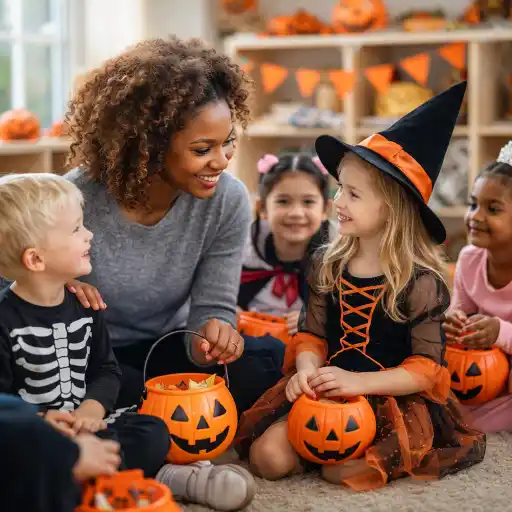
Notice and document strengths as well as concerns. Record what the child tried, what support helped, and how they communicated. Share objective observations with families and invite their insights about familiar routines or comforting strategies. For classroom resources focused on identifying and discussing feelings, consider the Monster Emotions Mix & Match activity kit Buy Now $3.49.
What common pitfalls should providers avoid?
Well-intended celebrations can become stressful when adults prioritize a schedule, a costume parade, or a finished project over a child’s signals. A strengths-based approach recognizes that children can participate meaningfully in different ways. The goal is emotional security and connection—not uniform enthusiasm.
- Minimizing fear: Replace “It’s not scary” with “It feels scary to you right now. I can help.”
- Pressuring participation: Do not insist that a child wear a costume, touch a material, or approach a decoration.
- Using surprise as entertainment: Avoid jump scares, sudden loud sounds, and unexpected appearances.
- Assuming all children share the same preferences: Make gentle autumn activities and non-Halloween alternatives available.
- Overlooking sensory discomfort: Consider noise, light, crowding, smells, movement, and costume textures.
Directors can help by reviewing materials in advance, agreeing on a consistent staff response, sharing the schedule and participation options with families, and ensuring an appealing quiet alternative is available. Invite family input about cultural or personal preferences without asking families to justify them. If a child’s distress is persistent, occurs across settings, or significantly interferes with everyday participation, discuss observations respectfully with the family and follow program procedures for consultation or referral. State requirements vary - check your state licensing agency.
Consistency matters: when adults respond in a predictable, respectful way, children learn that communicating discomfort is safe. That lesson supports emotional trust well beyond the Halloween season.
Conclusion: How can teachers support children’s emotional development during Halloween?
Teachers can support emotional development during Halloween by preparing children for what to expect, observing individual cues, validating feelings, and offering genuine choices. Predictable routines, gentle activities, quiet alternatives, and flexible participation help children explore seasonal play while preserving their sense of safety and control.
Use stories, puppets, art, and conversation to help children name feelings and practice coping in ways that feel manageable. Avoid dismissing fear or treating participation as a measure of bravery. Partner with families, document what supports each child, and adapt plans as needed. The most important takeaway is simple: Halloween can be a meaningful context for emotional learning when the child’s experience—not the activity plan—guides the response. For additional professional learning, explore the linked ChildCareEd courses on self-regulation and social-emotional development.
ChildCareEd courses for further learning:
- CDA Home Visitor Subject Area 3 Part 3 Birth to 5
- Building Equity: Inclusionary Practices in Preschool
- Bienvenido! Welcoming All Families
- The ABCs of Behavior: Turning Challenges into Learning Opportunities
- CDA Bridge Bundle: Family Child Care without Portfolio Review
- Healing Young Hearts: Stress and Grief
- CDA Bridge Bundle: Infant/Toddler without Portfolio Review
- Classroom Setup for Child Care
- CDA Bridge Bundle: Preschool without Portfolio Review
- Self-Regulation & Change: Helping Children Cope
- Mummy Races & Zombie Tag: Halloween-themed Gross Motor Games
- CDA Certification en Español: Recursos y Consejos para Educadores Bilingües
- 🔍 ¿Qué ves cuando observas a un niño aprender?
- 💛🧩 ¿Cómo puedo hacer que mi enseñanza sea inclusiva para los niños con autismo?
- Halloween Classroom Activities Kids Will Go Batty For
- 10 Ejemplos de Cómo la Cultura Influye en el Desarrollo Infantil
- Cómo Trabajar en el Cuidado Infantil en Carolina del Norte: Requisitos y Pasos
- Cómo Trabajar en el Cuidado Infantil en California: Requisitos y Pasos
- Celebrando la amistad en el cuidado infantil durante el Día de los Mejores Amigos
- Canciones, juegos y preguntas de círculo para niños
- How can providers and families keep children safe while trick-or-treating?
- What are safe, engaging non-candy Halloween ideas for daycares?
- How Can Halloween Fine-Motor Activities Be Fun Without Being Scary?
- How Can You Plan October Classroom Activities for Children Who Do Not Celebrate Halloween?
- What Should You Do When a Child Finds a Halloween Activity Frightening?
- How Can Fall Classroom Activities Teach Positive Behavior?
- How Can Teachers Support Children’s Emotional Development During Halloween?
- How Can Preschool Teachers Encourage Sharing and Cooperation During Halloween?
- How Can Child Care Providers Use Positive Guidance During Halloween?
