Every day outdoors brings learning and fun — and sometimes a bite or sting. This short guide helps North Dakota child care providers and directors give safe, calm #firstaid right away, prevent problems, and follow program rules. Use the tips below, practice with your team, and keep a clear plan so children and families feel safe. For more step-by-step guidance, see ChildCareEd’s quick guide on Splinters, Stings, and Rashes and the Creating Safe Outdoor Play Environments article.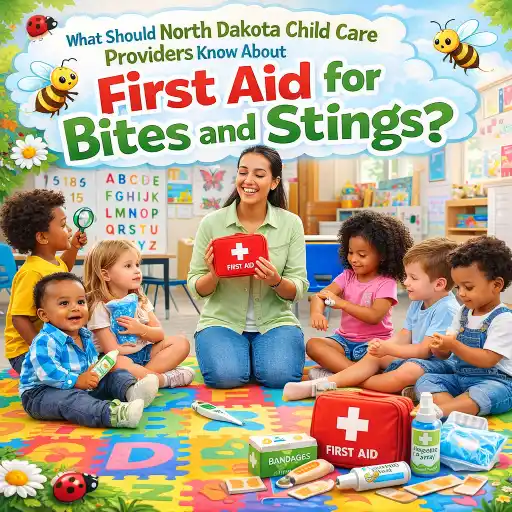
Why does knowing bite and sting first aid matter?
1) Children react quickly. What starts as a small sting can become an #allergy emergency for some kids.
2) Quick, calm action keeps a child safe and helps families trust your program.
3) Good routines lower risks and help staff act fast when a bite or sting occurs.
Why it matters:
- 🩺 Some reactions are life-threatening (trouble breathing, swelling of face/mouth). If you see these, call 911 — treat as anaphylaxis and use epinephrine if prescribed. See KidsHealth allergic reaction guidance.
- 🌿 Ticks and mosquitoes can carry disease. Quick removal and monitoring matter — see CDC tick info: Ticks | CDC and Mosquito bites | CDC.
- 📋 Good documentation and training protect children and staff and meet licensing expectations in #NorthDakota. For state rules and tips, review ChildCareEd’s North Dakota Child Care Rules.
What are the first steps to take right away when a child is bitten or stung?
Follow a short, practiced checklist so staff can act without guessing. Use enumeration so it’s easy to train and remember.
- 🧯 Safety and comfort
- Move the child away from the hazard and stay calm.
- Put on gloves if skin is broken or there is blood (follow your BBP policy).
- 🫧 Clean and check the site
- Wash with soap and water.
- For visible stingers (bee): gently scrape out the stinger — don’t squeeze. See ChildCareEd’s guide.
- For ticks: use fine-point tweezers, grasp close to the skin, and pull straight up. Save the tick in a sealed container if the family or clinician wants it — see CDC ticks.
- ❄️ Soothing care
- Apply a wrapped cold pack 10 minutes on / 10 minutes off to reduce swelling.
- Give an age-appropriate antihistamine only with family permission or an action plan.
- 🚨 Watch for allergic signs and act fast
- If the child has trouble breathing, swelling of lips/tongue/face, fainting, or widespread hives — call 911 immediately. If your program has epinephrine and the child’s plan allows it, give it and call 911. See KidsHealth and ChildCareEd allergy guidance.
- 📝 Document and call home
- Note time, location on body, treatment given, and changes. Call the parent/guardian and follow your program’s medication and emergency policies.
How can we prevent bites, stings, ticks, and mosquito problems during outdoor play?
Prevention is easier than treatment. Use numbered routines so staff can follow them each day.
- Clothing and repellents
- 👕 Dress children in light-colored clothes, long sleeves, and pants when ticks are active. Tuck pants into socks if possible.
- 🧴 Use EPA-registered repellents per label and family permission (don’t combine with sunscreen; apply sunscreen first). See CDC guidance: Mosquito bites | CDC.
- Yard and equipment checks
- 🔍 Do a daily walk-through before outdoor time. Remove standing water, clear leaf litter, and keep trash lids closed to reduce wasps and mosquitoes. ChildCareEd outlines yard checks in Creating Safe Outdoor Play Environments.
- 🛡️ Injury prevention and outdoor safety: For staff who want to build the consistent daily habits that reduce bite and sting incidents during outdoor play, ChildCareEd's Injury Prevention: Their Safety Is In Your Hands
 Buy Now $24.00 is a 3-hour online course covering how to identify environmental hazards, set up safer outdoor spaces, and build prevention routines — a direct match for the daily yard walk-through, standing water removal, and plant and pest management steps described throughout this article.
- Program rules and teaching
- ✅ Teach children not to touch nests, dead animals, or unfamiliar critters. Supervise closely near brush or wood edges (see ChildCareEd’s outdoor safety tips).
- Plant and pest management
- Remove poisonous plants from play areas and work with a pest management plan that favors habitat changes over heavy spraying. For tools and mapping, use ChildCareEd resources like the hazard-mapping tool in Creating Safe Outdoor Play Environments.
What policies, training, and documentation should North Dakota providers have to handle bites and stings safely?
Strong policies and training give staff confidence. Numbered steps make policy easy to use during a busy day.
- Written plans and permissions
- 📝 Keep an allergy action plan and medication permission on file for each child with known allergies. ChildCareEd’s allergy article has sample checklists.
- Training and drills
- 🎓 Require pediatric First Aid & CPR for staff and regular refreshers. ChildCareEd’s course pages explain blended and in-person training options: First Aid & CPR expectations and Preparing for training. Consider enrolling staff in a pediatric First Aid & CPR refresher this summer that focuses on outdoor incidents such as insect stings and bites; see course details at pediatric First Aid & CPR refresher.
- 💉 Follow your medication administration policy, document each dose, and store emergency meds where staff can reach them. Review ChildCareEd’s Medication Administration guidance.
- Allergy and medication management: To make sure all staff are confident following allergy action plans and administering emergency medications, ChildCareEd's Illness, Medication, and Allergies in Child Care Buy Now $32.00 is a 4-hour online course covering allergy recognition, medication administration procedures, anaphylaxis response, and documentation requirements — directly supporting the epinephrine steps, medication permission forms, and incident reporting routines outlined in this guide.
- Note: state requirements vary - check your state licensing agency about stock epinephrine or who can administer it in North Dakota.
- 📂 Use a simple incident report: date/time, what happened, care given, parent notified, and follow-up. Keep photos if helpful and save removed ticks in a sealed bag if requested by parents or clinicians.
- ⚠️ Signing medication logs before giving medicine — fix: staff must sign immediately after giving.
- ⚠️ Not rehearsing emergency plans — fix: run short drills and EpiPen practice with trainers.
- ⚠️ Forgetting to ask about household allergies at enrollment — fix: add clear allergy questions to your intake packet and update yearly.
Conclusion: Quick checklist to use today
- 📝 Post an easy action plan in each room for bites and stings (who to call, where meds are kept).
- 🧰 Check your first-aid kit against ChildCareEd’s First Aid Kit Checklist Buy Now $0.00.
- 🎓 Schedule a First Aid & CPR refresher for staff this month (ChildCareEd classes listed at ChildCareEd).
- 🔍 Do a daily outdoor walk-through before play to reduce hazards.
- 📞 Remind families about allergy plans and written medication permissions at pickup.
Keeping these steps simple, practiced, and written down makes your program calmer and safer. You’re already doing important work — these routines help you respond with confidence to bites and stings in your #preschoolers program.
- 😫🧸 ¿Qué hacer cuando un bebé no quiere dormir la siesta en el aula?
- ¿Cuáles son las mejores actividades de primeros auxilios para adultos?
- ¿Cómo pueden los equipos de cuidado infantil practicar habilidades rápidas de primeros auxilios en situaciones reales?
- Capacitación en Salud y Seguridad Preventiva en Línea para Proveedores de Cuidado Infantil
- Regulaciones de Licenciamiento de Cuidado Infantil en California para Centros y Hogares de Cuidado Infantil Familiar
- Proporciones de Cuidado Infantil y Tamaños de Grupo por Edad en Maryland (Guía Rápida para Centros y Hogares)
- Lista para Abrir una Guardería en Casa en Dakota del Norte: Cómo Empezar
- Lista para Guardería en Casa en Texas: Cómo Iniciar una Guardería en el Hogar
- Cómo Trabajar en el Cuidado Infantil en California: Requisitos y Pasos
- Cómo Trabajar en el Cuidado Infantil en Wisconsin: Requisitos y Pasos
- Cómo Ser Maestra de Preescolar en Dakota del Norte
- Capacitación Previa al Servicio para Proveedores de Cuidado Infantil en Dakota del Norte
- Las Mejores Ideas de Excursiones para Guarderías en Dakota del Norte
- How can DC child care programs keep kids safe outdoors from insects, wildlife, and bites?
- How can Florida child care programs keep kids safe from snakes, insects, and harmful plants on the playground?
- How can childcare programs protect young children in North Dakota from West Nile, ticks, and extreme heat?
- How can North Dakota child care programs keep children safe from West Nile and tick-borne illness this summer?
- What should North Dakota child care providers know about first aid for bites and stings?
- How can North Dakota programs teach children about bug safety?
- How can child care programs keep kids safe on the Fourth of July in North Dakota?
