Childcare professionals often have role-specific concerns when selecting First Aid and CPR training. Licensing authorities and employers commonly require staff—including home-based providers, nannies, and center teachers—to hold current CPR and First Aid certification, which typically must be periodically renewed. ChildCareEd's CPR and First Aid programs Buy Now $85.00$80.00, offered in both blended and in‑person formats (see our Pediatric In-Person First Aid & CPR/AED Buy Now $95.00), are designed to align with state and county licensing expectations and recognized workplace standards. ChildCareEd maintains approvals from multiple agencies across the United States. Instructors emphasize hands‑on competence and situational decision‑making so staff complete training with practical skills and the confidence to respond to an #emergency.
What does First Aid & CPR with ChildCareEd include?
First Aid & CPR with ChildCareEd
ChildCareEd First Aid and CPR classes Buy Now $85.00$80.00 include CPR and choking training for adults, infants, and children. First Aid training includes but is not limited to soft tissue injuries, bone and muscle injuries, medical emergencies including diabetic emergencies, anaphylactic shock (including how to use an epi-pen), and environmental emergencies. Upon completion of the class, you will receive your First Aid/CPR/ AED infant, child, and adult certification. For a concise explanation of why learning CPR across adult, child, and infant age groups matters for parents and educators, see Why Every Parent and Educator Should Learn Adult, Child, and Infant CPR.
For hands-on practice ideas and short drills you can run with staff, see ChildCareEd's practical guide to the best first aid activities for adults, which maps drills to blended learning and skills checks.
How should I prepare for First Aid & CPR training?
Preparing for First Aid & CPR Training
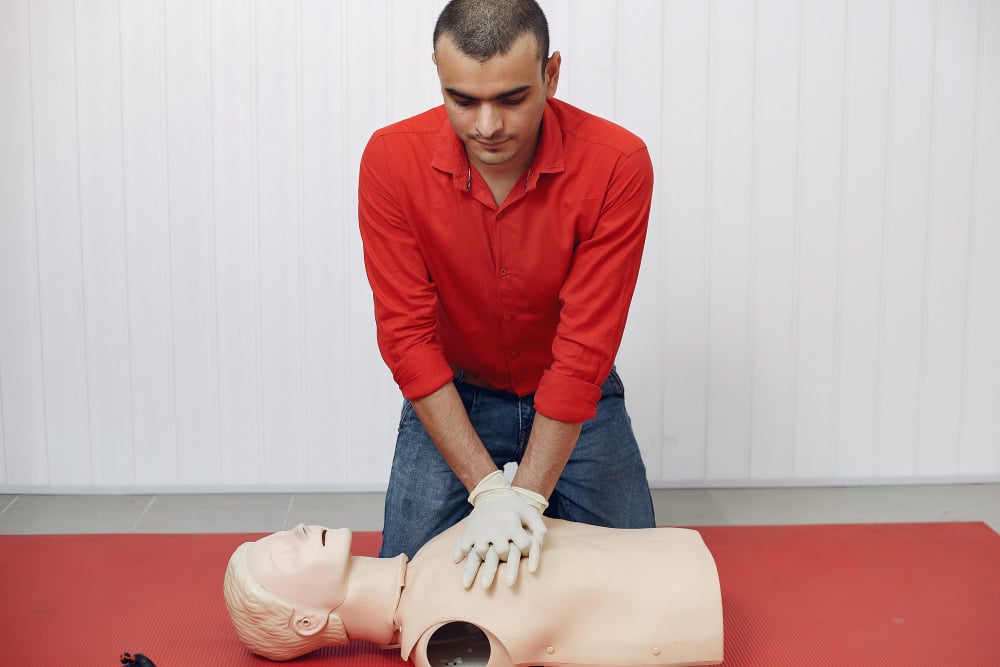
Preparing for your First Aid & CPR blended Buy Now $85.00$80.00 training with ChildCareEd, which includes an online portion and a skills verification session with a live trainer, is important to ensure you gain the necessary knowledge and skills. Here's a step-by-step guide to help you prepare effectively:
What should I do before the online portion?
- Review Course Materials:
- Familiarize yourself with the course outline and objectives.
- Create a Study Schedule:
- Plan your study schedule to cover the online portion. Break it into manageable sections and allocate specific times for study.
- Access Required Technology:
- Ensure you have a reliable internet connection and the necessary devices to complete the online portion of the course.
- Quiet Study Environment:
- Choose a quiet and comfortable environment for studying. Minimize distractions to enhance your focus.
How should I approach the online portion?
- Active Participation:
- Engage actively with the online content. Take notes and participate in quizzes or interactive activities.
- Review and Recap:
- Periodically review the material to reinforce your understanding.
How do I prepare for the skills verification session?
- Check Requirements:
- Ensure you understand all the requirements for the skills verification session. This may include specific attire, documentation, or other prerequisites.
- Gather Necessary Materials:
- Prepare any required materials, such as a printed certificate from the online portion, identification, and any other documents.
- Practice Skills:
- Review the practical skills covered in the online portion. Practice CPR techniques and any other hands-on skills you'll be assessed on.
- Seek Clarification:
- If there are any concepts or skills you find challenging, reach out to ChildCareEd for clarification before the skills verification session.
What should I do after the training?
- Review and Reflect:
- After completing the training, take some time to review what you've learned. Reflect on how you can apply this knowledge in real-life situations.
- Stay Informed:
- Keep yourself updated on any changes or updates in First Aid and CPR guidelines. It's essential to maintain your knowledge over time.
By following these steps, you'll be well-prepared for your First Aid & CPR blended Buy Now $85.00$80.00 training with ChildCareEd. Good luck!
How do I maintain CPR/First Aid competence and integrate it into daily childcare practice?
Maintaining clinical competence after certification requires sustained maintenance strategies: regimented practice, explicit policy alignment, and deliberate integration of skills into workplace systems. The actions below are practical, evidence-informed interventions you can implement immediately to preserve psychomotor performance and ensure staff readiness.
- Establish a short, recurring skills-drill cadence. Schedule 5–10 minute drills monthly for single skills (high-quality compressions, proper hand placement, infant/child modifications, and choking relief). These micro-practices preserve psychomotor memory without taxing staff schedules. For drill ideas and sequencing, see ChildCareEd's drills guide (best first aid activities for adults).
- Run quarterly scenario-based simulations. Design scenarios that reflect your setting (playground injury, allergic reaction needing epinephrine, diabetic hypoglycemia, unresponsive child). Use role-play so one staff member leads while others practice team communication and 911 activation: these simulations improve situational awareness and decision-making under stress.
- Document competencies and make them auditable. Keep a simple log: date, staff present, skills practiced, and a short evaluator note. Use the log to schedule targeted refreshers for staff who need additional practice and to demonstrate training activity to licensing or insurers.
- Maintain and check equipment regularly. Assign a staff member to inspect first-aid kits, epinephrine device expiration dates, and AED readiness monthly. A well-stocked kit and a functional AED are essential complements to training — see practical kit guidance in ChildCareEd's article Got CPR and a Well-Stocked First Aid Kit?.
- Use blended refresher touchpoints. Pair short e-learning refreshers with an in-person skills check every 6–12 months. State and employer requirements vary; some agencies (and OSHA-aligned programs) expect hands-on practice and a certificate of completion. Official training bodies emphasize hands-on evaluation as part of certification (see guidance from the Texas Department of Insurance on course structure and hands-on instruction: TDI: CPR, AED, and first aid training).
- Integrate competencies into orientation and staffing plans. New hires should complete the online portion before their first in-person shifts and have a scheduled skills check within 30 days. Cross-train substitutes and ensure at least one staff per shift is certified and comfortable using an AED and epinephrine devices.
- Link training to safety culture and community preparedness. Encourage staff to read short articles and case studies to contextualize practice; ChildCareEd's pieces on community safety and pediatric preparedness (First Aid and CPR: An Investment in Community Safety, Pediatric First Aid and CPR Training) can support staff buy-in and leadership conversations.
Implementing the steps above creates redundancy: monthly micro-practice preserves skills; quarterly simulations test systems; documentation demonstrates compliance; and equipment checks ensure tools function when needed. For role-specific checklists and certification pathways (pediatric vs. adult-only), consult ChildCareEd's course comparisons and certification information such as Pediatric and Adult First Aid and CPR Certification and the RSV blended option Pediatric RSV First Aid & CPR/AED Buy Now $115.00 for remote/hybrid logistics.
These practices will make your center more resilient, reduce response time in emergencies, and support compliance with licensing expectations. For a viewpoint on why pediatric first aid training matters specifically for daycare settings, see Why Pediatric First Aid Training is Crucial for Daycare Providers.
ChildCareEd offers First Aid & CPR training Buy Now $85.00$80.00 multiple times weekly to facilitate staff scheduling. Visit www.childcareed.com and click on Instructor-Led to view the full calendar and register. Enroll to maintain certification and strengthen your program's #safety culture. #safety #AED #CPR #FirstAid
Summary
Preparing for First Aid & CPR training requires both logistical preparation and pedagogical intent: complete the online portion attentively, deliberate on psychomotor practice, and use the skills verification session to address remaining gaps. After certification, embed short drills, quarterly scenario-based simulations, routine equipment checks, and auditable documentation into center systems to sustain competence and demonstrate compliance with licensing expectations. Providers operating in Texas should verify alignment with state guidance (see the Texas Department of Insurance link in References) and consult their licensing specialist as regulations and registry expectations vary by program type.
- Adult/Child/Infant CPR AED and Adult First Aid Blended
- Adult Only CPR AED and Adult First Aid Blended
- Pediatric Blended First Aid & CPR/AED Adult, Child, Infant
- Pediatric RSV First Aid & CPR/AED
- Pediatric In-Person First Aid & CPR/AED Adult, Child, Infant
- Adult First Aid Only - Blended
- Texas Director Credential Renewal
- Texas Director Credential
- Preparing for your First Aid & CPR Training
- Keeping Our Youngest Students Safe: The Vital Importance of Pediatric First Aid and CPR Training for Teachers
- Don't Let Emergencies Make You Scream!!
- Life in the Fast Lane: Why First Aid Training & CPR is Critical for Those Working With Children
- Basic Health and Safety Training: The Essential Guide for New Child Care
- ¿Cuáles son las mejores actividades de primeros auxilios para adultos?
- How to Work in Childcare in Nevada: Requirements and Steps
- Daycare Teacher Certification Requirements in Georgia
- How can Washington child care programs stay compliant with staff training, records, and classroom safety?
- What CPR and AED skills should every Nevada child care educator know?
- Safe Temperature Regulations in Daycare: Nevada Rules for Child Care Providers
- Babysitting Training Online: How to Build Skills, Safety, and Confidence
- Daycare Temperature Regulations in Nevada: How Hot Is Too Hot?
- Working in Maryland Child Care: Training, Requirements, and Career Tips
