Florida playgrounds are full of sunshine and fun — and some natural hazards we must watch for. This article helps directors and caregivers spot and reduce risks from snakes, stinging #insects, biting bugs, and poisonous #plants. Use the steps and links belo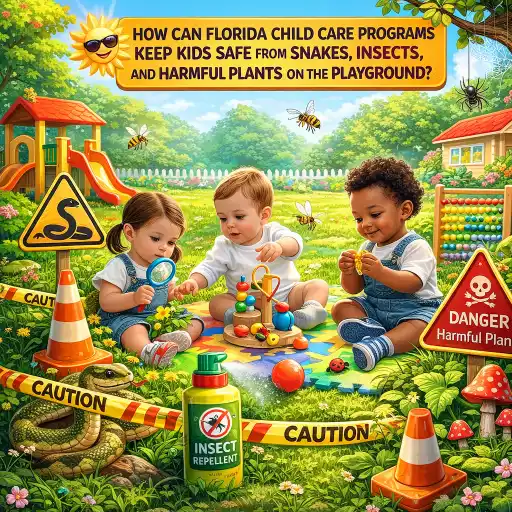 w to make outdoor play safer. Remember: state requirements vary - check your state licensing agency.
1) How can we keep snakes away from our playground?
- 🔧 Do daily checks of the #playground before children go outside. Walk the area at a child’s eye level and look in mulch, under equipment, and near buildings — see a helpful checklist at Playground Safety for ideas.
- 🧹 Remove hiding spots: keep grass short, remove wood piles, and clear dense plants. Replace tall mulch piles with smoother surfaces and keep equipment edges visible; a printable checklist is available at Playground Safety Checklist (PDF) Buy Now $0.00.
- ⚠️ Create barriers: trim shrubs away from play areas and seal gaps under fences and sheds so snakes can’t sneak in. Use gravel or concrete edges where allowed by your licensing rules.
- 📣 Train staff: tell everyone what snakes look like and what to do if they see one. The national standards in Caring for Our Children recommend plans for outdoor safety and staff training.
- 📞 Know who to call: Have local animal control and poison control numbers posted. After any bite, get medical care right away — don’t wait.
These small checks save time and worry. Simple daily habits make the playground a safer place for play and learning.
2) How can we protect children from stinging insects and mosquitoes?
- 🐝 Keep food and trash covered and clean tables right away. Beehives and wasp nests are places with snacks and open drinks.
- 🦟 Reduce standing water weekly so mosquitoes can't breed: empty buckets, clean birdbaths, and check toys and planters. The CDC has steps to control mosquitoes at Preventing Mosquito Bites.
- 🧴 Use repellents safely: follow label directions and choose EPA-registered products when allowed for children; cover strollers with netting for infants per CDC guidance.
- 👕 Dress smart: long sleeves and pants at dawn or dusk help. Light-colored clothing can be less attractive to some stinging insects.
- 📋 Train and plan: staff should know first aid for stings and that caregivers with known severe allergies should have an action plan and epinephrine available. NIOSH guidance on protecting workers from stinging insects gives clear first aid steps at NIOSH Fast Facts. Consider scheduling Pediatric First Aid and CPR training so staff can respond confidently to stings and anaphylaxis; see course details at Pediatric First Aid and CPR training.
Quick actions — like removing breeding sites and cleaning food — cut down bites and keep kids outside longer and happier.
3) Which plants are harmful and how do we manage them?
- 🔎 Learn common harmful plants and post pictures for staff. ChildCareEd has plant lists and images you can use at Lists and Images of Poisoning Plants Buy Now $0.00.
- 🌿 Remove or fence off poisonous species. If a plant is aggressive or invasive (like some groundcovers), remove it — see a homeowner’s warning about aggressive groundcover at Blue Star Creeper warning.
- 🪴 Choose safe landscaping: plant non-toxic species near play areas and keep flower beds away from toddler paths. The Virginia Poison Center suggests resources on plant safety and first aid at Plant Safety: Prevent Plant Poisoning.
- 🧤 Use safe removal methods: staff should wear gloves and wash their hands after handling plants. For big removals, hire licensed groundskeepers so chemicals and heavy tools are used correctly.
- 📚 Teach children not to eat or touch unknown plants and tell families about risky species near your site. Include plant safety in family orientation and daily reminders.
Keeping a short, clear border between play and planted areas and using non-toxic plants makes outdoor time safer for little explorers.
4) What should staff do if a bite, sting, or plant exposure happens?
Preparation and calm action matter. Write a clear plan, train staff, and keep supplies ready. Here’s a short action list to follow after an incident.
- 🚨 Step 1 — Stay calm and keep the child still and comfortable. For snake bites, keep the bitten part still and lower than the heart if possible.
- 📞 Step 2 — Call emergency services for any venomous snake bite or if a child has trouble breathing, swelling, or severe pain. News reports show delays can cause worry; get medical help fast (see a recent snake bite story for context: daycare copperhead bite).
- 🧼 Step 3 — For stings: remove any stinger by scraping (do not squeeze), wash with soap and water, and apply ice. Follow the NIOSH first aid steps at NIOSH.
- 🩺 Step 4 — For plant exposure: wash skin with soap and water and remove contaminated clothing. For ingestion or severe reactions, contact your poison control center and follow their instructions; see plant first aid at Virginia Poison Center.
- 📋 Step 5 — Document the event, notify parents, and review your outdoor safety plan. The national guide Caring for Our Children recommends clear written policies for incidents.
Practice incident drills and keep emergency numbers visible. Knowing what to do reduces panic and improves outcomes.
Conclusion: Why this matters and how to avoid common mistakes
Why it matters:
1) Young children explore with their hands and mouths. Small hazards can become big injuries quickly. 2) Families trust your program to keep children safe while they learn and play. Simple prevention steps protect health and build trust.
Common mistakes and how to avoid them:
- ❌ Mistake: Only checking the playground once a week. ✅ Fix: Do a quick daily check before outdoor time; use a checklist like The Ultimate Playground Safety Checklist.
- ❌ Mistake: Thinking small plants or mulch are harmless. ✅ Fix: Learn common toxic plants and remove or fence them. See poisoning plant lists Buy Now $0.00.
- ❌ Mistake: Not training staff on bites/stings. ✅ Fix: Provide annual training and practice your emergency plan as recommended by Florida health and safety resources. State requirements vary - check your state licensing agency.
Quick FAQ
- Q: Should we close outside play when we see a snake? A: Yes. Move children to a safe place and call animal control.
- Q: Can we use insect repellent at child care? A: Follow product label and state rules; the CDC has guidance on repellents at CDC Mosquito Prevention.
- Q: Who to call for plant poisoning? A: Call Poison Control and follow their advice; keep their number posted.
- Q: How often should staff review outdoor safety? A: At least annually and before the rainy or mosquito season. Practice emergency drills too.
Keeping a tidy, checked, and well-planned outdoor space helps children enjoy fresh air and play with fewer risks. Use the links and checklists above to build routines that protect kids, staff, and families. #safety #snakes #insects #plants #playground
Stinging insects (bees, wasps, hornets) and mosquitoes are common in Florida. A sting or multiple stings can be serious for kids with allergies. Use these steps to reduce bites and stings. Some common yard plants can cause rashes, stomach trouble, or worse if touched or eaten. Follow these steps to spot and remove risky plants. Snakes like warm, shady spots, piles of mulch, and tall grass. To lower the chance of a child meeting a snake, follow these steps.- 45 Hour Child Growth and Development
- How To Keep A Healthy Class for Infants/Toddlers
- Unlocking Support for Florida Childcare
- 45 Hour Infant and Toddler Methods and Materials
- Pediatric RSV First Aid & CPR/AED
- 45 Hour School Age Methods and Materials
- Texas Director Credential
- Keeping Them Safe: Infants & Toddlers
- Family Child Care: Building, Premises, and Outdoor Safety
- CDA Certification en Español: Recursos y Consejos para Educadores Bilingües
- 🥦✨ ¿Cómo apoyar a los niños selectivos a probar nuevos alimentos sin presión?
- Cómo Abrir Una Quardería En Casa Sin Dinero?
- Recursos en Español sobre el Sueño Seguro del Bebé
- ¿Cómo empiezo mi certificación CDA en Florida en línea?
- ¿Cómo afecta la dopamina a los niños: señales, efectos e influencias diarias?
- 10 Ejemplos de Cómo la Cultura Influye en el Desarrollo Infantil
- Normas de Licenciamiento de Cuidado Infantil en Virginia para Centros Diurnos Infantiles y Hogares Diurnos Familiares
- Proporciones de Cuidado Infantil y Tamaños de Grupo por Edad en Maryland (Guía Rápida para Centros y Hogares)
- Proporciones de Cuidado Infantil y Tamaños de Grupo por Edad en Nueva Jersey (Guía Rápida para Centros y Hogares)
- Proporciones de Cuidado Infantil y Tamaños de Grupo por Edad en Virginia (Guía Rápida para Centros y Hogares)
- Consejos de Supervisión Activa para Salones de Preescolar y el Juego al Aire Libre
- Capacitación Previa al Servicio para Proveedores de Cuidado Infantil en Nevada
- How can we use prairie animals and nature activities with young children in Oklahoma?
- How can Florida early childhood educators protect children from poisonous plants, bugs, and outdoor hazards?
- How can Washington child care programs keep playgrounds safe from stinging insects, slugs, and harmful plants?
- How can Florida child care programs keep kids safe from snakes, insects, and harmful plants on the playground?
- Canciones, juegos y preguntas de círculo para niños
- La mejor manera de hacer seguimiento a la capacitación de su equipo de daycare How to Organize Staff Training for Your Child Care Center Cómo organizar la capacitación del personal para su centro de cuidado infantil
- Cómo simplificar la capacitación para sus empleados de daycare
