As a Nevada child care provider, you see children every day. Noticing small moments in play helps you keep kids #safe, support learning, and talk with families. This short guide shows what to watch for, how to arrange your room, and simple ways to record and share what you see. Use small steps — little changes add up fast. #Nevada #preschool #observation #safety #play
Why does noticing preschool play and learning matter in Nevada?
2) It makes teaching better. Observation gives facts you can use to plan play, choose materials, and set goals. For tools and forms, check the Anecdotal Record template Buy Now $0.00 and the ChildCareEd article on purposeful observation.
3) It protects children and your program. Noticing patterns helps you document concerns for referrals, and it shows families you are watching closely. Also, remember: state requirements vary - check your state licensing agency.
What should I notice when I watch children play?
- 😊 Social play: Who does the child play with? Do they take turns or help others? (See ChildCareEd’s article on watching to learn.)
- 🔎 Language: New words, sentences, or questions the child uses. Use the Developmental Milestones Checklist Buy Now $0.00.
- 🧩 Thinking & problem solving: Does the child try, change ideas, or solve simple puzzles? Link to play-based thinking ideas in critical thinking.
- ⚽ Motor skills: Running, hopping, holding crayons, or using scissors. Compare to CDC milestone pages.
- 📈 Attention & persistence: How long does the child play at an activity? Do they return after breaks?
- 📸 Safety signals: Any choking, risky climbing, or blind spots that show up during play? See safety tips at Preventing Injuries.
- 📝 Emotions: How a child handles joy, frustration, or calming down—look for emotion words or actions.
- 🔁 Routine skills: Can they follow simple group instructions during transitions?
Take 1–2 facts per child. Short notes beat long reports. For forms and examples, see observation tools and the 5 benefits of documentation.
How can I set up rooms and supervise so that learning and safety happen?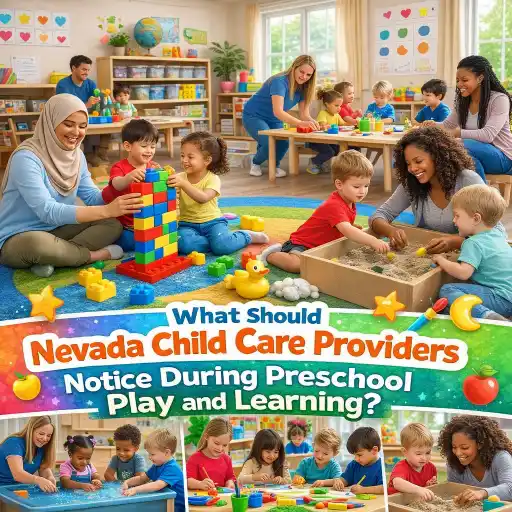
- 🪑 Zone the room: Create clear areas for blocks, art, reading, and a calm corner. Low shelves and labeled baskets help children choose and return materials. See ideas at classroom design for Nevada.
- 📍 Position staff: Use fixed posts and roving roles so adults can see every zone. Learn the 7 active supervision steps at Active Supervision.
- 🔁 Smooth transitions: Post visual schedules and do headcounts at every move. A quick routine reduces missing-child risks and behavior disruptions.
- 🧰 Safety fixes: Anchor furniture, cover cords, and remove small parts for younger children. Read the safety checklist.
- 📋 Staffing & training: Keep staff Registry IDs and training current. The Nevada Registry guide and preservice training tips help you meet rules — state requirements vary - check your state licensing agency.
Small moves you can do this week: add one calm corner, post a zone map, and run a one-minute headcount drill with your team.
How do I document, share, and act on what I notice?
Documentation turns moments into action. Use short, objective notes and simple follow-up steps.
- 📝 Write facts not labels: "Sam stacked 6 blocks" instead of "Sam is good at blocks." Use the Anecdotal Record template Buy Now $0.00.
- 📸 Collect one photo or sample with family permission and add a short note (date, setting, who was there). Portfolios help show growth.
- 🔍 Make a simple plan: 1 goal, 2 teacher moves, re-check in 2–4 weeks. For goal-making ideas, see turning observations into goals.
- 🤝 Share with families kindly: Start with strengths, show one example, ask what they see at home, and offer next steps. ChildCareEd explains family partnership tips in observation articles.
- ⚠️ Common mistakes & fixes:
- 🔴 Relying on one note — fix: collect 2–3 short observations across days.
- 🔴 Letting training lapse — fix: track CPR and required preservice hours; see Nevada preservice requirements.
- 🔴 Weak records at inspection — fix: keep a 3-place file system (child folder, classroom binder, program file) as shown in Nevada resources.
If you see repeated concerns, offer the family your notes, suggest a doctor visit or screening (ASQ or state early intervention), and help with referrals.
Conclusion
Short checklist to start today:
- 📌 Pick one observation focus (language or turn-taking) and note 1–2 facts per child this week.
- 🛠️ Add one calm corner or move a shelf to improve sightlines.
- ✅ Run a headcount drill and post a zone map for staff.
- 📂 Use an anecdotal note and save one photo in a child portfolio with family permission.
For ready tools and courses, visit ChildCareEd’s Nevada resources, like the classroom setup guide, observation resources, and preservice training. You’re doing important work — small steps make big differences for children, families, and your program.
Use a short list so observation is quick and useful. Count, note, and describe facts. Try rotating one focus each day. Good design and active supervision make play safer and learning stronger. Follow simple steps and routines, so staff know what to do.1) It helps children get support early. When teachers notice small changes — a child’s words, how they play with others, or how they move — you can act before a small worry becomes a big problem. See examples of age signs at the preschool milestones guide.- 45 Hour Child Growth and Development
- CDA Home Visitor Subject Area 3 Part 3 Birth to 5
- 45 Hour Preschool Methods and Materials
- Bienvenido! Welcoming All Families
- Pediatric RSV First Aid & CPR/AED
- 45 Hour School Age Methods and Materials
- CDA Bridge Bundle: Family Child Care without Portfolio Review
- CDA Bridge Bundle: Preschool without Portfolio Review
- Texas Director Credential
- Supporting the Nevada Childcare Workforce
- 😫🧸 ¿Qué hacer cuando un bebé no quiere dormir la siesta en el aula?
- 🩺 Cumplimiento de Salud e Inmunización en Cuidado Infantil de Nevada ✔️
- ❄️ ¿Qué actividades al aire libre funcionan bien para los niños de Illinois en cada estación? 🌷🍂
- 🚨 Reporte Obligatorio en Nevada
- ¿Cómo pueden los equipos de cuidado infantil practicar habilidades rápidas de primeros auxilios en situaciones reales?
- Proporciones de Cuidado Infantil y Tamaños de Grupo por Edad en Maryland (Guía Rápida para Centros y Hogares)
- Consejos de Supervisión Activa para Salones de Preescolar y el Juego al Aire Libre
- How to Become a Preschool Teacher in Nevada
- Capacitación Previa al Servicio para Proveedores de Cuidado Infantil en Georgia
- Daycare Teacher Certification Requirements in Nevada
- Online Child Care Courses in Nevada: Training Made Simple
- How can Nevada early childhood educators keep classrooms safe in hot weather?
- What Should Nevada Child Care Providers Notice During Preschool Play and Learning?
- How can busy Nevada early childhood educators do quick, useful classroom observations?
- Online Early Childcare Courses in Nevada
- Did Nevada’s 'Powered by Play' Conference Show Why Play-Based Learning Still Matters?
- Canciones, juegos y preguntas de círculo para niños
- What Makes a Great Home Daycare? 10 Things Parents Notice First
- What Should a 3-Year-Old Be Learning at Preschool?
