Preschool social skills can tell you a lot about how a child is learning to get along, calm down, and join play. This short guide helps California child care providers and directors spot important signs, teach clear skills, document concerns, and work with families. Keep it practical and kind — you already do so much for every child.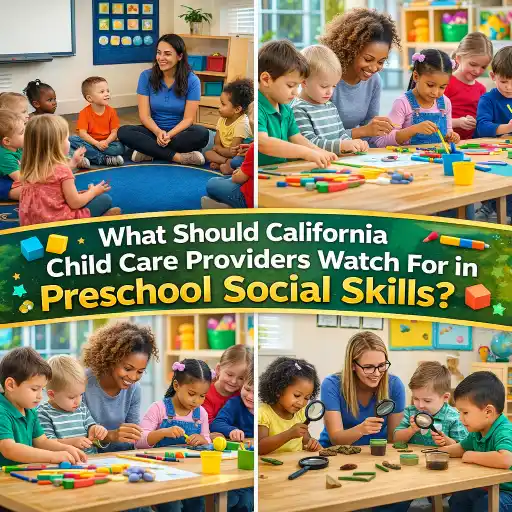
Why this matters
Strong social skills help children feel safe, join the group, learn in class, and form friendships. When we notice small differences early, we can offer support that helps a child succeed in preschool and later in school. Early action also eases stress for families and staff.
Use tools and simple routines so children practice the skills every day. For milestone examples and checklists, see the CDC 3-year and 4-year milestones pages. State requirements vary - check your state licensing agency.
1) What early signs should I watch for in preschool social skills?
- 📌 Ability to join peers (does the child ask or join in play?) — see ideas at ChildCareEd on teaching empathy and friendship.
- 😊 Use of words for feelings (can the child say "sad," "mad," or "happy"?) — check the SEL tips at How to Support SEL.
- ⏳ Wait and take-turn skills (uses timers or trades) and the ability to accept small rules.
- 🚨 Frequent withdrawal, aggressive hitting, or very limited eye contact — these are red flags to monitor and may need further screening (see the ChildCareEd article on signs a child might need support: What Signs Indicate...).
For formal milestone checklists and referral guidance, use the CDC milestone pages and local Help Me Grow resources like Help Me Grow LA. #preschool #socialskills
2) How can I teach and support social skills in the classroom?
- 🎯 Set one small goal each week (example: "Invite a friend to play").
- 📚 Teach with stories and puppets — use scripts such as “Can I play?” and “I feel ___ when you ___.” ChildCareEd has ready activities and a social skills lesson plan Buy Now $0.00.
- 🧰 Add tools: feeling charts, calm-down strategy cards, and small timers. Calm-down cards are available at ChildCareEd: Calm Down Strategy Cards Buy Now $0.00.
- 🤝 Practice: role-play during calm times and praise when children try using words instead of hitting.
- 🔁 Repeat daily routines (greeting, cleanup, turn-taking games) so skills generalize.
Use inclusion habits like multiple ways to join play and accessible materials so every child belongs. For curriculum and teaching guidance tied to California, see the state early learning resources at the CDE: California learning foundations. For concrete activities and classroom routines that specifically foster peer friendships and build classroom community, see Building Social Foundations. #empathy #inclusion
3) When should I document concerns and involve families or specialists?
- 📝 Record objective observations: time, what happened, what the staff did, and what changed. Use the format from ChildCareEd’s recordkeeping tips: Recordkeeping and Documentation Tips.
- 📆 Track over 2–6 weeks to see patterns. One day is rarely enough to decide.
- 📣 Talk with the family: start with strengths, share specific, calm observations, and ask what they see at home. ChildCareEd has a course on family communication: Let’s Talk: Effective Communication
 Buy Now $24.00.
 - 🔎 If concerns persist, use screening tools or refer. The CECMHC guide helps pick screening tools: Finding Social Emotional Screening Tools. CDC guidance explains when to screen and refer: Developmental Monitoring and Screening.
- 🏛️ Know local resources: call Help Me Grow or your regional early intervention. In California, see local directories like Help Me Grow LA. State requirements vary - check your state licensing agency.
Keep records secure and share only with those who need to help the child. #earlyintervention
4) How can I avoid common mistakes and build consistent classroom habits?
Small mistakes often slow progress. Use this checklist to avoid common pitfalls and build consistent practice:
- ❌ Don’t lecture right after a conflict — teach repairs later when calm. (Short, calm limits now; teach later.)
- ✅ Use consistent scripts across staff. Pick 2–3 power phrases and use them every day (example: “Use gentle hands,” “Can I have a turn?”). ChildCareEd materials on conflict and repair give short scripts: Teaching Preschoolers How to Work Through Conflict.
- 🧩 Arrange the room for success: zones, duplicates of popular toys, and clear shelves help reduce grabbing and fights.
- 👥 Train staff together and practice role-play so everyone uses the same approach. Consider ChildCareEd courses like Brighter Futures: Social Emotional Development Buy Now $16.00.
- 🔁 Make routines visual and predictable — morning greeting, story time, and calm corners reduce surprises and big emotions.
Common mistakes include forcing sharing, inconsistent staff messages, and waiting too long to intervene. Replace these with short scripts, practice, and simple environmental changes. For deeper policy and inclusion guidance in California, see CDE inclusion works.
Conclusion
Spotting social skill needs, teaching short scripts, documenting clearly, and partnering with families give children the best chance to grow. Use ChildCareEd resources, CDC milestone guides, and local Help Me Grow contacts to support next steps. Your steady, kind practice helps children learn friendship, calm, and belonging — skills they will use for life.
FAQ
- Q: How fast will social skills improve? A: Small changes in weeks; steady habits in months with daily practice and family support.
- Q: When should I refer for assessment? A: If concerns persist across weeks, affect participation, or match red flags on milestone lists. See CDC screening guidance: screening.
- Q: Which tools help with social-emotional screening? A: Use vetted tools from the CECMHC chooser: Finding Social Emotional Screening Tools.
- Q: How should I tell families? A: Start with strengths, share objective notes, offer a small home script, and invite next steps. See ChildCareEd’s Let’s Talk Buy Now $24.00 course.
Good documentation and family partnership make support effective. Follow these clear steps: Teach short, repeatable scripts and routines. Keep lessons simple, playful, and part of the day. Try this 5-step classroom plan: Look for how a child joins play, uses feeling language, and handles turns. Watch over time — patterns matter more than one day. Useful things to notice include:
- 45 Hour Child Growth and Development
- CDA Preschool Credential with Portfolio Review
- 45 Hour Preschool Methods and Materials
- Bienvenido! Welcoming All Families
- CDA Bridge Bundle: Preschool
- Pediatric RSV First Aid & CPR/AED
- CDA Bridge Bundle: Family Child Care without Portfolio Review
- CDA Bridge Bundle: Preschool without Portfolio Review
- Texas Director Credential
- Myth: Preschool's Just About Playing with the Kids
- 🔍 ¿Qué ves cuando observas a un niño aprender?
- 📜 ¿Qué es el Título 22 en el cuidado infantil de California?
- Que es Título 22 en California?
- ¿Cómo solicito la licencia para una guardería en California?
- Regulaciones de Licenciamiento de Cuidado Infantil en California para Centros y Hogares de Cuidado Infantil Familiar
- Proporciones de Cuidado Infantil y Tamaños de Grupo por Edad en Maryland (Guía Rápida para Centros y Hogares)
- Lista para Guardería en Casa en California: Cómo Iniciar una Guardería en el Hogar
- Lista para Guardería en Casa en Texas: Cómo Iniciar una Guardería en el Hogar
- Retraso del Habla en la Guardería: Cómo Pueden Ayudar los Proveedores
- Cómo Trabajar en el Cuidado Infantil en California: Requisitos y Pasos
- Capacitación Previa al Servicio para Proveedores de Cuidado Infantil en Dakota del Norte
- How can I use beach and ocean-themed summer activities in my California early childhood classroom?
- What California children’s museums best support hands-on preschool learning?
- What Should California Child Care Providers Watch For in Preschool Social Skills?
- California Preschool Ratios: How Many Children Can One Teacher Supervise?
- Can You Become a Preschool Teacher in California Without a Degree?
- Title 22 Home Daycare Ratios: How Age Mix Changes Your California Capacity
- How Do You Fill Out LIC 279? A Step-by-Step Guide for California Family Child Care Applicants
- What Does California Preschool Compliance Really Cost? A Director’s Annual Budget Checklist
