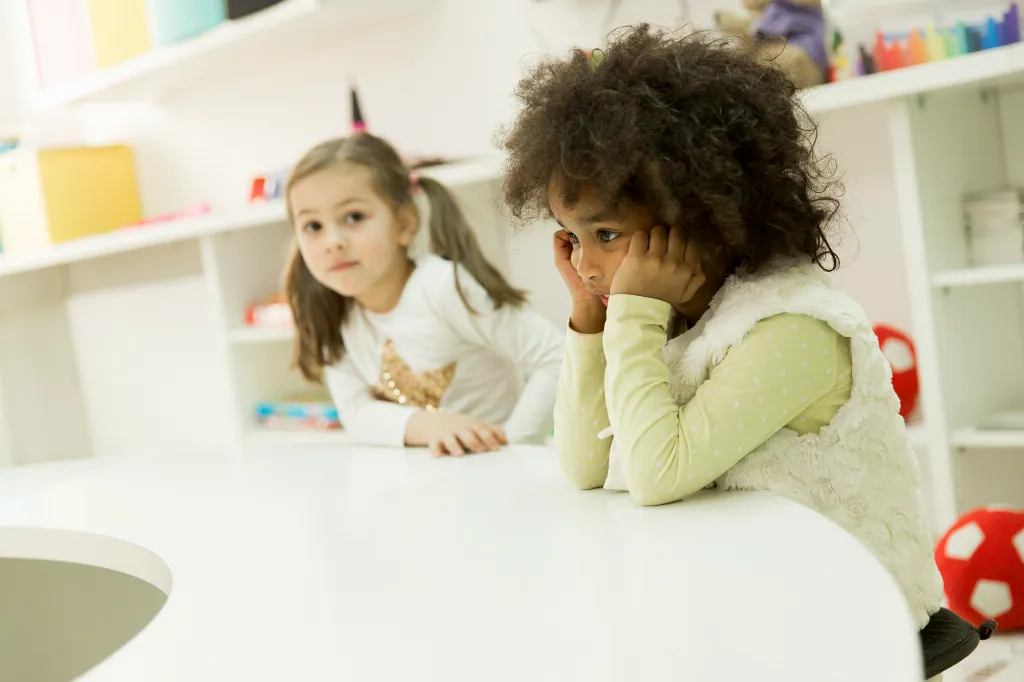
 Small changes in the room and schedule make big differences in how children act. When things are predictable, children feel safe and try new skills.
Helping children learn rules and calm down is one of the hardest parts of our job. You can use simple steps today that keep the room safe, teach skills, and build strong relationships. Use these ideas in your #classroom with your #children to guide #behavior with clear #guidance and partner with #families.
For easy ideas and examples of routines, see How Can Positive Guidance Improve Classroom Management.
What quick changes stop behavior problems before they start?
😊 Create a predictable day:
- Post a simple picture schedule at child height (use photos or icons).
- Give 2-minute and 1-minute warnings before transitions.
🎯 Set clear, short rules:
- Teach 3 or fewer rules (example: "Use kind hands").
- Model the rule and practice with role-play and songs.
🏗️ Arrange the room to reduce crowding:
- Make clear centers (blocks, art, reading) and limit how many children in each.
🔁 Balance activity and calm:
- Mix active play, quiet time, and short movement breaks so energy stays steady.
📋 Use visuals and simple cues:
- First–Then boards and timers help many children stay calm; see Visual Schedule tips.
Research and field guides like PBIS and CSEFEL show prevention is the most powerful step — change the room and the routine before behavior starts. See PBIS classroom strategies for ideas that fit many programs.
How should I respond in the moment to keep everyone safe and teach?
When a child is upset, our calm response teaches skills and keeps others safe. Use a short, repeatable plan so staff respond the same way every time. For scripts and moment-by-moment ideas, see What Positive Behavior Guidance Actually Work? and calming tools at Calm-Down Strategies.
🧘 Stay calm and get close: lower your voice and get to child level.
📣 Name the feeling: "You look upset." Simple words help children learn emotion words.
⛔ Set the limit: "Hands are for helping. Hitting hurts." Keep it short and clear.
🔁 Offer a replacement skill: show a calm choice (deep breaths, a squeeze toy, ask for help).
How can I team with families and specialists so supports last?
Children learn best when home and school use the same steps. Strong family partnerships and clear team planning make behavior supports work. For practical family work, see Family Engagement Strategies and CSEFEL materials on Positive Behavior Support (PBS overview).
🤝 Start with strengths: tell families what the child does well before sharing concerns.
📊 Share brief facts: one or two short observations (time, activity, what happened).
🧾 Make a small plan together: try 1–2 consistent steps at home and school (example: 2-minute warning + "my turn please").
🔍 Track progress: keep simple notes and meet weekly or biweekly to tweak the plan.
👩⚕️ Ask for help early: if behavior is intense or not improving, consult mental health or special education; see resources in the Managing Behaviors toolkit.
How do I set up routines, visuals, and calm spaces that teach skills?
Routines, visual schedules, and a calm corner are teaching tools, not punishments. CSEFEL explains why schedules help children understand expectations (Helping Children Understand Routines). ChildCareEd has step-by-step guides for visual schedules and calm corners: Create a Visual Schedule and Calm-Down Strategies.
📘 Visual schedules:
- Make 6–8 picture cards for the main parts of the day.
- Post at child eye level and practice checking it each transition.
🪁 Calm-down spot:
- Include 2–4 safe tools (breathing visual, sensory bottle, squeeze toy).
- Teach visits when children are calm; staff stay nearby for safety.
⏱️ Transition routines:
- Use a short song or countdown and a visible timer so children can prepare.
FAQ
Q: When should I ask for specialist help?
A: If a behavior is dangerous, lasts a long time, or gets in the way of learning, talk with your mental health consultant or special educator.
Q: How many rules should I teach?
A: For preschoolers, 3 or fewer simple rules usually work best. Repeat them often and keep the wording clear.
Q: Do rewards help?
A: Yes. Specific praise and small classroom jobs can be very effective under PBIS.
Q: What if families disagree?
A: Listen carefully, share your observations, and try one small step at home and at school for a week.
Conclusion
Quick actions to try this week:
😊 Post a simple picture schedule and give a 2-minute warning.
📣 Teach and practice one replacement skill (breathe + ask).
🧘 Set up a small calm corner with 2 tools and teach visits when calm.
🤝 Share one short strength + fact + plan message with a family.
You are not alone. Small, consistent, kind steps help children learn skills and make your classroom calmer and safer. For deeper training, ChildCareEd courses like Mysteries of Challenging Behavior Solved  Buy Now
 $24.00$18.00 and Classroom Management is Collaboration! Buy Now $16.00 can help your team get started.
Small changes in the room and schedule make big differences in how children act. When things are predictable, children feel safe and try new skills. For easy ideas and examples of routines, see How Can Positive Guidance Improve Classroom Management and the CSEFEL brief on schedules and routines.
- Professional Presence in Early Childhood
- Birth to Five CDA Credential with Portfolio Review
- Pediatric RSV First Aid & CPR/AED
- 45-Hour Infant and Toddler Curriculum
- Creating Environments that Nurture Growth and Community
- Texas Director Credential
- Anxiety: Signs & Strategies
- Every Moment Matters: Schedules and Transitions
- Prevention and Solutions To Challenging Behaviors
- Back-to-School Success: Essential Skills & Strategies for Childcare Professionals
- Gold Stars Aren’t Just for Kids: Why Childcare Certifications Are the Secret Sauce to Success
- The 2026 Guide to Leveling Up Your Childcare Expertise
- CDA Certification en Español: Recursos y Consejos para Educadores Bilingües
- 💛🧩 ¿Cómo puedo hacer que mi enseñanza sea inclusiva para los niños con autismo?
- How Can Arizona Preschool Programs Best Understand Temperament and Behavior?
- How can child care providers understand and respond to tantrums?
- How Can Child Care Directors Make Inclusive Practices Consistent Across Every Classroom?
- Time-In or Time-Out? 7 Real Classroom Scenarios and What to Try
- ABA Classroom: Prompts, Reinforcement, and Routines Explained Simply
- When Learning Feels Hard: Positive Discipline Strategies for Children Who Struggle
- How Can Child Care Providers Support Social-Emotional Development in Young Children?
- How Can Child Care Providers Build Self-Regulation in Young Children?
- Why Is Social-Emotional Learning at the Heart of 2026 Classrooms?
- How Can You Support an Autistic Child in a Preschool Classroom?
- What Is Positive Reinforcement in Early Childhood Education?
- When Do Persistent Classroom Difficulties Call for an Individualized Plan?
