Introduction — Why this matters
As child care providers and directors, you meet big feelings every day. Helping #preschoolers calm d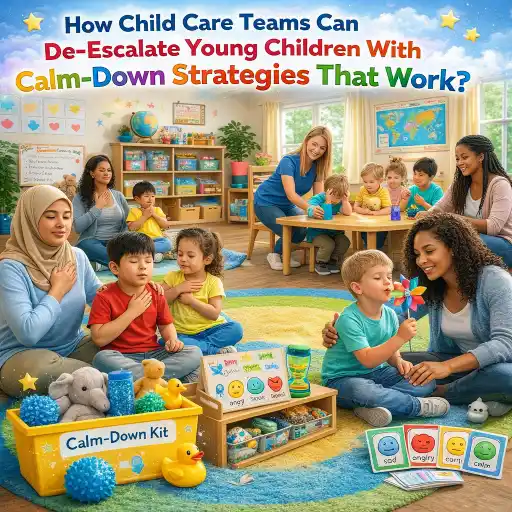 own keeps classrooms safer, helps learning, and teaches life skills. Small, simple steps reduce stress for children and staff. Many providers find success using short, repeatable tools, a clear calm-down place, and regular practice. For quick ideas and lesson supports, see resources like What simple emotional regulation tools help children ages 2–5? and the "I Need a Break" Calm Down Posters Buy Now $0.00.
Why it matters: 1) Young children are still learning to name feelings and slow their bodies. 2) Teaching easy tools supports long-term #regulation and better social skills. 3) Being proactive saves staff time and protects other children.
1) What quick calm-down steps work in the moment?
Use a short routine the child can learn and hear in a crisis. Try the simple order: Connect → Calm → Coach. Keep words tiny and actions short.
- 🧑🤝🧑 Connect: Get down to the child's level, offer a steady voice, and say, 'I’m here.'
- 😮💨 Calm: Teach 1–2 breath tools (balloon breaths, 5-finger breaths or turtle breaths). Use the same phrase each time: e.g., 'Breathe with me—1,2,3.' See ideas at ChildCareEd and the Zones of Regulation for language to teach.
- 💪 Heavy work and sensory options: offer carrying books, wall push, or a squeeze toy to help the body reset.
- 🔁 Replace unsafe actions: give a stomp spot, punching pillow, or safe squeeze toy instead of hitting.
- 📣 Coach briefly after calm: one small question — 'What helped? What else could we try?' — and praise one small choice.
Keep scripts short and repeat often. Practice the steps when children are calm so they recognize the routine during a meltdown. For more on in-the-moment tools, see How to Support Children with Challenging Behaviors.
\n\n
2) How do we teach calm-down tools so children actually learn them?
Teaching works best when it is short, fun, and repeated. Build practice into the day — circle time, transitions, or quick movement breaks. Use visuals, play, and games so children learn by doing.
- 🎲 Short practice games: Red Light/Green Light, Freeze Dance, or Simon Says build stopping and waiting skills.
- 🧘 Daily breaths: 1–2 minute group breathing each day. Use a visual (breathing heart, glitter jar) and a calm voice.
- 🎵 Brain breaks: quick movement or mindfulness between tasks — these lower stress and reset attention.
- 📅 Routines + visual cues: visual schedules and countdowns help children expect change and reduce meltdowns.
- 💬 Role play and small coaching: practice the calm steps, then ask 1) What happened? 2) How did you feel? 3) What will you try next?
Use training frameworks like the Pyramid Model for teaching social-emotional skills. Short, repeated practice builds habit and helps children use tools without long adult speeches. Most importantly, model the language and steps yourself — children learn from your calm.
3) What should a calm-down area include and how should staff use it safely?
A calm-down spot is a safe, chosen place — not a punishment. Keep it simple and taught ahead of time.
-
- soft rug or chair🪟 Basics checklist (limit items to 2–4):
- feelings chart they can point to
- 2–4 calm tools (sensory bottle, breathing visual, small squeeze ball)
- clear rule card: 'This spot helps me calm.'
- 📚 Teach when calm: practice 2–5 minute visits so children know the routine and choices.
- 👀 Supervision and choice: staff stay nearby and the child chooses to use it. Avoid using the space as a timeout/punishment — teach it as a tool. See peace corner ideas at ChildCareEd Calm Down Posters Buy Now $0.00 and the Calm-Down Kit Checklist Buy Now $0.00.
- 🔒 Safety note: keep items safe, sanitary, and age-appropriate; rotate tools to keep interest. State requirements vary - check your state licensing agency.
Limit time in the calm spot to short resets (2–5 minutes) unless staff remain nearby and coach longer. Teach classroom rules about how to use and respect the space. When done well, a calm corner supports #calming and gentle teaching of #emotions.
\n\n
4) When should we ask for extra help and how do we avoid common mistakes?
\n
Most children respond to consistent teaching and practice. Ask for help when safety is at risk or tools don’t help over weeks. Use team-based steps to make fair, data-informed decisions.
-
- frequent hurting of self or others🛑 Signs to get extra help:
- very long meltdowns many times each day
- no response to usual calming tools after repeated practice
- 👥 Team steps: collect notes, share patterns with families, your director, or a mental health consultant. Training modules like Pyramid Model and programs on ChildCareEd can guide next steps. \n
-
- ❌ Mistake: Only teach tools during meltdowns. ✅ Fix: Practice daily when calm.🚫 Common mistakes & fixes:\n
- ❌ Mistake: Long lectures in the moment. ✅ Fix: Use one short sentence and one clear choice.
- ❌ Mistake: Using calm corner as punishment. ✅ Fix: Teach it as a safe choice and model visits.
- 📈 Track patterns: log triggers, times, and what helps. Use data to decide if you need referral. If trauma or complex needs are possible, partner with families and specialists. For crisis training, see Therapeutic Crisis Intervention guidance.
When you involve families early and keep practices consistent, referrals often become a targeted, helpful step rather than a surprise.
-
If you want a training that matches your Connect → Calm → Coach routine and daily practice of breathing, sensory tools, and calm-down corners, use From Tantrums to Triumphs: Equipping Preschoolers with Self-Regulation Buy Now $25.00 because it focuses on teaching preschoolers practical self-regulation skills that reduce meltdowns and build emotional control. (childcareed.com)
-
For a team-wide approach to building consistent routines, supporting children through stress/transition, and creating a calmer classroom environment (the backbone of successful calm-down tools), add Self-Regulation & Change: Helping Children Cope
 Buy Now $16.00. (childcareed.com)
Conclusion — Quick summary and FAQ
Summary: Teach 1–2 short tools, practice them often, use a calm Connect→Calm→Coach plan, set up a safe calm-down spot, log patterns, and ask for help when safety or progress stalls. Use ChildCareEd resources like tool guides and printable calm-down posters to support staff.
- Q: How long should a calm corner visit be? A: 2–5 minutes to reset; staff stay nearby for longer visits.
- Q: What if a child refuses help? A: Stay nearby, offer one simple choice, and practice tools later when calm.
- Q: What tools work best? A: Breath practice, heavy work, a squeeze toy, and simple visuals. Build a short menu and let the child choose.
- Q: When to refer for extra support? A: If safety is a concern or patterns persist despite consistent teaching, involve families and specialists.
You do important work. Small, steady practice and respectful routines help children build lasting #calmdown skills and stronger #regulation of their #emotions. Keep your team learning — training resources like the Pyramid Model modules and Zones of Regulation make teaching easier.
- 45 Hour Child Growth and Development
- Building Equity: Inclusionary Practices in Preschool
- 45 Hour Preschool Methods and Materials
- Bienvenido! Welcoming All Families
- 45 Hour Infant and Toddler Methods and Materials
- CDA Bridge Bundle: Family Child Care without Portfolio Review
- CDA Bridge Bundle: Infant/Toddler without Portfolio Review
- CDA Bridge Bundle: Preschool without Portfolio Review
- Texas Director Credential
- Nuevos Cursos de Cuidado Infantil para Directores, Administradores y Proveedores de Cuidado Infantil en el Hogar
- CDA Certification en Español: Recursos y Consejos para Educadores Bilingües
- Understanding Developmental Milestones in Spanish
- 7 Fiesta-Fueled Classroom-Friendly Activities
- Celebrate Cinco de Mayo With Fun Child Care Activities
- Cinco de Mayo Crafts and Activities for Preschool and Daycare
- How to Celebrate Cinco de Mayo in Your Center or Daycare
- Canciones, juegos y preguntas de círculo para niños
- How to Get Your CDA Certification in Spanish
- How Can Child Care Providers Understand Temperament in Infants and Toddlers?
- How can child care programs celebrate Latin rhythms and culture with young children?
- How can child care providers help toddlers manage separation anxiety?
- How can child care teams best support children during tantrums and emotional outbursts?
- How can child care programs build focus and self-control in young children?
- How can child care providers understand and respond to tantrums?
- How Can Child Care Providers Teach Día de los Muertos With Cultural Sensitivity?
- Why Are Coping Skills Important for Preschoolers?
- How Does Co-Regulation Help Children Learn to Calm Down?
- How Can Giving Children Real Choices Help Them Calm Down?
